

“Tush Push” Survives: NFL’s Bold Moves and the Future of Football
In a historic decision, NFL owners have upheld the controversial "Tush Push" play, while simultaneously embracing Olympic flag football. What does this mean for the future of the sport?
 Chris MarksMay 21, 20252 Mins read20
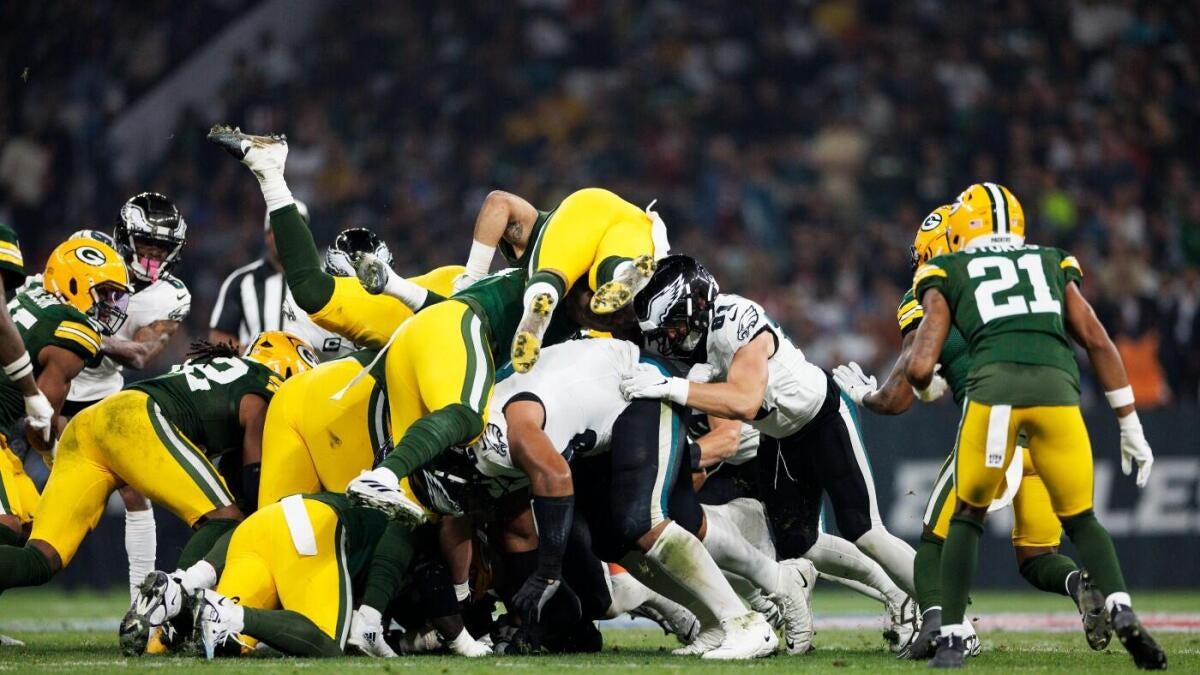
In the dimly lit conference rooms of Eagan, Minnesota, a quiet storm brewed. NFL owners, the unseen architects of the game, convened to deliberate on the future of football. At the heart of their discussions was the “Tush Push,” a play that has ignited debates and divided opinions across the league.
The “Tush Push” Debate: A Test of Tradition and Innovation
The Green Bay Packers, citing safety concerns and a desire to preserve the game’s integrity, proposed a ban on the “Tush Push.” They argued that the play, which involves a quarterback being pushed by teammates to gain short-yardage, lacked skill and disrupted the flow of the game. However, the Philadelphia Eagles, masters of the maneuver, countered by sending their legendary center, Jason Kelce, to the meeting. Kelce, who had recently retired, passionately defended the play, even suggesting he might return to the field if his role was limited to executing the “Tush Push.”
In the end, the proposal to ban the play fell short, with only 22 votes in favor, one shy of the 24 needed. The Eagles’ celebration was swift and pointed: a social media post featuring quarterback Jalen Hurts preparing for a “Tush Push,” accompanied by the caption “Push on.” The decision not only preserved a tactical advantage for the Eagles but also underscored the league’s complex balancing act between innovation and tradition.
Olympic Flag Football: The NFL’s Global Leap
Simultaneously, the NFL took a bold step onto the global stage. Owners unanimously approved a resolution allowing players to participate in flag football at the 2028 Summer Olympics in Los Angeles. Each NFL team can designate one player to represent their country, provided they meet the league’s health and safety standards. This move, championed by Commissioner Roger Goodell, signals the NFL’s commitment to expanding its global footprint and embracing the Olympic spirit.
High-profile players like Justin Jefferson and Patrick Mahomes have expressed interest in Olympic participation, viewing it as a prestigious opportunity. However, logistical challenges remain, including injury protection, salary cap implications, and potential scheduling conflicts with the NFL season. While some skeptics question the feasibility of integrating NFL athletes into Olympic flag football, the league’s decision marks a significant shift towards international collaboration and recognition.
The Future of Football: A Delicate Balance
As the NFL navigates these pivotal decisions, the future of football appears poised for transformation. The “Tush Push” stands as a testament to the league’s willingness to adapt and innovate, even when faced with controversy. Meanwhile, the inclusion of flag football in the Olympics reflects a broader vision of global engagement and the evolution of the sport.
Yet, these developments raise pressing questions: Will the “Tush Push” become a staple of NFL strategy, or will it eventually be phased out? Can the NFL successfully integrate into the Olympic framework without compromising the integrity of its primary season? Only time will reveal how these bold moves will shape the future of the game.
In the quiet corridors of power, decisions are made that echo across the field. The NFL’s recent meetings have set the stage for a new era in football—one where tradition meets innovation, and the global stage beckons.





Barcelona’s Fragile Pursuit: When Injuries Threaten More Than Just a Season
A silence spreads over Camp Nou that no roar can drown out—two...
Chris Marks2 Mins read
William Saliba: Arsenal’s Silent Architect or Its Greatest Gamble?
The air inside the Emirates shifts with unspoken tension—William Saliba, once a...
 Joseph Bennett2 Mins read
Joel Embiid’s Quiet Confidence: Is the 76ers’ Giant Ready to Rewrite His Story?
Joel Embiid is rarely one to make noise without purpose, and now,...
 Kirsten Collins1 Mins read
Juventus, Atalanta, and Arsenal’s Quiet Revolution: What’s Really Shaping This Week in Football?
The roar of Serie A stadiums masks a subtle shift, one that...
Kirsten Collins2 Mins read




Leave a comment