

Edgecombe vs. Flagg: The Rivalry the NBA Pretends Isn’t Personal
VJ Edgecombe says the beef with Cooper Flagg is “all love,” but when did basketball rivalries ever thrive on honesty? Something unspoken is brewing beneath the surface—and both franchises know it.
 Kirsten CollinsJuly 29, 20252 Mins read21

He said it with a smile—the kind that tries to disarm without fully surrendering. “It’s all love,” VJ Edgecombe told Showline, referring to his so-called rivalry with Mavericks No. 1 pick Cooper Flagg. But anyone who’s watched the game long enough knows: when young players start issuing public denials, the feud is already real.
This isn’t just preseason banter. This is Philadelphia versus Dallas. This is a No. 3 pick who walks like he was meant to go first versus a No. 1 pick who looks like he’s been told so since he was twelve. The court is neutral, but everything else—from body language to branding—suggests otherwise.
Talent Alone Doesn’t Sell—Narrative Does
For all their skill, Edgecombe and Flagg are being asked to play another game—one shaped by perception, myth, and media choreography. On paper, they’re positioned as future faces of their franchises. Off paper, they’re now circling one another in an arena built for conflict.
Cooper Flagg is pristine. A prodigy. The Mavericks’ crown jewel with a game that feels mathematically engineered. Edgecombe, in contrast, plays like a wildfire—unpredictable, brash, kinetic. That contrast isn’t accidental. It’s programming. “Flagg is cool with everyone,” one scout reportedly whispered. “VJ is trying to own the room.”
But Edgecombe’s demeanor suggests he knows something else: being liked never sold tickets. Being watched does.
Rivalries Aren’t Built. They Emerge
The NBA is a league that thrives on tension. Magic and Bird weren’t best friends. MJ and Isiah weren’t exactly brunching. Rivalries aren’t declared—they metastasize through close games, subtle gestures, and the way one player refuses to shake another’s hand just a second too long.
Edgecombe says there’s no beef. But his every movement says otherwise. The slightly exaggerated flex after a dunk. The way his eyes seem to find Flagg during warmups. The unmistakable thrum in the crowd when both are on court. This isn’t fake tension—it’s foreshadowing.
And perhaps that’s why this “all love” narrative feels curated, not candid. Because in the hyper-managed image economy of Gen Z sports stars, admitting ambition feels like a risk. So rivalries are softened with smiles and buried under PR. But they’re still there, waiting to erupt.
What’s more dangerous: a rivalry that’s too loud—or one that refuses to admit it exists? Edgecombe and Flagg are already playing for more than points. They’re playing for identity, for headlines, for the kind of narrative that lasts longer than stats.
And maybe that’s why it matters that VJ Edgecombe can’t stop mentioning Cooper Flagg—even when he says it’s all love. Because the real rivalries, the ones we remember, rarely start with hate. They start with denial.



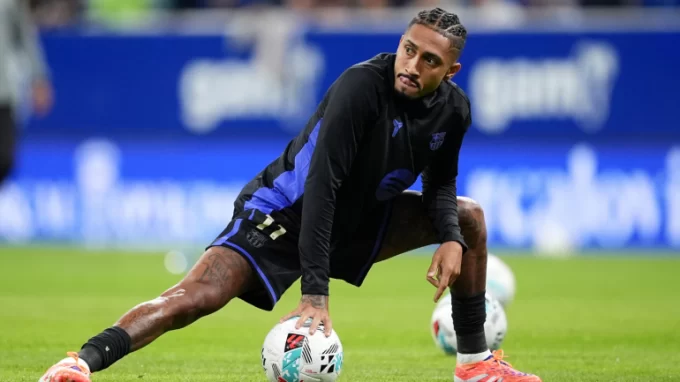
Barcelona’s Fragile Pursuit: When Injuries Threaten More Than Just a Season
A silence spreads over Camp Nou that no roar can drown out—two...
 Chris Marks2 Mins read
William Saliba: Arsenal’s Silent Architect or Its Greatest Gamble?
The air inside the Emirates shifts with unspoken tension—William Saliba, once a...
 Joseph Bennett2 Mins read
Joel Embiid’s Quiet Confidence: Is the 76ers’ Giant Ready to Rewrite His Story?
Joel Embiid is rarely one to make noise without purpose, and now,...
Kirsten Collins1 Mins read
Juventus, Atalanta, and Arsenal’s Quiet Revolution: What’s Really Shaping This Week in Football?
The roar of Serie A stadiums masks a subtle shift, one that...
Kirsten Collins2 Mins read





Leave a comment