

Taylor Swift and the Bodyguard Dilemma: What Happens When a Myth Protects Itself?
With The Bodyguard remake circling Taylor Swift’s Eras-era orbit, Hollywood is reimagining protection, power, and the impossible intimacy of pop stardom. But is this a role—or a mirror?
 Kirsten CollinsApril 12, 20252 Mins read28
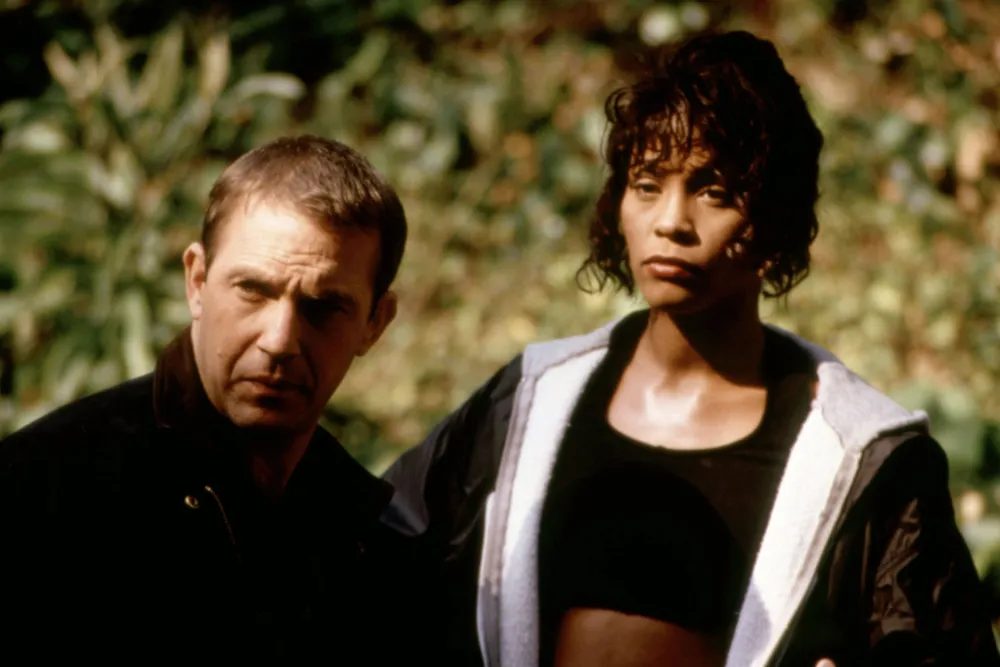
She has thousands of eyes on her at every moment—but not one can touch her. That’s the paradox of Taylor Swift: hyper-visible, yet utterly untouchable. And now, if rumors hold, she may soon be starring in the one film where being adored and being protected collide with tragic precision—The Bodyguard.
Director Matthew López is reportedly eyeing a remake of the iconic 1992 film that made Whitney Houston a silver screen siren and cemented the idea that love—true, dangerous, devastating love—needs a bulletproof vest. The question isn’t just why remake it? The real question is: why now—and why Taylor?
There’s something poetic, almost eerie, about the timing. Swift, mid-Eras tour, at the absolute zenith of her cultural power, is also its most scrutinized subject. She is the product and the protection. The narrative and the shield. And to step into a role like Rachel Marron isn’t just career pivot—it’s a doubling down on myth.
She Doesn’t Need Saving—But She Might Need Hiding
The original Bodyguard was a fable about fame and fragility—a pop goddess stalked, adored, and ultimately undone by the intensity of her own orbit. Houston made it aching and operatic. Could Swift, meticulously self-authored, pull off that same unraveling?
More than that: would she want to?
“I think a modern version could be even more psychologically intense,” López has said. “What does it mean to be constantly seen, yet never truly known?” In this era of parasocial obsession, digital bodyguards, and TikTok detectives mapping Swift’s every move, the metaphor bleeds too easily into reality.
Can you play a woman in danger when the danger now wears the mask of adoration? When fans aren’t just screaming outside stadiums, but decoding your every lyric like scripture?
When the Star Becomes Her Own Storyline
And then there’s the legacy of Houston. The voice. The rawness. The tragic foreshadowing of a woman both larger than life and stripped bare by it. To remake The Bodyguard with Swift is to provoke a new layer: not just racial, but tonal. Whitney’s Rachel fought for privacy. Taylor’s version might fight for control.
Could this film become a meta-commentary on fame in the 21st century? On how a woman builds a fortress, only to realize she lives in it alone?
And still, the romance remains. The fantasy that someone might step in—not to rescue, but to understand. That somewhere behind the dancers, beneath the sequins, outside the convoy of black SUVs, there’s room for something quiet. Something dangerous, because it’s real.
The casting hasn’t been confirmed. The script may never shoot. But the idea has already done its work. It’s crawled into the culture like a whisper—asking not whether Taylor Swift could be the next Rachel Marron, but whether she already is.




When Are the Oscars 2026? Date of the Academy Awards – Hollywood Life
Image Credit: AFP via Getty Images The Oscars are officially on the...
Kirsten Collins1 Mins read
Ticket Prices & Presale Details – Hollywood Life
View gallery Image Credit: Dave J. Hogan/Getty Images Harry Styles is embarking...
Kirsten Collins2 Mins read
Where Is Lawrence Jones on ‘Fox & Friends’? Health Update Amid Hiatus – Hollywood Life
Image Credit: Getty Images Fans of Lawrence Jones, a Fox & Friends...
Kirsten Collins1 Mins read

Who Is Lexi Minetree? 5 Things to Know About the ‘Elle’ Series Actress – Hollywood Life
View gallery Image Credit: Getty Images for Hello Sunshine Lexi Minetree plays...
Kirsten Collins2 Mins read




Leave a comment