

“The Vanishing World”: Sayaka Murata’s Chilling Vision of a Future Too Quiet to Notice
 Showline ReviewerApril 29, 20252 Mins read246
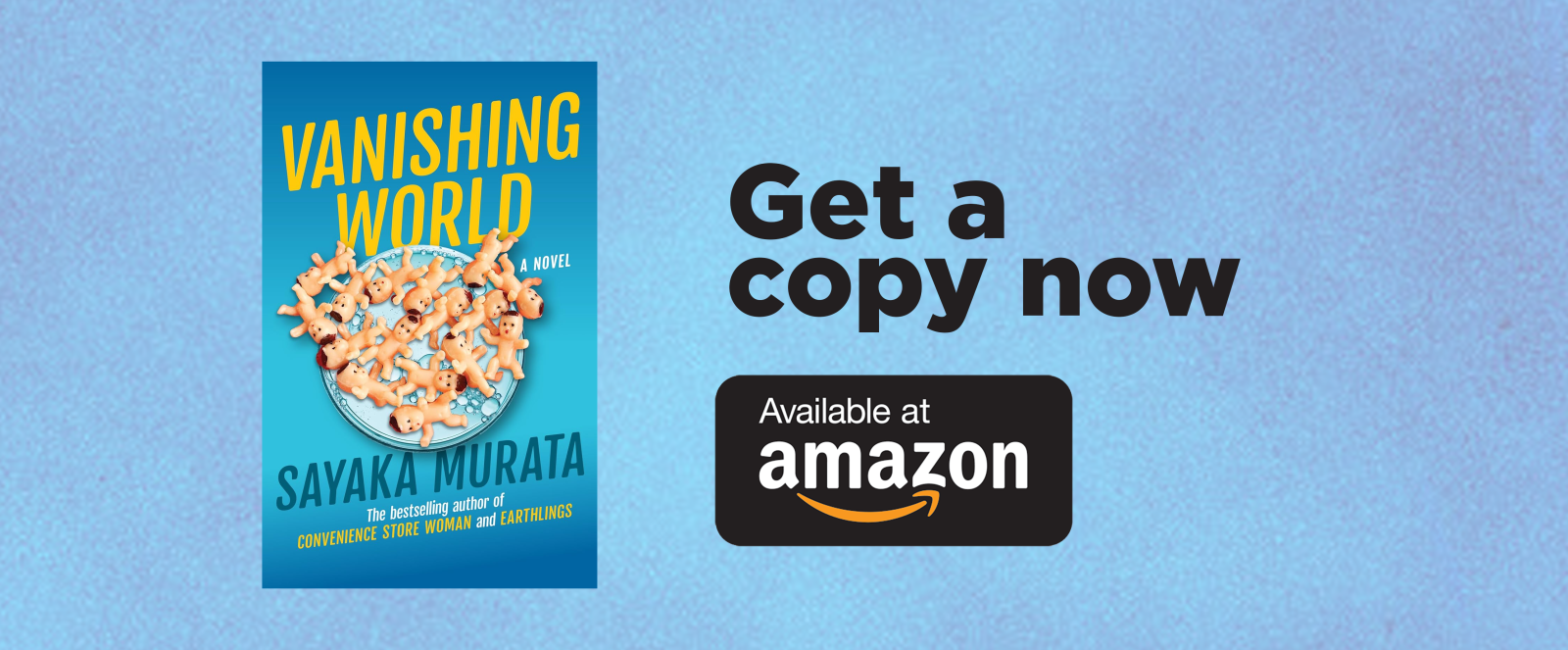
It starts not with a scream, but with a quiet absence—a kind of soft, rotting silence that seeps into the bones. The Vanishing World doesn’t clamor for your attention; it hums beneath your skin until you realize you’re no longer reading a novel—you’re absorbing a slow extinction. Sayaka Murata, the master of making the strange feel ordinary and the ordinary feel grotesque, has returned with something even more unnerving than her previous work: a meditation on the banality of oblivion.
In this future, humanity isn’t wiped out by fire or flood. It simply… thins. Life goes on in muted rituals—shopping, chatting, planning for a future everyone knows is slipping away. Murata’s pacing mirrors this slow drift: sentences that unspool like mist, chapters that feel less like arcs and more like quiet tides receding further each time. Her characters do not rage against the dying of the light; they fold laundry under it. They cradle it like a worn-out pet. “It didn’t feel tragic,” one character notes, almost to herself. “It felt neat.”
The structure is brilliant in its subtle cruelty. Just when you think you understand the emotional landscape, Murata lets a crack split through—a brief, chilling moment where you see the full emptiness underneath. The prose is sparse, glassy, deceptively simple; it lets the horror accumulate molecule by molecule. Her world feels less like a dystopia and more like a surrender: sterile streets, conversations about having children that feel transactional, not passionate. It is less a story than a slow disintegration of purpose—and somehow, you can’t look away.
Murata’s brilliance lies not in spectacle but in atmosphere. The world she builds is frightening precisely because it is not built to frighten; it is built to resemble life as we know it, just subtly off-tune. The result is an emotional dissonance that lingers, a discordant hum under your skin. The characters’ emotional numbness infects you. You realize, disturbingly, that you understand them. That you might react the same way. That perhaps you already are.
By the end, Murata doesn’t hand you an explosion, a revolt, a redemption. She hands you an origami of silence, folding smaller and smaller into itself until it vanishes altogether. And you’re left wondering—how much of yourself has already disappeared while you weren’t looking?
Who This Book Is For:
The Vanishing World will burrow deep into readers who crave fiction that unsettles, rather than comforts. This is for those drawn to the eerie quiet of Never Let Me Go, the aching estrangement of The Vegetarian, the slow-burn disquiet of Station Eleven. If you love stories that question the very scaffolding of human meaning—what it means to live, to hope, to reproduce—this book will haunt you. It offers no easy catharsis, only a haunting mirror held up to our vanishing sense of urgency, connection, and self.
Review Overview
Summary
In The Vanishing World, Sayaka Murata peels back the surface of existence to reveal a future so eerily mundane, it bleeds into horror. This is not a story of survival—it’s a story of forgetting what survival even means.
- Story Grip7
- Character Connection8
- Writing Vibe9
- Freshness & Meaning10
- World & Mood9
- Heartstrings & Haunting10
- Overall Flow9







When “107 Days” Meets Outcry: Harris’s Book Tour Interrupted
The microphone crackled to life, and before Harris could finish her opening...
 Chris Marks1 Mins read

Whispers in the Shadows: Why Holly Black’s Sequel Is a Dark Invitation We Can’t Ignore
The night isn’t just dark—it’s ravenous, greedy, and it’s coming for you....
Chris Marks2 Mins read

Why Stephenie Meyer’s Regret About Edward Changes Everything You Thought You Knew
The moment Stephenie Meyer admitted she wouldn’t pick Edward Cullen today, a...
Chris Marks2 Mins read

When Fear, Fury & Feathers Collide: Cinema, Superheroes, and a Confessional Album
Open with tension—the kind that threads through a scream, a reveal, and...
Chris Marks2 Mins read




Leave a comment