

What the Shadows Know: Inside the Whispering Myth of The Acolyte*
An exclusive excerpt from The Acolyte’s prequel dares to ask what happens when the Force is no longer a beacon, but a veil. What are we being primed for—and why does it feel so eerily familiar?
 Chris MarksApril 25, 20252 Mins read28

Random House Worlds
She speaks before she steps into the light—and already you don’t trust her. That’s how the excerpt from The Acolyte begins: with a voice, not a vision. And in this universe—one supposedly governed by the Force and its sacred clarity—it’s an unsettling inversion. The light does not guide here. It blinds.
There’s something quietly insurgent about this prequel. Not just in plot, but in presence. It dares to suggest that the golden age of Jedi order was not gilded but gutted. That peace, too, has a cost. And that the story we’ve been told—generation after generation—is a curated echo from the winning side. But what if the Sith never lost? What if they merely learned to whisper more convincingly?
The Golden Lies of the Republic
This is not the saga we were trained to follow. The Acolyte, both in its series and this newly unveiled excerpt, reads like a liturgy to everything Star Wars has been too afraid to say aloud. That the Force, wielded in imbalance, becomes theater. That light becomes a propaganda tool. That control, however benevolent, still tightens around the throat.
In one passage, the narrator reflects: “We were taught to trust the ones who did not feel fear. But what if the fearless simply forgot what it meant to care?” It’s a line that lingers like smoke. You begin to wonder whether the Jedi’s famed serenity wasn’t the absence of emotion—but its erasure. Sanitized loyalty disguised as virtue.
And this is what makes The Acolyte so arresting—it isn’t screaming to rebel. It’s calmly, dangerously, doubting the entire architecture of what we once believed. Doubt wrapped in elegance, delivered in velvet. Subversion, but make it sacred.
Myth as Memory, Memory as Weapon
What if the most revolutionary thing a story can do… is remember differently?
The timeline of The Acolyte takes us far before the Skywalkers and Empires. It is the High Republic—polished, proud, and conveniently amnesiac. But beneath the composure, the novel seems to ask a question we’ve trained ourselves not to ask: What had to be destroyed for this peace to thrive?
In this sense, the excerpt is not a teaser. It is a warning. Not just about what’s to come in the series, but what we’ve always chosen to overlook. There’s a quiet power in storytelling that doesn’t seek answers, but rather returns our questions to us—sharpened, inverted.
We have always imagined the Sith as monsters lurking in red-lit shadows. But The Acolyte hints at something far more disturbing: that they once walked among us—elegant, eloquent, misunderstood. And maybe they still do.
—
Maybe the Force was never divided into light and dark. Maybe it was only ever about who was allowed to speak—and who was told to vanish.








When “107 Days” Meets Outcry: Harris’s Book Tour Interrupted
The microphone crackled to life, and before Harris could finish her opening...
Chris Marks1 Mins read
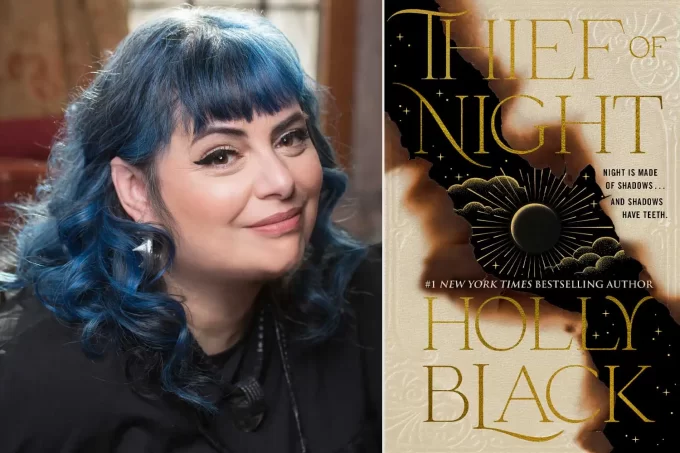
Whispers in the Shadows: Why Holly Black’s Sequel Is a Dark Invitation We Can’t Ignore
The night isn’t just dark—it’s ravenous, greedy, and it’s coming for you....
Chris Marks2 Mins read

Why Stephenie Meyer’s Regret About Edward Changes Everything You Thought You Knew
The moment Stephenie Meyer admitted she wouldn’t pick Edward Cullen today, a...
Chris Marks2 Mins read

When Fear, Fury & Feathers Collide: Cinema, Superheroes, and a Confessional Album
Open with tension—the kind that threads through a scream, a reveal, and...
Chris Marks2 Mins read





Leave a comment