

Picture This: A Modern Romance Woven in Timeless Tradition
What happens when the pulse of modern love meets the weight of tradition? Picture This plays with the tension between fleeting moments and eternal connections, crafting a romance both familiar and unexpectedly fresh.
 Chris MarksApril 7, 20252 Mins read34
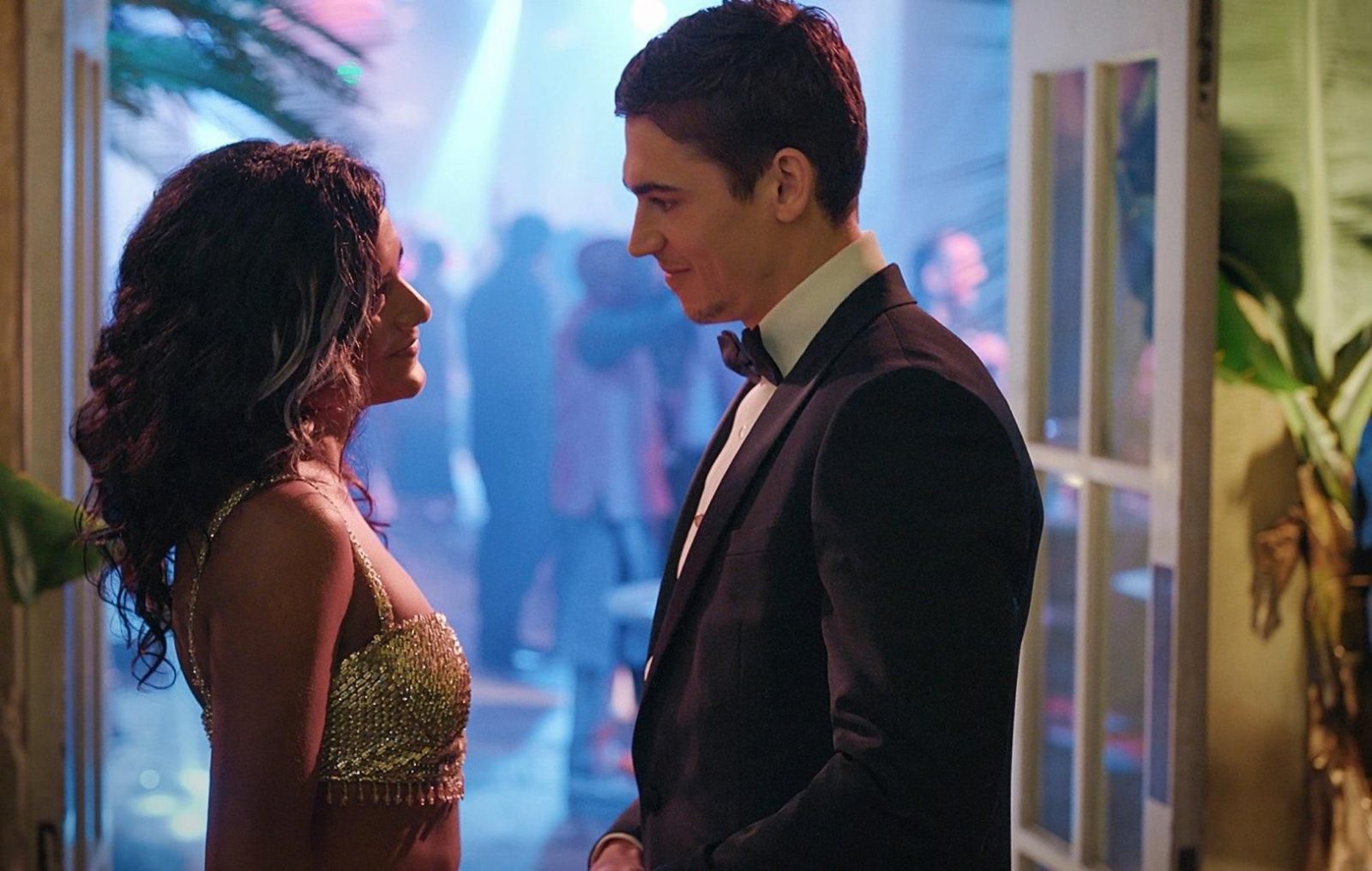
She clicks the shutter—eyes still holding the fleeting moment, fingers frozen on the trigger, but somehow, the picture is already slipping away.
The digital age has made it all too easy to snap a photo and call it love. Yet, Picture This shows us the unspoken truth about romance: capturing it is never enough. A single image—a moment frozen in time—can’t encapsulate the layers of emotion that make love immortal. And yet, we try. With every click, with every connection, we long to preserve the unpreservable.
This film knows that love is a contradiction. In a world where everything is instantaneous, where technology promises more than it delivers, Picture This finds beauty in the tension between the modern and the timeless. It’s not the plot that will haunt you—it’s the unanswered question: How do we reconcile the digital, disposable nature of today’s love with the lasting, profound connections we crave?
A Love Story Lost Between the Pixels
Modern romance is framed by screens, our affections exchanged through texts and photos, our hearts caught in a loop of online connections that rarely last beyond a Wi-Fi signal. But Picture This holds a mirror to this reality—only it’s a broken mirror, one that reflects our longing for something more. In the story’s delicate play on nostalgia, it asks: What happens when the filter fades, and the connection we once sought through technology becomes a ghost of what we imagined?
“We want love to be perfect, but it’s never in the image we create,” says one of the characters, as she stands staring into the blur of a photograph, her past as elusive as the perfect shot. This sentiment, this sense of unattainable perfection, runs through the veins of Picture This. It reminds us that love, when distilled to a perfect snapshot, lacks the rawness that makes it so unforgettably real.
When Love Isn’t Just in the Frame, but in the Silence Between the Clicks
There’s a quiet rebellion in Picture This, a revolt against the idea that everything must be documented. The film doesn’t just look at love through the lens of a camera; it challenges the audience to see the moments we miss when we’re too busy framing our happiness for the world to admire. Love, as the film proposes, is not merely about capturing what’s in front of you—it’s about understanding what can’t be captured.
And yet, there’s a longing for more. For realness. For something permanent in a transient world. At one point, a character opens a photo album—a relic from another time—and with a sigh, murmurs, “These photos don’t change. But we do.” It’s a line that echoes long after the film ends, pushing us to question our relationship with love, with time, and with the fragile images we clutch.
Maybe love isn’t something we can snap into existence. Perhaps it’s in the moments we let slip, the ones that refuse to be framed, that we find its most authentic form. And maybe, just maybe, Picture This isn’t just a story of two people—it’s a story of all of us, trying to hold onto something that can never be held.





Pianist Omar Harfouch Brings Celebrated Figures Together for a Night of Cultural Exchange – Hollywood Life
Image Credit: Omar Harfouch On February 20, 2026, pianist and cultural figure...
 Kirsten Collins2 Mins read

Who Is Ivana Lisette Ortiz? About the Rihanna Home Shooting Suspect – Hollywood Life
Image Credit: WWD via Getty Images The suspect in the March 8,...
Kirsten Collins1 Mins read

How Much Money Does She Have Now? – Hollywood Life
Image Credit: WWD via Getty Images Rihanna may be known as one...
Kirsten Collins2 Mins read
Stars Who Slammed ‘Love Story: JFK Jr. & Carolyn Bessette’: Statements – Hollywood Life
Image Credit: Getty Images FX’s Love Story: John F. Kennedy Jr. and...
Kirsten Collins2 Mins read





Leave a comment