

Cliff Booth’s Return: Is Hollywood Ready for Tarantino’s Darkest Dream Yet?
Brad Pitt’s most iconic character is about to make a comeback under Quentin Tarantino’s direction. But will Cliff Booth still resonate in a world that’s grown darker, or will this reunion ignite new controversy? The question isn’t just about the film—it’s about the power of nostalgia and reinvention.
 Chris MarksApril 3, 20252 Mins read241

“Do you want to know a secret? Some dreams should never be revisited.”
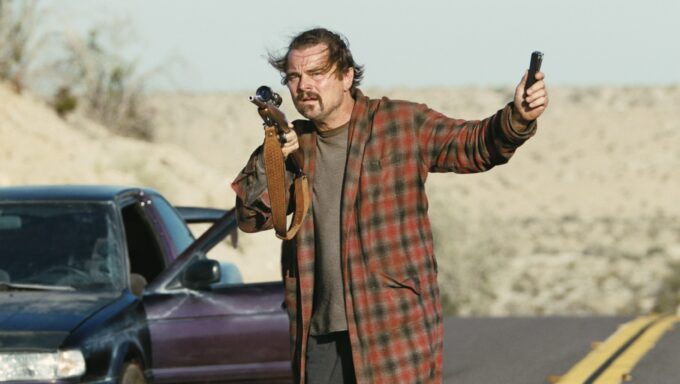
When word spread that Brad Pitt would once again slip into the worn leather jacket of Cliff Booth, the world couldn’t help but lean in closer. Tarantino, the master provocateur, is at it again. But this time, it’s not just about reviving a beloved character—it’s about resurrecting a cultural moment. The film industry has changed. Hollywood has changed. The question is whether Booth’s return can still spark the same fire, or if Tarantino’s brand of nostalgia has gone cold.
Cliff Booth wasn’t just another character; he was the last of a dying breed—cool, quiet, and unflinchingly masculine. In Once Upon a Time in Hollywood, he walked through a world on the verge of collapse, the old Hollywood mythos already eroding around him. So why bring him back now, in an era where that same mythos feels further out of reach than ever?
A Dream of Yesterday’s Future
There’s something almost tragic about the revival of Booth. Tarantino’s films are known for subverting conventions, for revealing the hidden ugliness behind what we thought we knew. And yet, in resurrecting a character whose very existence is tied to a fading version of Hollywood, Tarantino seems to be pulling us into a dream that no longer exists—or maybe never did. It’s the cinematic equivalent of chasing ghosts.
Tarantino once said, “I think the best thing I can do is to revisit something and take it to an extreme I didn’t take it to the first time.” If that’s the case, how far will he push the envelope with Booth? Will we see the quiet, reserved tough guy succumb to the very toxicity that he once seemed immune to? Or will the Cliff Booth we remember remain, impossibly ageless in a world that’s swiftly left him behind?
The Return of a Hero—Or a Harbinger?
What does it mean when nostalgia becomes a currency? When a character like Cliff Booth, beloved for his simplicity and charm, is thrust back into a world that is, for better or worse, more complicated and fractured than ever? Perhaps the true test of Cliff Booth’s return isn’t how the character evolves, but how we, as an audience, choose to remember him.
The modern world demands complexity. Tarantino’s films, once a kaleidoscope of humor and violence, now sit squarely in a landscape where those same binaries feel worn out, ready to be torn apart and analyzed. The Booth we saw in 2019 may not fit into 2025 without significant adaptation. Yet, in true Tarantino fashion, perhaps that’s exactly what he’s after—an exploration of the distance between who Booth was and who we need him to be now.
As Hollywood’s dream team assembles once more, we’re left to wonder: what happens when the past insists on visiting the present? The clock is ticking—Cliff Booth may be making a comeback, but are we ready to face what that means? Or, more hauntingly, are we still too eager to embrace the past, even as it slips through our fingers?
The final shot, as always, will be left to us.








Where Is Lawrence Jones on ‘Fox & Friends’? Health Update Amid Hiatus – Hollywood Life
Image Credit: Getty Images Fans of Lawrence Jones, a Fox & Friends...
 Kirsten Collins1 Mins read

Who Is Lexi Minetree? 5 Things to Know About the ‘Elle’ Series Actress – Hollywood Life
View gallery Image Credit: Getty Images for Hello Sunshine Lexi Minetree plays...
Kirsten Collins2 Mins read

Release Date, Cast & Updates on ‘Elle’ – Hollywood Life
View gallery Image Credit: Courtesy of Prime Video What, like producing a...
Kirsten Collins2 Mins read
Updates on Academy Award Nominations – Hollywood Life
Image Credit: Warner Bros. Pictures Awards season kicked off earlier this month,...
Kirsten Collins2 Mins read




Leave a comment