

Thunderbolts*The Marvel Movie That Put an Asterisk on Itself
Marvel’s Thunderbolts* doesn’t just bend the rules—it footnotes them. The cast claims it’s symbolic, but the deeper meaning may be more disruptive than clever.
 Chris MarksApril 30, 20252 Mins read74
There’s something unnerving about punctuation that winks back at you.
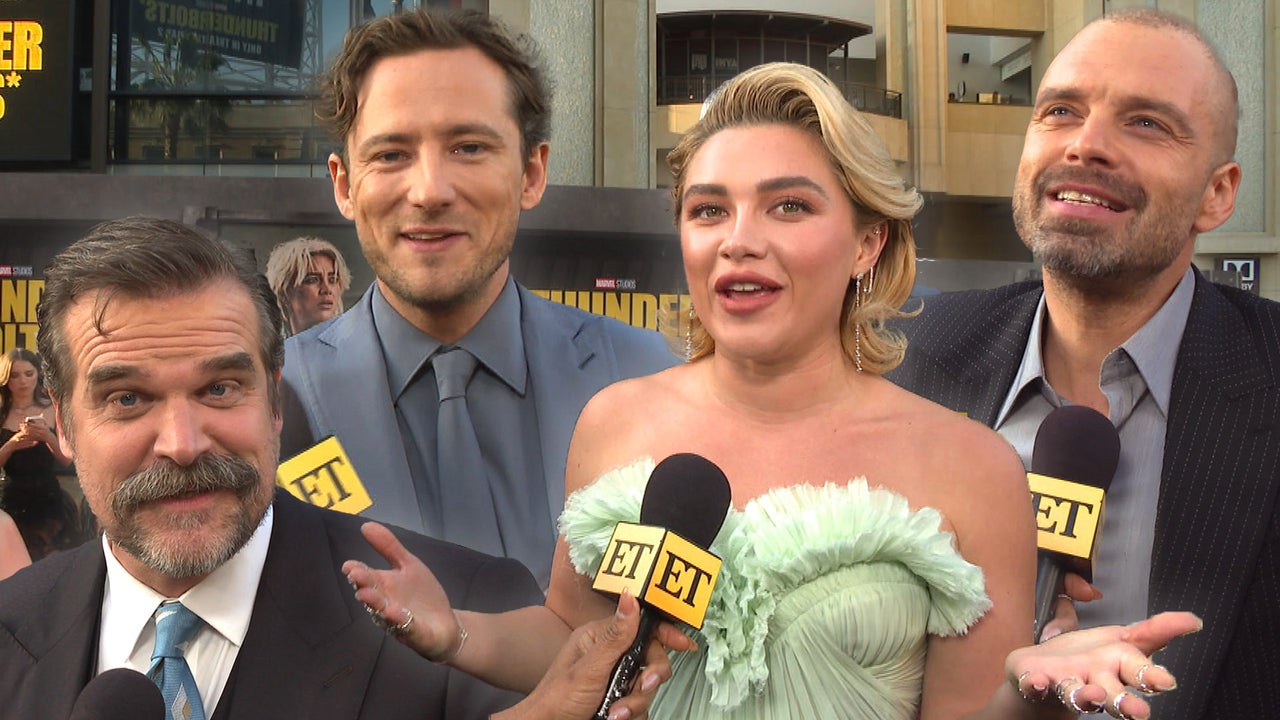
Thunderbolts* is the first Marvel film with a title that comes pre-annotated, like a whisper in fine print or a contractual caveat waiting to be decoded. And no one—from Marvel’s inner sanctum to the cast themselves—is giving a straight answer. Florence Pugh says it “means something,” Wyatt Russell laughs and shrugs, and David Harbour calls it “an emotional asterisk.” Which raises the obvious question: what is Marvel trying not to say?
We’ve entered the era of cinematic footnotes—movies that come with disclaimers not in the end credits, but embedded in the title itself. That asterisk isn’t decoration; it’s a disruption. A mark that something in the very DNA of Thunderbolts is conditional, complicated, or perhaps even corrupted.
The Fine Print of a Franchise
Marvel doesn’t make mistakes in branding. Every subtitle, hyphen, and inter-title has been scrubbed cleaner than a super-soldier’s backstory. So when a studio that runs on precision drops a symbol that universally signifies a catch or omission, it begs to be interrogated. Is this a new chapter in Phase Five, or a silent admission that the franchise machine is catching up with itself?
Behind closed doors, cast members have admitted the title “reflects the team.” It’s a group of antiheroes, after all—ex-cons, assassins, unstable rogues masquerading as saviors. But maybe the asterisk doesn’t just describe the Thunderbolts. Maybe it describes Marvel’s own evolving tone. The era of glossy, infallible heroes is over. This is Marvel with a moral footnote.
When the Symbol Is the Spoiler
There’s a risk in telling your audience to look for meaning. Eventually, they will.
Marvel’s asterisk lands in a moment of postmodern fatigue. Audiences no longer want linear stories—they want riddles, breadcrumbs, reasons to rewind. But if everything is meaningful, is anything? If a movie title asks us to expect fine print, what does it say about the experience itself?
“I think it’s about truth,” Pugh offered cryptically, before walking away mid-interview, her expression unreadable. It may have been a tactic. Or it may have been the point.
So the question persists: what’s the asterisk hiding? A character resurrection? A genre swerve? A betrayal baked into the plot? Or is it something far more uncomfortable—that the promise of heroism, in this cinematic universe or any other, comes with an inevitable cost?
And what does it mean when even the title doesn’t want to make a promise without a disclaimer?






Where Is Liam Conejo Ramos Now? Updates on 5-Year-Old’s ICE Detainment – Hollywood Life
Image Credit: Getty Images Liam Conejo Ramos came home from preschool while...
 Kirsten Collins2 Mins read

Who Is Harry Styles’ ‘Aperture’ About? Breakdown of the Lyrics – Hollywood Life
View gallery Image Credit: Getty Images We’ve doing doing all this late...
Kirsten Collins1 Mins read
When Are the Oscars 2026? Date of the Academy Awards – Hollywood Life
Image Credit: AFP via Getty Images The Oscars are officially on the...
Kirsten Collins1 Mins read
Ticket Prices & Presale Details – Hollywood Life
View gallery Image Credit: Dave J. Hogan/Getty Images Harry Styles is embarking...
Kirsten Collins2 Mins read




Leave a comment