

Barry, Diane, and the Myth of the Open Marriage
Barry Diller’s memoir doesn’t just lift the veil on his marriage to Diane von Furstenberg—it folds the veil, frames it, and invites us to question what “truth” really means among the elite.
 Chris MarksMay 7, 20252 Mins read27

Barry Diller has always seemed like the man behind the curtain—pulling strings at Paramount, spinning digital fortunes at IAC, married to Diane von Furstenberg like a tasteful footnote in his public résumé. But in his new memoir, he’s stepped forward, parted the curtain, and given us a glimpse not of scandal—but of something far stranger: candor, dressed in cashmere.
He calls it a “truly unconventional marriage,” a phrase that sits in the mouth like a secret half-told. Diller’s portrayal of his union with DVF is less about infidelity and more about intellectual fidelity. “Ours was a love that didn’t require ownership,” he writes. But don’t mistake that for freedom. It reads more like a slow-burning contract between two titans who understood power not as something to share, but to orbit.
Love as a Game for the Very Rich
It’s tempting to romanticize them—he the mogul, she the muse-turned-multimillionaire. But the real allure is in their calculation. This wasn’t some whimsical European arrangement. It was—if Diller is to be believed—an intentional, cerebral, almost businesslike understanding of what a bond could be when neither party needed the other, yet still chose each other, again and again, across decades and dalliances.
There is something uncomfortably precise about how Diller discusses Diane. Not with affection, necessarily, but admiration. Like someone assessing a priceless sculpture—unattainable, unpossessable, but worthy of reverence. “She’s more of a force than a person,” he muses in passing. It’s the kind of line that tells you everything you need to know about their dynamic—and nothing you can trust.
We like our romances messy, full of passion, scandal, betrayal. But what do we do with a relationship that thrives on clarity and negotiation? What does it mean to love someone not with your heart, but with your strategy?
The Elegance of Omission
There are, of course, names left out. Questions unasked. One wonders if this memoir is less confession and more curation—a calculated release of just enough intrigue to remind us that the richest lives are still the most private. Even as Diller demystifies the nature of his marriage, he reframes the mystery. It becomes artful, intentional—like the architecture of one of DVF’s parties: glittering, exclusive, and utterly impenetrable unless invited.
In revealing his truth, Diller quietly reasserts the ultimate privilege: the power to define what truth even is.
—
And so the book closes not with a revelation, but with a slow wink. Diller and von Furstenberg remain exactly what they’ve always been—iconic, untouchable, and two steps ahead. Maybe the real secret isn’t in how they stayed married. Maybe it’s in how they convinced the world that the rules never applied to them at all.







When “107 Days” Meets Outcry: Harris’s Book Tour Interrupted
The microphone crackled to life, and before Harris could finish her opening...
Chris Marks1 Mins read
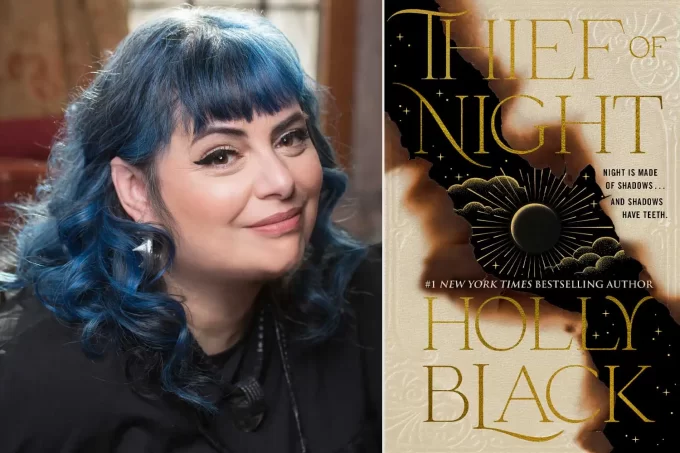
Whispers in the Shadows: Why Holly Black’s Sequel Is a Dark Invitation We Can’t Ignore
The night isn’t just dark—it’s ravenous, greedy, and it’s coming for you....
Chris Marks2 Mins read

Why Stephenie Meyer’s Regret About Edward Changes Everything You Thought You Knew
The moment Stephenie Meyer admitted she wouldn’t pick Edward Cullen today, a...
Chris Marks2 Mins read

When Fear, Fury & Feathers Collide: Cinema, Superheroes, and a Confessional Album
Open with tension—the kind that threads through a scream, a reveal, and...
Chris Marks2 Mins read




Leave a comment