

The Deception Behind the Deal: How Bait-and-Switch Pricing Is Shaping Our Desires
In a world where every deal seems too good to be true, bait-and-switch pricing is quietly reshaping our consumer habits. But what happens when the promise is broken, and the lure leads to a trap?
 Joseph BennettMay 8, 20253 Mins read110
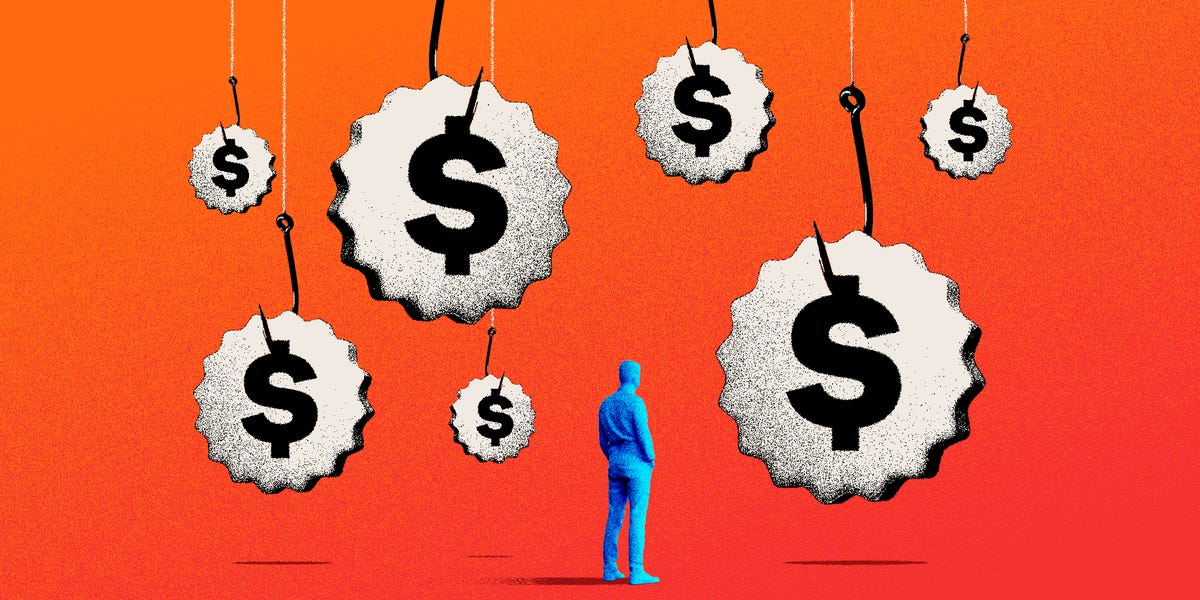
It’s the perfect price—a promise of a deal that seems too good to pass up. We click, we call, we walk into the store, hearts pounding with the hope of securing that rare, fleeting bargain. But the moment we’re in front of the register, reality hits. The price we thought we’d locked in vanishes like smoke, replaced by something far less enticing. That flashy “limited-time offer” or “special promotion” is suddenly out of reach, and the real price? Far from what we were led to believe. Welcome to the world of bait-and-switch pricing, where the only thing that’s certain is that nothing is as it seems.
The Lure of the Perfect Price
It’s a marketing masterpiece—a siren song designed to hook us in, tempting us with the promise of a deal so good it seems almost criminal. Think back to that time you saw an irresistible ad on your phone—maybe it was for a TV, a vacation package, or a pair of shoes. The price was absurdly low, and yet, you didn’t hesitate. You clicked the link, or better yet, called the number. But when you arrived at the promised land, you were greeted with an unsettlingly different reality. The product you sought was out of stock, the offer “expired,” or worse—hidden fees and added costs appeared as if from nowhere.
“Bait-and-switch is the hidden tax on consumer enthusiasm,” says a former ad executive, who worked in the marketing industry for years. “We’re trained to expect a bargain, but what we’re really getting is manipulation.”
It’s a phenomenon that quietly warps the relationship between business and consumer. While some may chalk it up to “miscommunication,” or “unforeseen errors,” the pattern is clear: businesses are using these tricks to prey on our desire for a good deal, knowing we’ll be reluctant to walk away once we’ve already made the commitment.
Behind the Mirror: The Power of Illusion
What is it about this deception that’s so effective? The answer lies in the psychology of desire. The human brain is wired to seek rewards, and what better reward than a bargain that promises to fulfill our every want without breaking the bank? But when faced with the truth—that the real price is anything but what we were led to expect—the dissonance begins. What we thought was a triumph of consumerism becomes a small but significant betrayal.
The allure of a seemingly unbeatable offer is hardwired into our behavior. “This is not about getting a cheaper price—it’s about a psychological thrill,” says Dr. Richard Hayes, a behavioral economist. “When the price feels too good to be true, our instincts kick in. The catch? By the time we realize we’ve been duped, the emotional investment is already made. And that’s when the switch happens.”
In a sense, these bait-and-switch tactics are nothing short of a mind game. It’s not enough to lure you in with false prices. The real victory lies in getting you to trust the system, to invest emotionally in the outcome, only to have it yanked away at the last moment.
The Cost of Deception
But here’s the real question: how much are we willing to tolerate? How far can businesses go before consumers wake up to the fact that these marketing tactics are eroding trust? We are no longer just passive recipients of advertising; we’re active participants in a game where the stakes keep rising.
Take a moment to think about the long-term implications. The deeper this practice seeps into the marketplace, the more we lose our ability to make informed decisions. Every deal we enter into is now filtered through a lens of skepticism, forcing us to question not just the price, but the motives behind it. The very fabric of consumer confidence is under threat, and what happens when that trust finally breaks?
Do we—consumers and corporations alike—simply accept this as the cost of doing business, or is there a line that, once crossed, will force a reckoning?
As the world of marketing becomes more sophisticated, more manipulative, one has to wonder: how much further will this deception go before the true cost is felt, not just in dollars, but in the very way we experience the economy itself? What happens when the act of trust itself is commodified, manipulated, and sold?
The next time you click “buy now” or pick up the phone to take advantage of a deal, ask yourself this: is the price you’re paying truly the one you’re being asked to accept, or are you merely the latest player in a game where the rules were written long before you ever entered the arena?






How Much Will Trump’s Policies Really Cost Wall Street?
When Donald Trump first took office, his policies were sold as a...
 Kirsten Collins2 Mins read

Milken 2025: The Party of the Rich, Amid a World Falling Apart
The night was electric in a way that only a private, star-studded...
Joseph Bennett3 Mins read

Buffett, Cook, and the Quiet War for America’s Soul
There was a moment, barely a second long, when Warren Buffett’s smile...
Joseph Bennett3 Mins read

The 5-Minute Flight: The Future of Urban Travel or Just Another Mirage?
Five minutes. That’s the promise—a blink of an eye and you’re airborne,...
 Chris Marks3 Mins read




Leave a comment