

When Baseball Meets Destiny: The Kiner-Falefa Connection
What happens when bloodlines collide in the world of baseball? Isiah Kiner-Falefa hits a home run after meeting his second cousin, Ralph Kiner’s son. But was it destiny, or just pure coincidence?
 Kirsten CollinsMay 13, 20252 Mins read35
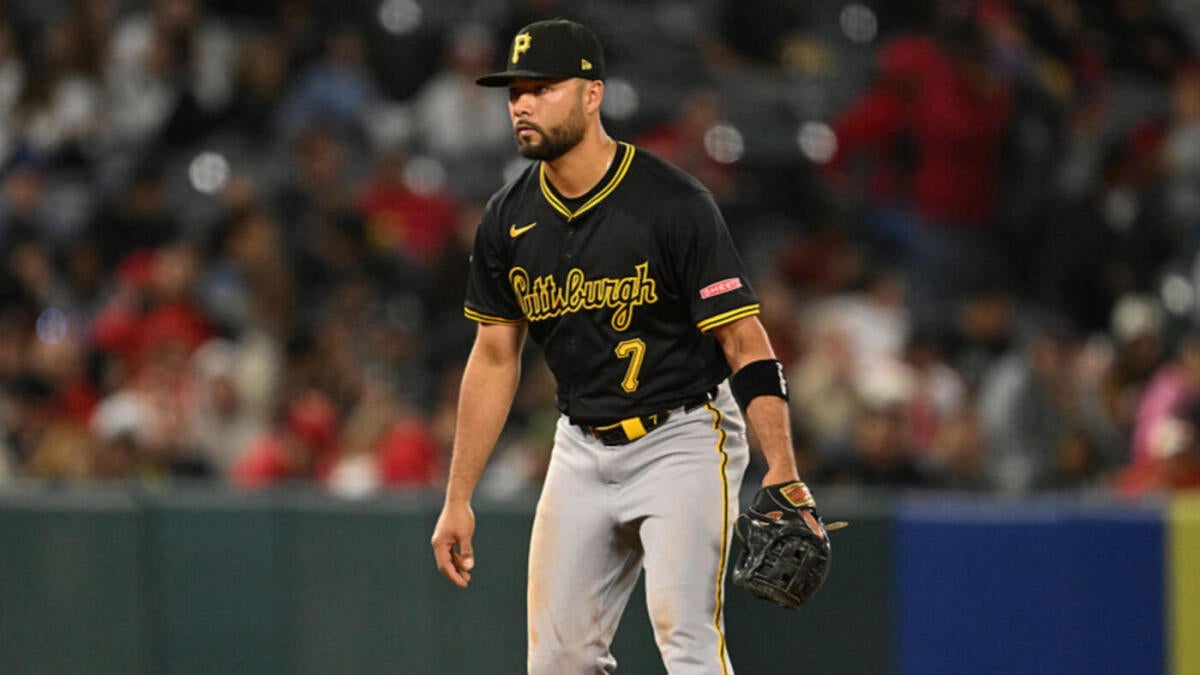
There are moments in sports that transcend mere statistics, where the intertwining of family, history, and fate feel too surreal to be true. Isiah Kiner-Falefa’s home run the day after meeting his second cousin, Ralph Kiner’s son, is one of those moments—an improbable twist of baseball’s rich tapestry that begs a question: was it simply a coincidence, or something deeper at play?
It’s the kind of story that stirs your imagination, not because of the home run itself, but because of what it represents—a long-lost link between generations of baseball history. Isiah, a versatile infielder for the Pittsburgh Pirates, had always known of his famous great-grandfather, the legendary Hall of Famer Ralph Kiner. But to meet his second cousin—Kiner’s son—and hit a home run the next day? It feels like the universe was conspiring in the most poetic way.
A Bloodline Reawakened
For many baseball fans, Ralph Kiner’s name is synonymous with power hitting, a legacy that spans decades. But Isiah’s journey is just beginning. The moment he stepped into the batter’s box after this familial encounter, one could feel a shift in the air. Was it the legacy of his great-grandfather propelling the ball, or was it the weight of something more than just the game that pushed him to success?
“I don’t know what it was,” Kiner-Falefa said, “but the timing just felt right.” He wasn’t the only one to feel it. Fans, commentators, and teammates alike remarked on the eerie connection between the meeting and the ensuing blast—after all, when baseball history and family collide, magic can happen.
The Meaning of Legacy
But in a sport that thrives on statistics and metrics, it’s easy to dismiss moments like these as mere coincidence. And yet, there’s something about baseball that draws us into its mythology—the rituals, the numbers, the connections that often feel like they run deeper than just the players themselves. Is it possible that baseball’s soul is tied to bloodlines and family in a way that other sports aren’t? Isiah Kiner-Falefa’s story, like many before him, is a reminder that the game doesn’t just belong to those who play it; it belongs to families, to legacies, and to moments when fate gives a nudge.
The real question, though, is whether this moment will prove to be the start of something more. Can Kiner-Falefa—who’s not just carrying the weight of a great-grandfather’s legacy but also a family bond with Ralph Kiner’s bloodline—build on this magic? Or will the story fade into the history books as just another curious incident in a sport that thrives on strange coincidences?
Destiny or Just a Home Run?
As the baseball world watches this unassuming moment unfold, one wonders whether it’s the start of something bigger for Kiner-Falefa. Was it just a twist of fate? Or is this a sign of something more, a legacy finally waking up in the most unexpected of ways?
For now, Isiah’s home run lingers as a symbol—a connection to his past, to the game, and to the unpredictable nature of baseball. The question remains: in a world governed by numbers, stats, and records, can destiny sneak through the cracks of history and change the game?
One thing’s for sure: baseball, in all its mystique, has a way of making us believe in the impossible.






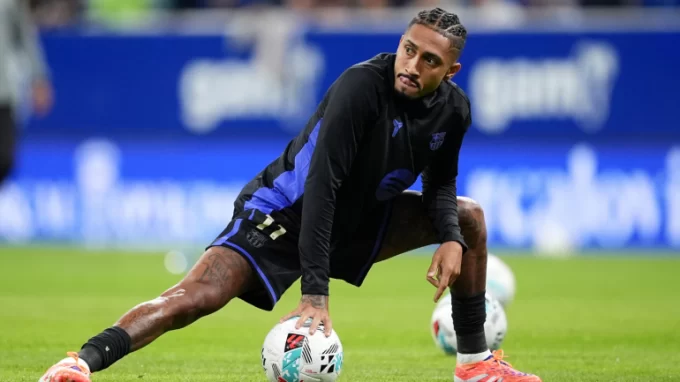
Barcelona’s Fragile Pursuit: When Injuries Threaten More Than Just a Season
A silence spreads over Camp Nou that no roar can drown out—two...
 Chris Marks2 Mins read
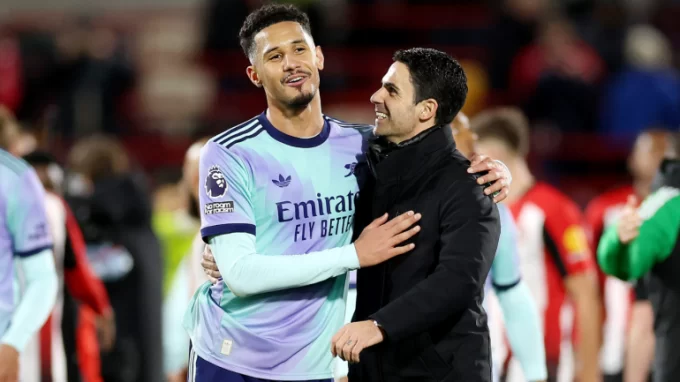
William Saliba: Arsenal’s Silent Architect or Its Greatest Gamble?
The air inside the Emirates shifts with unspoken tension—William Saliba, once a...
 Joseph Bennett2 Mins read
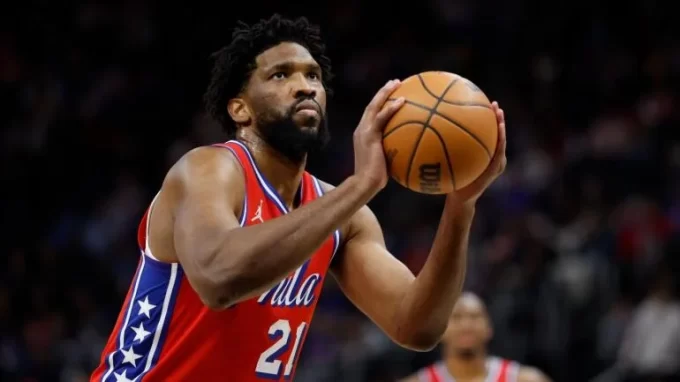
Joel Embiid’s Quiet Confidence: Is the 76ers’ Giant Ready to Rewrite His Story?
Joel Embiid is rarely one to make noise without purpose, and now,...
Kirsten Collins1 Mins read
Juventus, Atalanta, and Arsenal’s Quiet Revolution: What’s Really Shaping This Week in Football?
The roar of Serie A stadiums masks a subtle shift, one that...
Kirsten Collins2 Mins read





Leave a comment