

Stefon Diggs: The ACL Tear That Changed Everything—But Is That Enough?
New England Patriots wide receiver Stefon Diggs opens up about his recovery from an ACL tear, but does his focus on improvement mask a deeper question: Can a player ever truly come back from such an injury, or is he chasing something that can never be regained?
 Kirsten CollinsMay 20, 20253 Mins read177
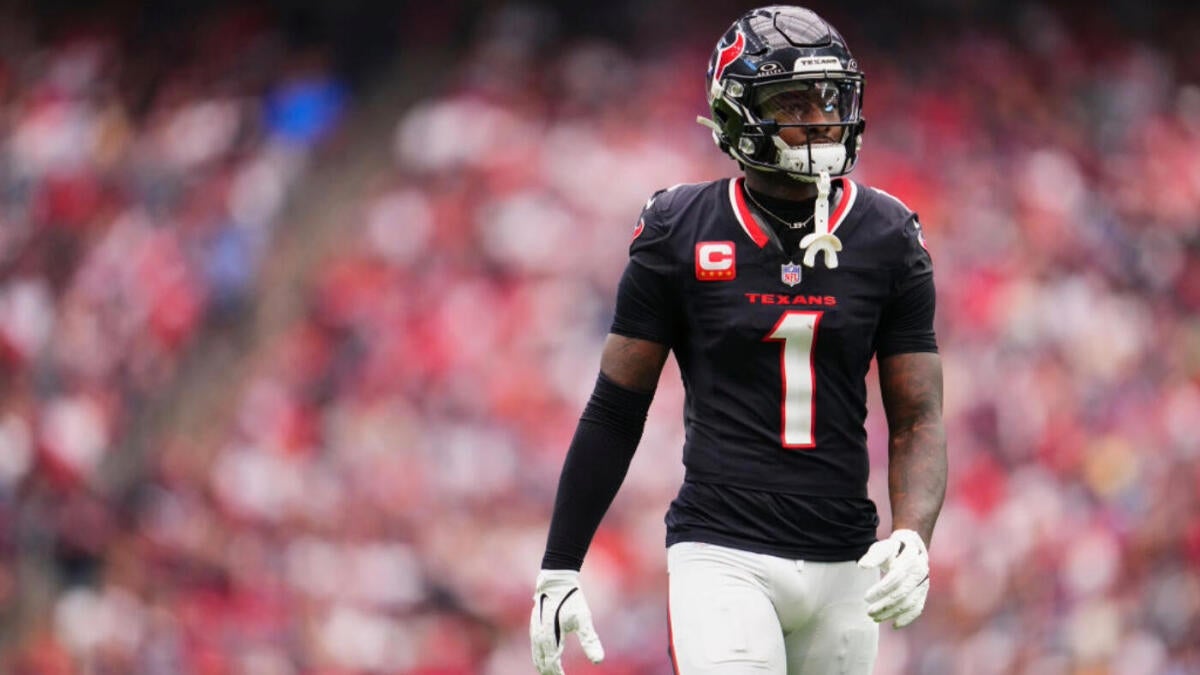
The torn ACL was more than just a physical injury—it was a moment that shook Stefon Diggs to the core. The echoes of that injury are still reverberating, shaping not just his future but the very way we view greatness in the NFL.
When the news broke that Stefon Diggs, the dynamic New England Patriots wide receiver, had torn his ACL, the weight of it was almost palpable. This wasn’t just another NFL injury; it was a moment that seemed to freeze time. The league had watched him grow from a promising star to a force—unstoppable, electric, unpredictable. But now, in the aftermath of a cruel twist of fate, he’s been forced to reckon with his own fragility. There’s something uniquely human about this struggle: the attempt to transcend the limits of the body, to recover from the things that, for a fleeting moment, feel insurmountable.
“I’m focused on being better,” Diggs said in his latest update on recovery. It’s a simple statement, but behind it lies the question: Can a player ever truly be “better” after an injury like this, or does the process of coming back carry with it something more profound—something intangible?
The Curse of the Comeback
Every athlete who’s ever faced an injury of this magnitude understands the delicate dance between physical recovery and mental fortitude. With each workout, each step toward getting back on the field, there’s an internal battle. For Stefon Diggs, this isn’t just about regaining strength; it’s about finding something deeper—a will to push past the limitations of his body, the doubt that whispers in the back of his mind, and the pressure of an entire career built on expectation.
The mental toll is something that’s rarely spoken about, but in every locker room, every rehab session, it’s present. Diggs’ admission that he’s focused on being “better” sounds like a triumph, but is it? Is the idea of “better” an elusive pursuit, one that always seems just out of reach when you’ve suffered an injury that has fundamentally altered the way you approach the game?
“Better” might not just be a physical state; it might be a mental game—a relentless drive to prove that the injury doesn’t define him. But the question remains: Can any athlete truly emerge from such a devastating injury the same? Or are they forever chasing a version of themselves that no longer exists?
The Weight of Perfection
The narrative around ACL recovery has always been one of rebirth, but there’s a darker side to it. For Stefon Diggs, it’s not just about “getting back”—it’s about redefining what success looks like in the aftermath. The moment a player returns from something like this, their performance is measured against an impossible standard. The fanfare, the cheers, the expectations—they’re all tied to an image that may no longer align with the reality of what he’s capable of.
While some players have managed to come back stronger—Dominant, even—it’s important to ask: Does that myth actually help or hinder? Perhaps the question should not be whether Diggs can be “better,” but rather if he can still be the player he was before the injury. Can he recapture that fluidity, that ease on the field, or will he always be chasing a memory?
“I’ve learned that sometimes, recovery isn’t just about the body; it’s about how you see the game,” Diggs remarked, revealing a new depth to his recovery. It’s this insight, this shift in perspective, that might be the true test of his comeback.
Chasing Greatness—or Something Else?
As Stefon Diggs embarks on this new chapter in his career, the mystery lies not in whether he will physically return to form but whether he will ever be able to fully transcend the experience of injury. We often ask athletes to perform miracles, but in doing so, we ignore the internal costs—costs that go beyond the physical and into the soul of the athlete. What if Diggs is not merely chasing the form he had before, but something much deeper? A kind of peace with the uncertainty of his body, a way to find greatness in the unknown, in the struggle?
And as fans, we must ask: Do we still want the athlete who was—and will we ever fully accept the version of the athlete that comes after the fall? Perhaps in the chase for the “better” version of Diggs, we’re overlooking the truth—that there’s a different kind of greatness in simply showing up, in battling through the recovery, in finding strength in places we never knew existed.
In the end, Stefon Diggs may prove something far more important than just his physical recovery—he may redefine what it means to be “better” in a game that is forever changing. But whether or not we’re ready for that change is a question that remains unanswered.




Barcelona’s Fragile Pursuit: When Injuries Threaten More Than Just a Season
A silence spreads over Camp Nou that no roar can drown out—two...
 Chris Marks2 Mins read
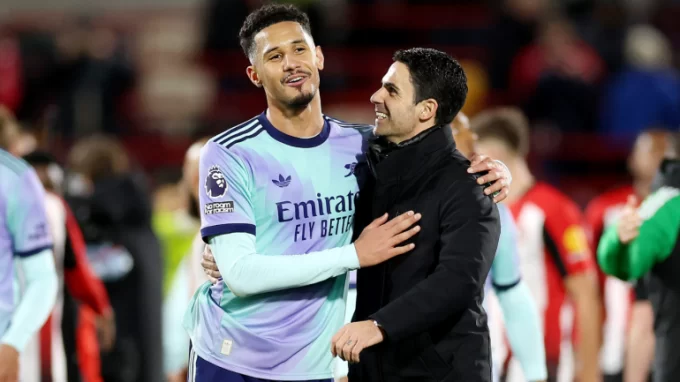
William Saliba: Arsenal’s Silent Architect or Its Greatest Gamble?
The air inside the Emirates shifts with unspoken tension—William Saliba, once a...
 Joseph Bennett2 Mins read
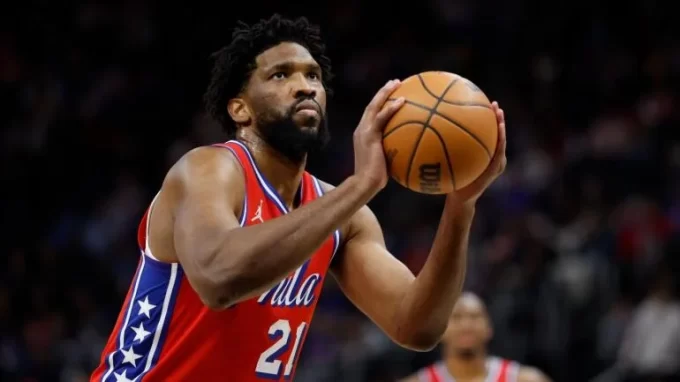
Joel Embiid’s Quiet Confidence: Is the 76ers’ Giant Ready to Rewrite His Story?
Joel Embiid is rarely one to make noise without purpose, and now,...
Kirsten Collins1 Mins read
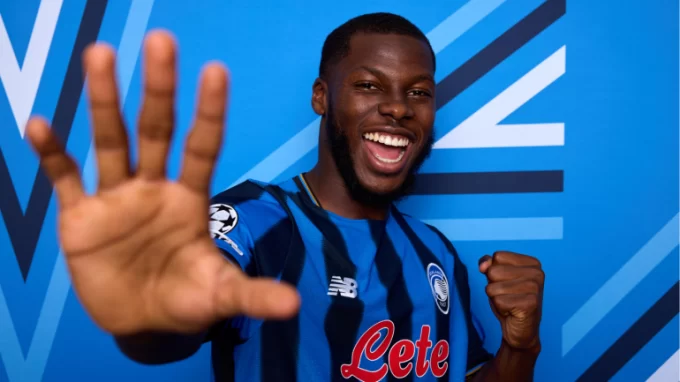
Juventus, Atalanta, and Arsenal’s Quiet Revolution: What’s Really Shaping This Week in Football?
The roar of Serie A stadiums masks a subtle shift, one that...
Kirsten Collins2 Mins read





Leave a comment