

Payday Power Plays: Who Tops the NFL’s Money Bracket at Every Position?
Record-setting deals for Sauce Gardner ($30.1M/year) and Trey Smith ($23.5M/year) have shifted the NFL’s salary landscape—highlighting who reigns at every position and raising the question: what’s the true cost of elite status?
 Kirsten CollinsJuly 15, 20251 Mins read22

A ripple of shock crossed the NFL world this week as Sauce Gardner and Trey Smith shattered benchmarks—Gardner becoming the highest-paid cornerback in history, Smith rewriting guard-market norms. But beyond the headlines lies a deeper inquiry: how much do positional paradigms shape value—and what does that say about football’s inner logic?
Each contract isn’t just compensation—it’s a statement of identity, strategy, and urgency in a league that bases greatness on both hardware and labor.
When Corners Make History
Sauce Gardner’s four-year, $120.4 million extension—$30.1 million per year and $60 million guaranteed—cements him as the top-paid at his craft. In a league that once treated corners as niche specialists, Gardner’s payday signals a seismic shift: those blanketing the league’s fastest receivers now command elite valuation. He declared, “This is only the beginning,” but is he also setting a precedent for defensive contract inflation?
Interior Line Gets Its Crown
Meanwhile, Trey Smith’s four-year, $94 million deal with $70 million guaranteed makes him the NFL’s richest guard—crushing a market where his franchise-tag AAV already led the position. Together with center Creed Humphrey, Kansas City has invested in its interior like never before. Is the era of pass protection reshaping front-five economics—and redefining what it means to value unheralded excellence?
Beyond those marquee contracts, Spotrac ranks reveal dominance at every position—Dak Prescott leads quarterbacks ($60M/year), Ja’Marr Chase at receiver ($40.3M), George Kittle at tight end ($19.1M), Tristan Wirfs at left tackle ($28.1M), Penei Sewell at right tackle ($28M), and Antoine Winfield Jr. at free safety ($21M). But why these numbers now? Are they market reflections—or the result of teams choosing narrative over need?
Contracts are more than money—they’re the league’s pulse, telling us which roles we applaud, which we underpay, and which suddenly demand respect.
In this season of record-breaking deals, every salary tells a story—of shifts in strategy, shifts in game philosophy, and shifts in cultural perception. As caps rise and markets surge, we must ask: if value is assigned by contract, which positions will rise—and which will fall silent in the new order?





Barcelona’s Fragile Pursuit: When Injuries Threaten More Than Just a Season
A silence spreads over Camp Nou that no roar can drown out—two...
 Chris Marks2 Mins read
William Saliba: Arsenal’s Silent Architect or Its Greatest Gamble?
The air inside the Emirates shifts with unspoken tension—William Saliba, once a...
 Joseph Bennett2 Mins read
Joel Embiid’s Quiet Confidence: Is the 76ers’ Giant Ready to Rewrite His Story?
Joel Embiid is rarely one to make noise without purpose, and now,...
Kirsten Collins1 Mins read
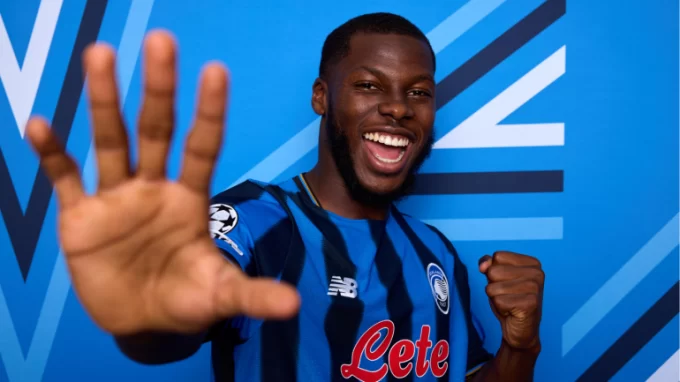
Juventus, Atalanta, and Arsenal’s Quiet Revolution: What’s Really Shaping This Week in Football?
The roar of Serie A stadiums masks a subtle shift, one that...
Kirsten Collins2 Mins read





Leave a comment