

The Porsche, the Penthouse, and the Pamela Problem
Pamela Anderson says Sylvester Stallone tried to buy her love with luxury. He says it never happened. But when two icons rewrite the same past, who owns the truth?
 Krista FreelandAugust 4, 20252 Mins read29
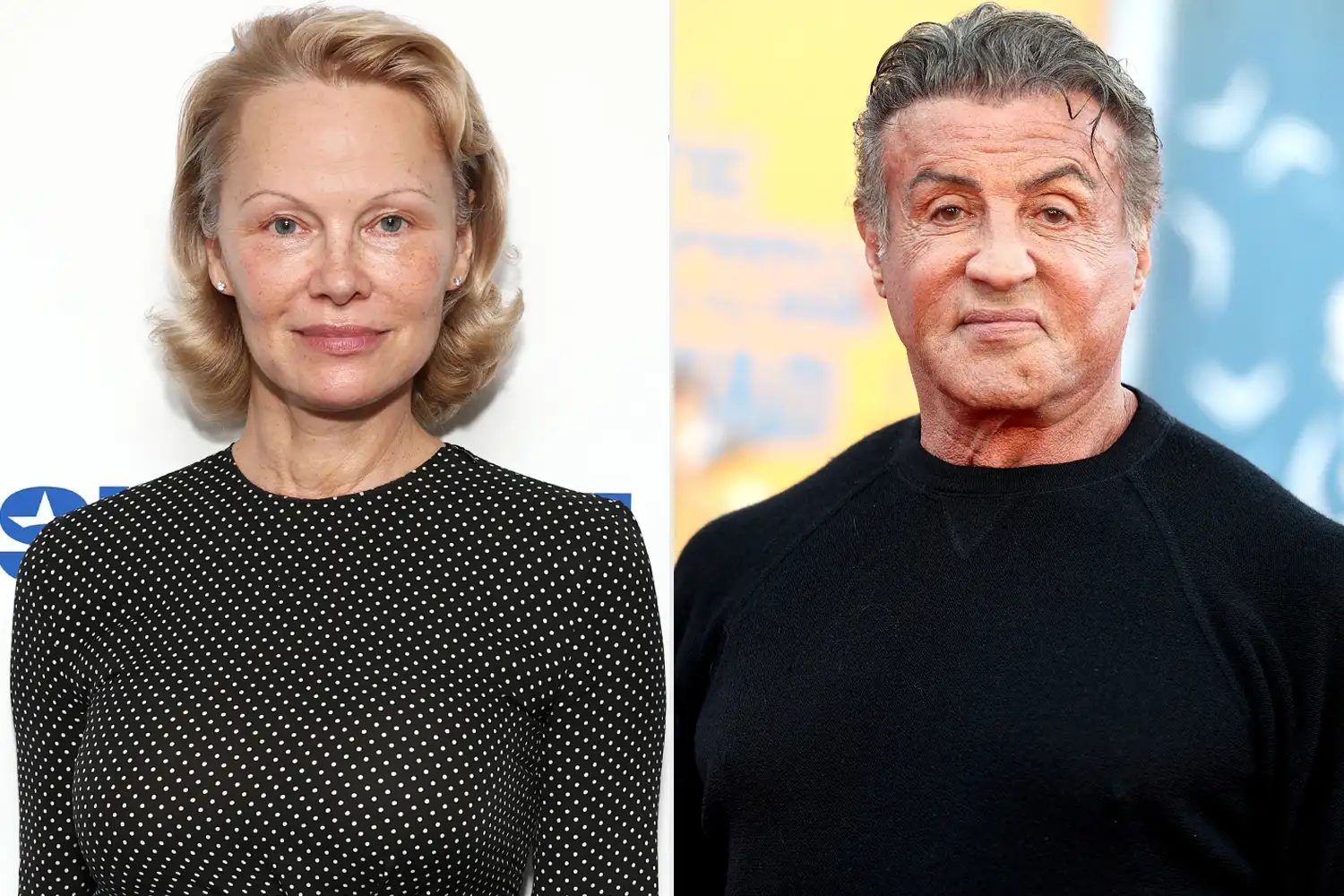
She remembers a Porsche and a penthouse. He remembers nothing of the sort. Somewhere in the haze of Hollywood’s high-gloss mythmaking, Pamela Anderson and Sylvester Stallone are locked in a quiet war over a past drenched in perfume, power, and possibly, propositions.
The claim is sultry and cinematic—Anderson, in a Netflix documentary and more recently a memoir, alleges Stallone once offered her a Porsche and a condo to be his “No. 1 girl.” Stallone, ever the brass-knuckled straight-talker, denied it swiftly: “It’s false. It never happened.” But the deeper mystery isn’t about what did happen—it’s about why we’re all still listening.
Glitter, Gaslight, and the Golden Era That Won’t Die
There’s something endlessly magnetic about watching two cultural relics spar over memory. Anderson, the eternal bombshell, has been masterfully recasting her public image—from caricature to curator of her own mythos. Stallone, meanwhile, clings to his gravel-voiced legacy, somewhere between legend and liability. The alleged offer sounds more like a scene from The Player than real life—but that’s exactly why it matters.
“Hollywood men didn’t ask. They offered,” one former studio publicist told me in a whisper that belonged more to 1996 than 2025. And in that glitzy context, Anderson’s claim isn’t a bombshell—it’s banal. The shocking part is not the allegation but how confidently it was packaged. Not in a courtroom, not in a tabloid, but in a documentary where she controls the lighting.
What’s unfolding here isn’t a scandal—it’s a negotiation of history, and Anderson is laying claim to her slice of it.
When Memory Becomes Marketing
This isn’t the first time we’ve seen a woman reclaim a story a man thought he’d buried under muscle, box office receipts, and charm. But it may be the most stylishly quiet. The media storm feels more like a ripple—chic, calculated, and oddly reflective of a post-#MeToo Hollywood that talks about change but still loves the thrill of vintage drama.
Is this just another memory molded by celebrity, then polished into brand gold? Possibly. But the real question is whether Anderson’s recollection is a weapon—or a mirror. “I’ve never needed to be anyone’s girl,” she said in an interview laced with defiance, grace, and something else—maybe revenge.
In this moment, it doesn’t really matter if Stallone made the offer. What matters is who’s narrating the past, and who gets to sell the ending.
And so we return to the Porsche. Was it ever real, or was it just the perfect symbol of 90s seduction—fast, shiny, transactional? Somewhere between the driver’s seat and the doorman’s smile lies a truth we’ll never fully reach. But maybe that’s the most Hollywood thing of all.





When Mercy Meets Tragedy: The Widow Who Forgave Her Husband’s Killer
The air thickens when forgiveness enters a room meant for grief. Imagine...
 Chris Marks1 Mins read

When Fear Became a Lifeline: Pete Davidson’s Reckoning in Rehab
There’s a silence that follows a mother’s voice when she confesses her...
 Joseph Bennett1 Mins read

Pete Davidson’s mom told him in rehab worst fear was learning he died
Pete Davidson is opening up about the heartbreaking moment he had with...
Chris Marks2 Mins read

Katie Couric’s Unexpected Spin on Sydney Sweeney’s American Eagle Ad: What’s Really Being Said?
Katie Couric stepping into a scene dominated by Gen Z glamour feels...
Krista Freeland2 Mins read





Leave a comment