

The Paris Match: What Happens When a Romance Novelist Escapes the Script
Kate Clayborn is taking her heroines where most writers fear to tread—across borders, across genres, and across the idea of what a “romance” should look like. The result? A seductive collision between fantasy and modern femininity.
 Joseph BennettAugust 5, 20252 Mins read37

She didn’t just write another love story. She lit a match in the cobblestone streets of Paris and tossed it into the genre itself.
Kate Clayborn, beloved by romantics and skeptics alike, has returned—but this time with a passport in one hand and something just slightly dangerous in the other. The Paris Match, her upcoming novel set in France, isn’t just a charming summer read. It’s a transcontinental experiment. An act of subversion. A flirtation with discomfort disguised as escapism. In the hands of Clayborn, Paris isn’t postcard-pretty. It’s precarious, as all good love stories are.
We’ve grown used to romance novels that stay tightly corseted within familiar tropes—grumpy/sunshine, second chance, enemies-to-lovers—all of which Clayborn can write in her sleep. But what happens when an author known for domestic warmth flings open the windows and lets in the European air, the uncertainty, the un-American mess?
A Love Letter with Edges
The cover of The Paris Match, unveiled recently, leans into the dreamy palette we expect—yes, there’s a woman, a cityscape, a color story. But behind the illustration is a question that Clayborn has long teased but never dared to fully ask: What if the happy ending doesn’t mean staying put?
Romance, as an industry, loves boundaries. Readers expect them, publishers protect them, and writers, often reluctantly, obey them. But Clayborn is inching away from the cozy confines of the genre—not with a bang, but with the soft insistence of someone who knows love doesn’t always look the same in a different language. “Romance doesn’t mean static,” she’s hinted in interviews. “It means movement. Sometimes literal.”
France, in this context, becomes more than a setting. It’s a dare. A metaphor for reinvention. And maybe—just maybe—a way for the author to test how far her readers will follow her.
From Cozy to Cosmopolitan
Why is this shift so compelling? Because it’s not just about a plot twist. It’s about authors—especially female ones—refusing to be domesticated by their own success. The pivot to a European setting reads like a career rebellion, cloaked in cobblestones and café lights. It says: I can be loved and still be restless.
Clayborn isn’t the first romance author to set her sights on Paris, but she might be the first to use it as something other than a backdrop. Her heroines aren’t tourists. They’re trespassers in their own lives, navigating culture shock, emotional displacement, and the uncomfortable awareness that real love, like travel, changes you permanently.
And in an industry that often trades on formula, change is risky. But Clayborn has never been a writer to coast. Her novels hum with emotional detail and nuance, often allowing her protagonists space to not know—to falter, to contradict themselves, to want things that don’t make sense on paper.
In other words, they’re human.
Clayborn’s France is not for the faint of heart. Nor is this book.
But that’s the thrill of it. You don’t read The Paris Match to be comforted. You read it to be asked: What parts of your life are you willing to leave behind in order to become yourself?
She may have left behind the traditional bounds of the genre, but what she’s found in return feels bolder, more alive, and eerily timely. Because maybe love—like literature—only works when it’s brave enough to cross borders.
And isn’t that the most dangerous match of all?







When “107 Days” Meets Outcry: Harris’s Book Tour Interrupted
The microphone crackled to life, and before Harris could finish her opening...
 Chris Marks1 Mins read
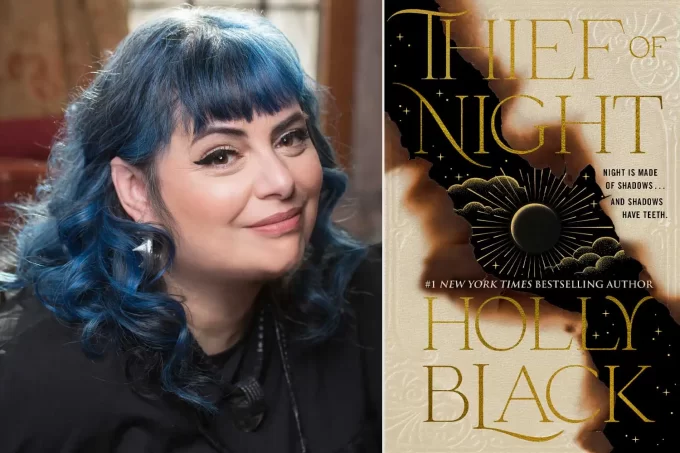
Whispers in the Shadows: Why Holly Black’s Sequel Is a Dark Invitation We Can’t Ignore
The night isn’t just dark—it’s ravenous, greedy, and it’s coming for you....
Chris Marks2 Mins read

Why Stephenie Meyer’s Regret About Edward Changes Everything You Thought You Knew
The moment Stephenie Meyer admitted she wouldn’t pick Edward Cullen today, a...
Chris Marks2 Mins read

When Fear, Fury & Feathers Collide: Cinema, Superheroes, and a Confessional Album
Open with tension—the kind that threads through a scream, a reveal, and...
Chris Marks2 Mins read





Leave a comment