

Two Innings and a Disappearing Act
The Chicago Cubs acquired Michael Soroka in a hopeful trade deadline move—then watched him vanish back to the IL before the popcorn got cold. Is this just bad luck, or baseball’s quiet curse?
 Chris MarksAugust 5, 20252 Mins read12
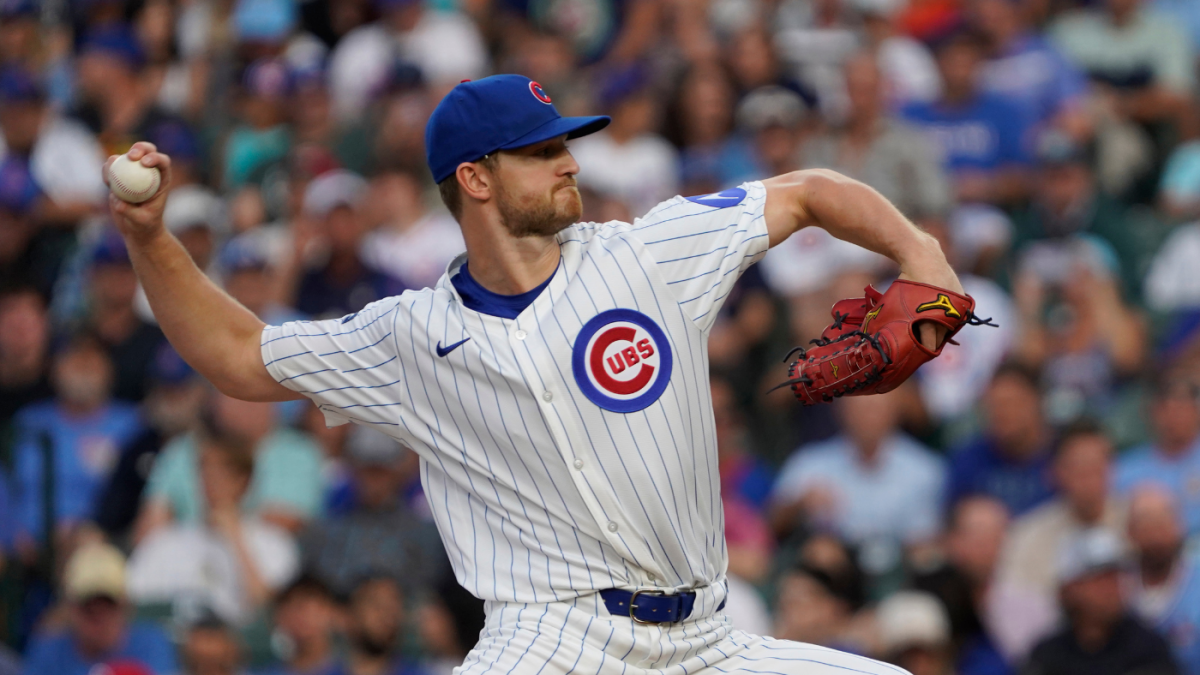
You could blink and miss it. Two innings, eleven batters, a quiet grimace, and then the exit. Michael Soroka—newly minted Cub, recently rescued from baseball’s forgotten shelf—pitched what might be the shortest arc in trade deadline history. A debut? Technically, yes. A statement? More like an ellipsis.
There was no cinematic roar, no chest-thumping, no glory. Just a whisper of shoulder discomfort and a slow walk toward the dugout that felt less like a routine substitution and more like a retreat from hope itself. In the background: an aching franchise, a confused fanbase, and the echo of one question that baseball never stops asking—how many second chances can one arm take?
The Fragile Theater of the Trade Deadline
Soroka didn’t arrive in Chicago wearing a cape. He didn’t need to. His story had enough pathos: a once-electrifying arm derailed by an Achilles, then another, then a long litany of baseball’s quietest violence—discomfort, swelling, rest, hope, rehab, re-injury. By the time the Cubs landed him, he was no longer a name but a narrative.
The trade wasn’t just about performance—it was about belief. That maybe, just maybe, he could rewrite a script that seemed permanently stuck in the second act. But the thing about hope in baseball is that it ages fast. And in Wrigleyville, where romanticism dies with every August loss, patience is as brittle as the bullpen.
One scout reportedly called Soroka “a classic risk-reward arm.” But what is that really? A euphemism for fragility? A poetic way of saying we don’t expect him to last?
What Happens When the Comeback Is a Mirage?
There’s a certain cruelty to how baseball handles broken bodies. The game demands myth but trades in injury reports. You’re either the comeback story or the cautionary tale. There is no middle. Soroka, once again on the IL, now finds himself suspended in that painful middle ground—talented enough to be needed, unreliable enough to be doubted.
The Cubs’ front office might call it “just a precaution.” A phrase designed to cool headlines and comfort fans. But even that sounds hollow when said in the same breath as “shoulder discomfort.” Not Achilles this time, not calf, not finger. Shoulder. The origin of the pitch. The core of the craft. The death knell disguised as soreness.
Baseball rarely mourns these moments in public. There’s too much schedule to fill, too many arms in waiting. But you wonder, quietly, what it must feel like to be Michael Soroka—believed in and let go of in the same week. To go from acquisition to absence before the clubhouse even learns your coffee order.
—
He came, he threw, he left. There is a metaphor in that. Or maybe just a warning. About how fast this game moves. About how quickly it forgets.
And as the Cubs stumble back into their season, bruised and guessing, the question lingers in the dugout air like humidity: was this bad luck—or did we just witness the final chapter pretending to be a fresh start?





Barcelona’s Fragile Pursuit: When Injuries Threaten More Than Just a Season
A silence spreads over Camp Nou that no roar can drown out—two...
Chris Marks2 Mins read
William Saliba: Arsenal’s Silent Architect or Its Greatest Gamble?
The air inside the Emirates shifts with unspoken tension—William Saliba, once a...
 Joseph Bennett2 Mins read
Joel Embiid’s Quiet Confidence: Is the 76ers’ Giant Ready to Rewrite His Story?
Joel Embiid is rarely one to make noise without purpose, and now,...
 Kirsten Collins1 Mins read
Juventus, Atalanta, and Arsenal’s Quiet Revolution: What’s Really Shaping This Week in Football?
The roar of Serie A stadiums masks a subtle shift, one that...
Kirsten Collins2 Mins read




Leave a comment