

Almost Isn’t Nothing: Alexandra Eala and the Art of the Near Win
She came close. Too close. But in the space between victory and defeat, Alexandra Eala may have found something more enduring.
 Joseph BennettMarch 28, 20251 Mins read36
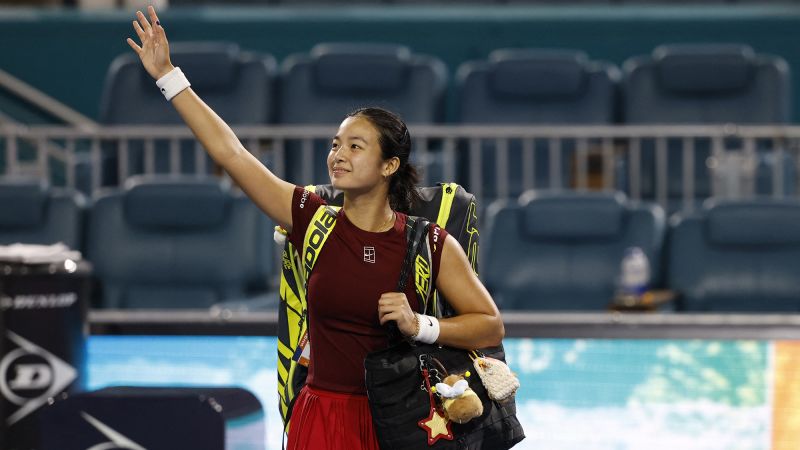
She didn’t leave the court in tears. She left in silence. Alexandra Eala, the Filipina teenager who had electrified the Miami Open, walked off not as a loser, but as a revelation. Her narrow defeat to World No. 5 Jessica Pegula wasn’t the end of a fairy tale—it was the start of a question. What happens when a nation’s hope is wrapped inside a teenager’s racket?
For three rounds, Eala danced with giants and didn’t flinch. Her presence, magnetic. Her game, knife-sharp. And then came Pegula—a player twice her age, with a résumé stacked like skyscrapers. The result? 7-5, 4-6, 6-3. A fight. Not a fluke. Not a collapse.
When a Loss Looks Like a Flag
Alexandra Eala isn’t just playing for herself. Every serve carries the weight of a country that has waited too long for a seat at tennis’s global table. In her footwork, there’s discipline. In her backhand, defiance. And in her eyes—an echo of something larger: representation, yes, but also resistance. Against obscurity. Against expectation. Against limits.
The commentators called her fearless. But they missed something. Eala isn’t fearless—she’s aware. Aware of the cameras. The weight of the moment. The crackling hum of being almost the story. That kind of awareness can break a player. Or build a myth.
Pegula may have won the match, but Eala made the court feel like Manila.
The Sound of Almost
The hardest thing to hold in sports is “almost.” It lingers. It scratches. But it also teaches. Eala now knows she can go toe-to-toe with the best, not in junior courts, but on the big stage. What she’ll do with that knowledge is the real story. And we’re just at Chapter One.
She didn’t win the Miami Open. But perhaps she won something else—a place in the global conversation, the murmur of a movement. And in time, when the spotlight returns, we might look back and say: That’s when the air shifted.
Because sometimes, almost isn’t nothing.
It’s everything before it becomes something.








“De Minaur’s Confession: The One Shot He Covets from Alcaraz”
In the world of tennis, where every stroke is a testament to...
 Chris Marks1 Mins read
Alcaraz’s Night Sessions: Spotlight or Strategy?
The Philippe Chatrier court gleams under the Parisian lights, its retractable roof...
Joseph Bennett1 Mins read
“Caroline Garcia’s Hell Unveiled: A Love Story of Triumph and Turmoil”
In the glimmering world of professional tennis, where every serve and volley...
 Krista Freeland1 Mins read

Djokovic’s 21-0 Enigma: Is Roland Garros His Personal Labyrinth?
The Philippe Chatrier court stands silent, yet Novak Djokovic’s presence reverberates through...
Krista Freeland1 Mins read





Leave a comment