

Aubrey O’Day’s Raw Reaction to the Diddy Verdict: A Mirror to Our Collective Unease
When the verdict came down in the Diddy trial, Aubrey O’Day’s physical illness was more than shock—it was a symptom of a deeper cultural fracture. What does her reaction reveal about the unseen toll of public justice?
 Chris MarksJuly 2, 20252 Mins read24

There’s a moment when the weight of a verdict does not just settle in courtrooms but spills violently into the bodies of those watching. Aubrey O’Day’s confession of feeling physically ill after the Diddy trial verdict cuts deeper than headlines—it fractures the veneer between public spectacle and private trauma. What are we really witnessing when fame, justice, and pain collide?
O’Day’s vulnerability is disarming. It’s not just a reaction; it’s a raw, unfiltered expression of collective discomfort that rarely surfaces amid the polished soundbites and staged sympathies. In this silence, we confront something unsettling: how justice—especially when tangled with celebrity—resonates far beyond legal texts and courtroom walls.
The Invisible Pulse Beneath the Verdict
Her reaction forces us to question what it means to be a bystander in a spectacle where justice is filtered through the lens of notoriety. How often do we overlook the psychological toll on those entwined in these narratives, either directly or through the cultural osmosis of media saturation? Aubrey’s physical illness feels like a metaphor for an exhausted public psyche—one that’s endlessly processing but rarely healing.
“I never thought I’d feel this way over something like this,” O’Day admitted in a recent interview, her voice carrying the weight of something unspoken. Is her sickness a personal response, or a symptom of a larger social malaise—the weariness of watching power play out in courtrooms while truth remains elusive?
The Theatre of Justice and Celebrity
The Diddy verdict is not just a headline; it’s a moment in the ongoing drama where celebrity culture and judicial process entwine and blur. What do we sacrifice when trials become media circuses? When the accused is also a brand, the courtroom becomes a stage where legal and public opinion perform a dangerous dance.
This is the question that hangs in the air after O’Day’s visceral reaction. Who truly wins when verdicts are dissected in public, emotions amplified, and real consequences swallowed by spectacle? Her moment of weakness challenges us to reconsider the toll such public reckonings extract—not just from those involved, but from society itself.
Justice may have spoken, but its echoes are far from clear. As Aubrey O’Day’s trembling response reminds us, the story doesn’t end when the gavel falls—it’s only just beginning to unravel.






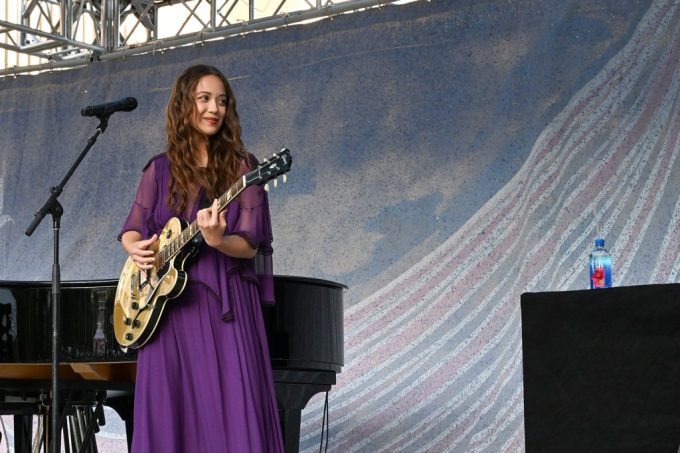
Laufey’s Opening Night Show at LA’s Crypto.com Arena: Best Moments
Laufey opened a two-night stand at Crypto.com Arena in downtown Los Angeles...
Chris Marks6 Mins read
Julie Adam Is Billboard Canada Women in Music’s 2025 Exec of the Year
Julie Adam is having a milestone year — and it’s getting even...
Chris Marks4 Mins read
Spinal Tap Tribute Album with Foo Fighters,Tool for Teen Cancer America
Spinal Tap may be a fake band, but its music is very...
Chris Marks2 Mins read

AxMxP Is K-Pop Rookie of the Month for September: Exclusive Photos
Ha Yoo Joon Image Credit: Chin Soyeon You debuted on Sept. 10....
Chris Marks2 Mins read




Leave a comment