

Awoniyi’s Silence: What’s Hidden Behind the Surgery?
Taiwo Awoniyi’s recovery from abdominal surgery raises more questions than answers—what’s really at stake in this seemingly routine procedure? As the striker recovers, his future—and that of his team—hangs in the balance.
 Krista FreelandMay 16, 20252 Mins read25
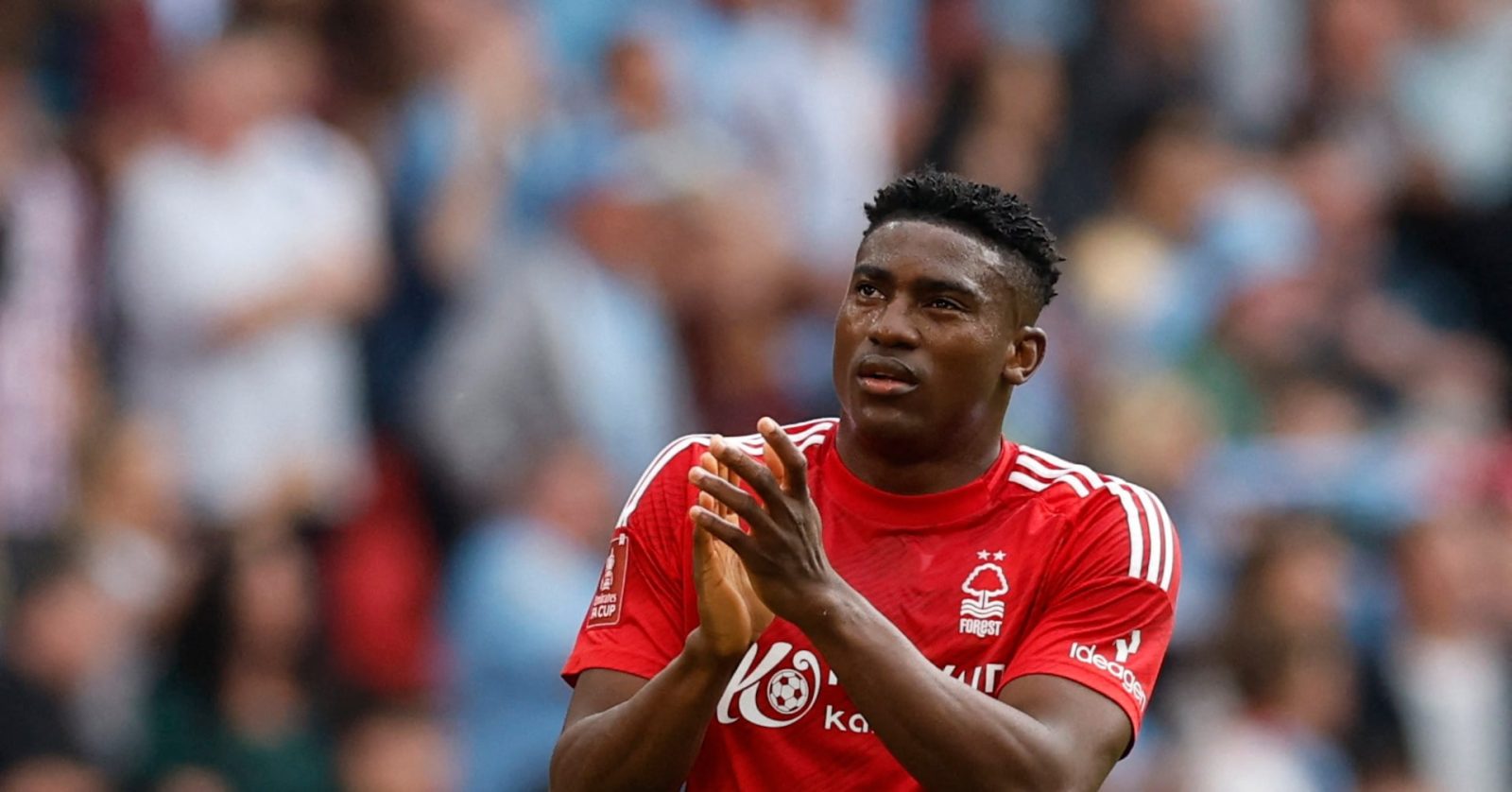
The news came quietly, almost too quietly for a player of Taiwo Awoniyi’s caliber. “Recovering in hospital after abdominal surgery,” the reports said. No more details. No further explanation. In a sport where every move, every word, every treatment is dissected, why the silence? What’s lurking behind this seemingly simple recovery?
The club’s manager, Espirito Santo, spoke briefly of Awoniyi’s status, confirming the surgery and assuring fans the player is “recovering well.” But when the cameras turned off and the press conferences ended, one question lingered: What exactly was done, and what is the real toll on Awoniyi’s body? The truth lies somewhere between the clinical words of a coach and the hushed whispers of the locker room.
What They’re Not Saying
Surgery, even the “routine” kind, is never just a procedure. Especially for a footballer. The stakes are always higher when it’s your body—your career—that’s being repaired. Abdominal surgery, for example, is a delicate affair. The core is where everything starts. Balance, power, speed. So, why would a player like Awoniyi, who seems to have been in the peak of his form, suddenly find himself under the knife?
This isn’t a small knock. This isn’t just a “few weeks on the sideline” situation. This is a procedure that raises suspicion. The timing alone is enough to make you pause. Football seasons are ruthless—every match is a battle, and the line between injury and fitness is razor-thin. Could this surgery be the sign of something more serious? Or is it merely a sign of a much more fragile reality that all athletes must face?
The Hidden Costs of Recovery
Awoniyi’s recovery isn’t just a personal battle. For his team, his absence represents a vulnerability that they must now learn to cope with. Every player’s injury is a crack in the foundation, a reminder that no team is invincible, no individual a machine. Espirito Santo’s carefully chosen words seem to dance around this truth. “He is doing well,” he says. But what does “doing well” really mean when the pressure is mounting, and the stakes are rising?
A player of Awoniyi’s talent is more than a striker; he’s a symbol. His absence could have deeper consequences than we’re being led to believe. Does his surgery signify the beginning of a chain of injuries, a slow unraveling of a career? Or, will he emerge from this as a stronger player, the surgery merely a small detour on the path to greatness?
A Question of the Future
The thing about recovery is that it’s never just physical—it’s mental too. As Awoniyi rests in the quiet of a hospital room, he is likely facing an internal battle that goes unnoticed by most. The uncertainty of a comeback. The fear of a recurring injury. The weight of the expectations that will follow when he returns. It’s a complicated dance: to heal, but to never forget that every recovery brings you one step closer to another possible setback.
What will his future look like? Will we see the same player emerge from this period of rest and healing? Or has this procedure opened up a Pandora’s box of questions about the longevity of his career?
The true nature of Awoniyi’s injury and recovery may never be fully revealed. But, as we wait, we must ask ourselves: How many stories like this are hidden in plain sight? And what do we really know about the cost of success in the unforgiving world of football?






Barcelona’s Fragile Pursuit: When Injuries Threaten More Than Just a Season
A silence spreads over Camp Nou that no roar can drown out—two...
 Chris Marks2 Mins read
William Saliba: Arsenal’s Silent Architect or Its Greatest Gamble?
The air inside the Emirates shifts with unspoken tension—William Saliba, once a...
 Joseph Bennett2 Mins read
Joel Embiid’s Quiet Confidence: Is the 76ers’ Giant Ready to Rewrite His Story?
Joel Embiid is rarely one to make noise without purpose, and now,...
 Kirsten Collins1 Mins read
Juventus, Atalanta, and Arsenal’s Quiet Revolution: What’s Really Shaping This Week in Football?
The roar of Serie A stadiums masks a subtle shift, one that...
Kirsten Collins2 Mins read




Leave a comment