

When Leonardo DiCaprio “Fails” His Stunts: The Art of Intentional Flaw
In One Battle After Another, DiCaprio admits he often missed his stunts—because his character isn’t meant to be flawless. What happens when failure becomes the point?
 Joseph BennettSeptember 26, 20251 Mins read72
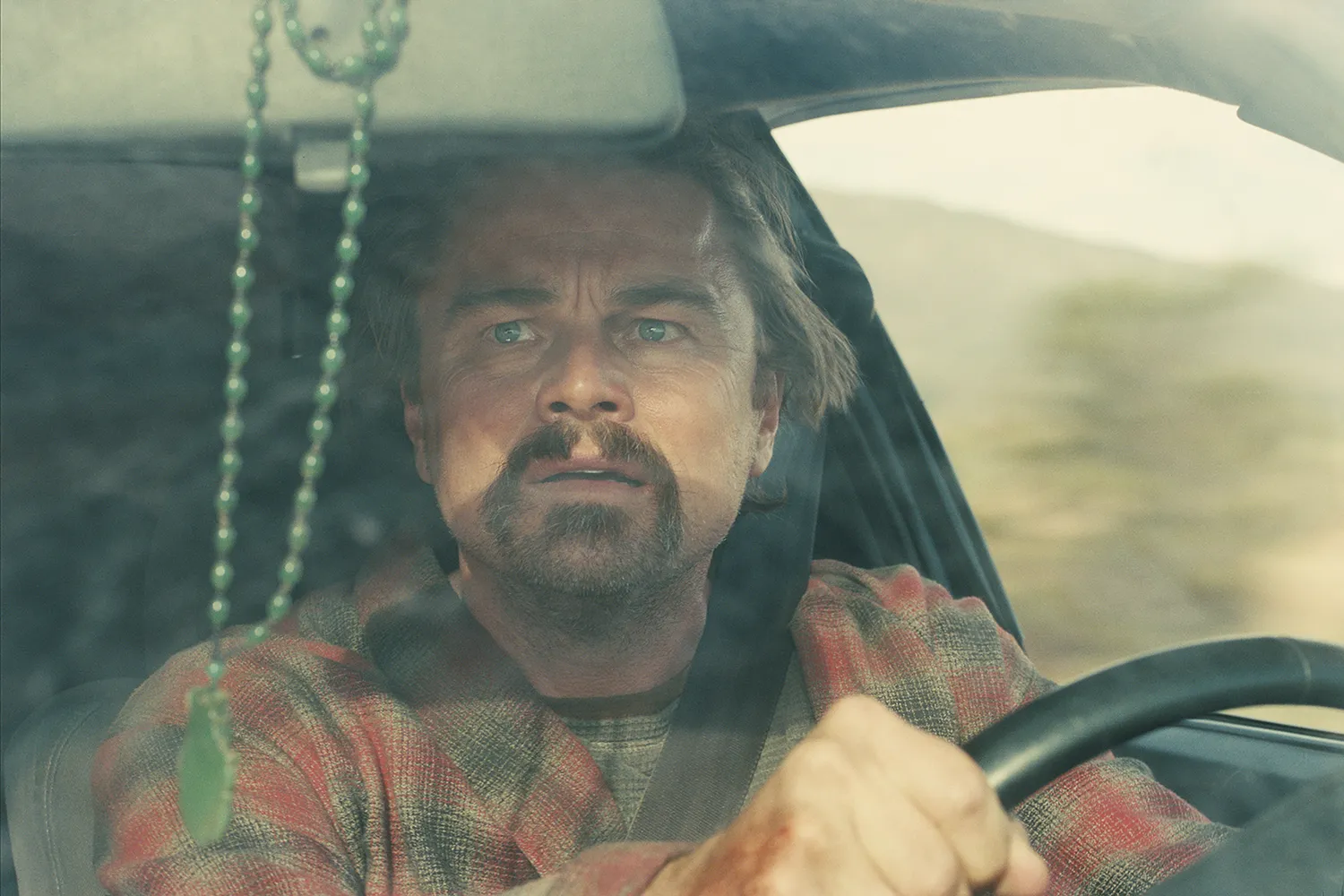
He laughs when asked: “I didn’t land a lot of my stunts.” The joke ripples with contradiction. In a film built on action and rescue, its lead admits failure. DiCaprio’s character, Bob, isn’t a warrior—he is a man flailing, falling, scrabbling. And that decision slices through the muscle‑bound syntax of typical action films.
In his interview, he frames it bluntly: “My character often fell … being an action hero is not Bob’s superpower.” The role is a deliberate inversion: Bob does not stick landings. He does not glide. He stumbles. That imperfection becomes a performance choice. The film, One Battle After Another, written and directed by Paul Thomas Anderson, centers a fragmented ex‑revolutionary who must reenter a violent world to recover his daughter. The mythology of heroism is cracked.
This is not humility; it’s method.
When the Fall Speaks Louder
We’re used to watching protagonists succeed in gravity. The jump sticks. The fight scene resolves. The stunts execute. But Bob’s failure redeems more than perfection. Every missed landing draws us deeper: not into the spectacle, but into a flawed humanity. In refusing mastery, the film reclaims stakes. The hero is wounded, not invincible.
DiCaprio compares Bob to “the opposite of Tom Cruise in Mission: Impossible,” quipping, “Bob does everything wrong.” It’s an audacious claim for a film that still demands tension, leaps, rescues. What bridges the gap between spectacle and failure is intention. DiCaprio’s admission feels less an apology than a manifesto.
Power in the Unpolished
To submit to failure is to reject control. It’s to let your hero’s limits broadcast themselves. Anderson’s direction, notorious for embracing mess, seems well matched. One Battle After Another is ambitious: 162 minutes, sprawling scope, rooted in political distrust and personal collapse.
Yet the miss carries a price. Some critics whisper that the film is overstuffed, that its reach exceeds its grip. When you let your hero fall, you risk alienating the audience. But perhaps you also challenge them: to root not for perfection, but survival.
I stepped out after screening, the action still echoing. The hero fell—over and over—but across each fall I felt the tension change. Failure wound deeper than success ever would.
Will we remember the stunts he landed—or the ones he couldn’t? In cinema, imperfection can be the sharpest signature.





How Much Money Does She Have Now? – Hollywood Life
Image Credit: WWD via Getty Images Rihanna may be known as one...
 Kirsten Collins2 Mins read
Stars Who Slammed ‘Love Story: JFK Jr. & Carolyn Bessette’: Statements – Hollywood Life
Image Credit: Getty Images FX’s Love Story: John F. Kennedy Jr. and...
Kirsten Collins2 Mins read
Find Out Release Date, Cast, Plot Details & More – Hollywood Life
Image Credit: Courtesy of Amazon Freevee After its breakout first season, Jury...
Kirsten Collins2 Mins read
What We Know So Far About the Pixar Sequel – Hollywood Life
Image Credit: Disney More than two decades after the original Monsters, Inc....
Kirsten Collins1 Mins read





Leave a comment