

The Art of Singing Badly: Bella Ramsey’s Beautiful Sabotage
Bella Ramsey, the breakout star of The Last of Us, was asked to “sing worse” for their acoustic cover of a-ha’s “Take On Me.” But was it a creative choice—or a quiet revolution?
 Chris MarksMay 6, 20252 Mins read37
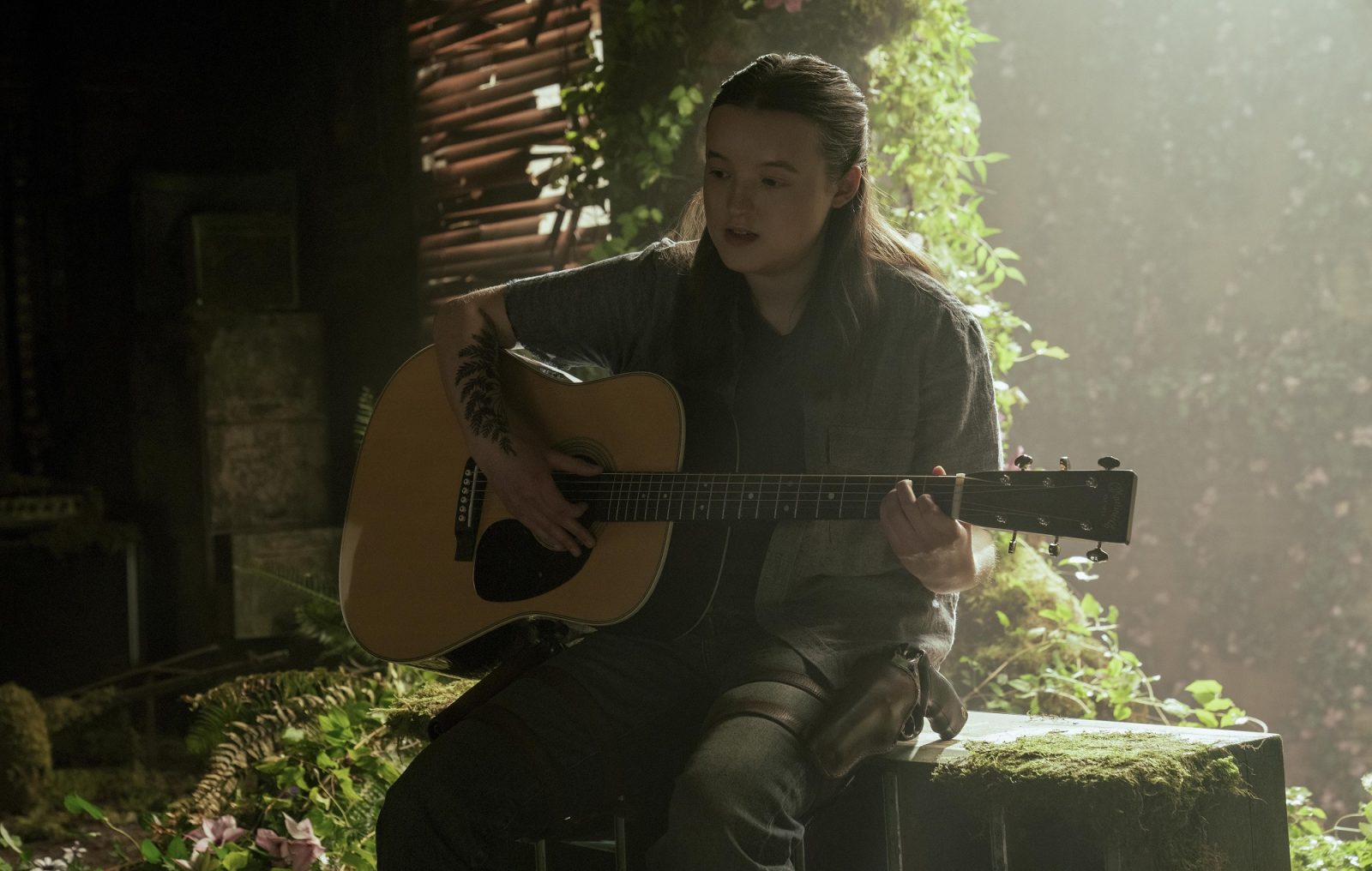
They asked Bella Ramsey to make it sound worse. And she did—deliberately, elegantly, and just slightly off-key, like someone humming their childhood into a broken tape recorder.
It was episode 7 of The Last of Us—a series already soaked in memory, trauma, and tenderness—when Ramsey, playing Ellie, sat down with a guitar and played Take On Me, the bittersweet anthem by a-ha. The scene should have been a moment of beauty. Instead, it became something rarer: a study in restraint. Or was it refusal?
The original version—polished, iconic, the synth-fueled sigh of the 1980s—is a cultural pillar. But Ramsey’s version was raw and stripped, caught between awkward adolescence and apocalypse. And then came the twist: we learned they could have sung it better. They were asked not to. A voice softened not by limitation, but by intention. Who makes a star dull their shine on purpose?
Muted Notes, Louder Meaning
The performance, ironically, sounded honest because it wasn’t flawless. It was scratchy and intimate, like a friend sharing a song at 2 a.m., not a character in a prestige drama. And that imperfection—crafted, not incidental—asks us to confront a question we rarely ask of on-screen music: why do we still equate technical polish with emotional truth?
“We had to find a balance between ‘Ellie trying’ and ‘Bella capable,’” said a source close to the production. The real trick? Making a trained actor unlearn instinct. Making a gifted performer play within the limitations of a character still discovering her own voice. There’s something uncanny, even subversive, in that.
By underplaying the moment, The Last of Us told a different kind of story. One that wasn’t about musicality or nostalgia or even romance—but about the fear of being vulnerable when the world has already taken everything else.
When the Echo Is the Message
This isn’t the first time pop songs have been re-contextualized into dystopian soundtracks. But Ramsey’s choice—and it was a choice, despite being directed—feels like a rebuttal to the prestige TV urge for cinematic neatness. It resists virality. It dares you not to quote it.
More than that, it plays into the larger, stranger emotional arc of The Last of Us itself: a world built on memory and ruin, where even a guitar can feel like a ghost. Ellie’s song is not performed for Riley, really. It’s performed for herself, in the dark theater of longing, where being heard and being known are not the same thing.
And now the internet, predictably, wants the “real” version. The better take. The pure vocals. But isn’t that the point? The one they didn’t give us is the one we’ve started to crave. As if flawlessness was the reward, and not the loss.
So what does it mean, then, to purposely fade a voice that could fill a room?
Maybe it means we’re finally ready to listen more closely. Or maybe it means we never really were.




Laufey’s Opening Night Show at LA’s Crypto.com Arena: Best Moments
Laufey opened a two-night stand at Crypto.com Arena in downtown Los Angeles...
Chris Marks6 Mins read
Julie Adam Is Billboard Canada Women in Music’s 2025 Exec of the Year
Julie Adam is having a milestone year — and it’s getting even...
Chris Marks4 Mins read
Spinal Tap Tribute Album with Foo Fighters,Tool for Teen Cancer America
Spinal Tap may be a fake band, but its music is very...
Chris Marks2 Mins read
AxMxP Is K-Pop Rookie of the Month for September: Exclusive Photos
Ha Yoo Joon Image Credit: Chin Soyeon You debuted on Sept. 10....
Chris Marks2 Mins read



Leave a comment