

Bluegrass and Propane
Billy Strings, the tattooed troubadour of new Americana, is reimagining the King of the Hill theme song for its revival. But beneath the twang lies a larger question: who gets to update America’s suburban hymn?
 Joseph BennettAugust 5, 20252 Mins read13
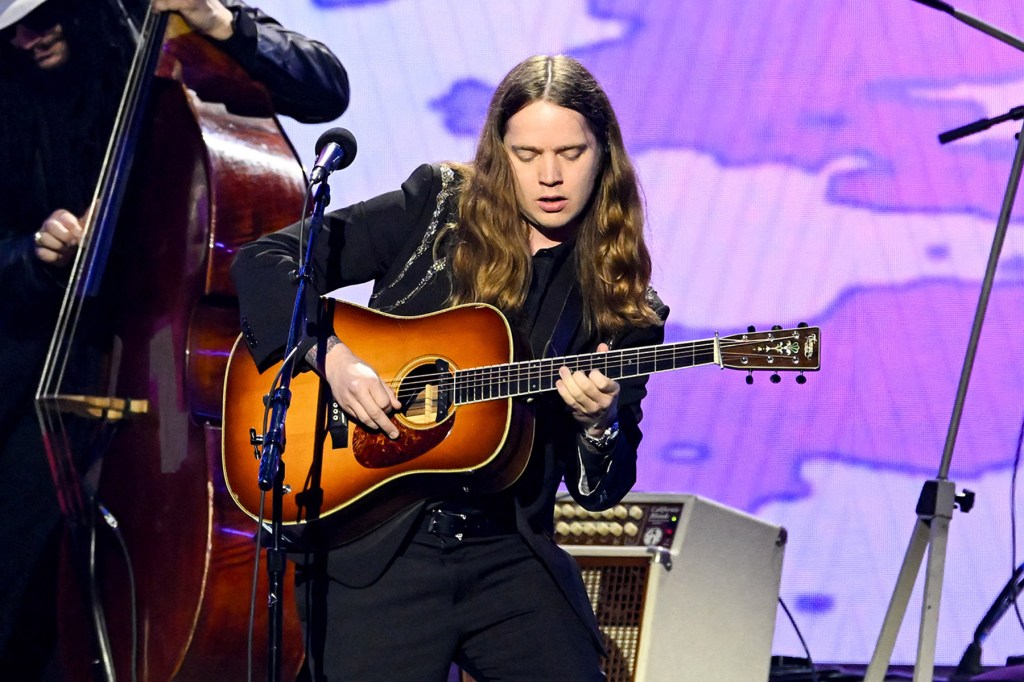
It begins the way most great American stories do—over the whine of an amplifier, the clink of a beer can, and the existential hum of Texas suburbia. King of the Hill, the deadpan symphony of lawn care and quiet masculinity, is back. But this time, it’s Billy Strings who’s holding the pick.
The Grammy-winning bluegrass prodigy—equal parts Hank Williams and Jack Kerouac—has been tapped to update the show’s iconic theme song for its revival. It’s a fascinating, if not slightly subversive, collision: a psychedelic picker with a cult following in jam-band circles now inheriting the sonic soul of America’s most understated animated show. The original theme was a punchy garage-band riff; Strings, by contrast, plays like a man whose fingers are translating ghosts.
Picking Through the Myth of Middle America
Billy Strings is not your average interpreter of nostalgia. He’s a Gen Z banjo bard raised on Metallica and Monroe, and yet somehow he’s managed to become the patron saint of a genre built on front porch shadows and Appalachian lament. His music isn’t polished—it’s blistered, bent, and unshaved. Which makes him, oddly, the perfect fit for King of the Hill, a show that never once tried to be cool, but always ended up sounding like truth.
The choice is symbolic. Because King of the Hill was never about Texas—it was about the people who stayed put when everything else changed. The guys who didn’t evolve so much as endure. And in a country now allergic to stillness, Hank Hill feels almost radical in his refusal to be remixed. “He’s a man of few words, and fewer hashtags,” one critic joked. But it’s true. Updating his soundtrack is like repainting a church: even if it’s beautiful, someone will accuse you of sacrilege.
Twang, Transmission, and the Politics of Sound
There’s a reason King of the Hill still resonates. It’s because the show never screamed for relevance. It whispered. And in an age where television increasingly resembles a TED Talk or an identity seminar, that kind of tonal restraint feels sacred. So when Billy Strings comes in—not to shout, but to strum—you listen.
His version of the theme hasn’t been released in full, but early reactions suggest a shift toward rootsier territory. Less rock, more roll. The electric has been replaced by the eternal. It’s a gamble. But isn’t that what revival actually is—a bet that memory and reinvention can coexist without erasure?
Billy, for his part, has remained characteristically humble. “I just wanted to honor it,” he’s said. And maybe that’s enough. Maybe we’re allowed to update our myths without torching them. Maybe tradition doesn’t live in the notes, but in the nerve it takes to play them differently.
—
In the end, the theme song is just 30 seconds. A riff. A bridge. A vibe. But in those seconds, you hear something unmistakably modern clinking against something undeniably ancient—like a propane tank being tapped by a tuning fork.
And that sound? That’s America, baby. Still awkward, still beautiful, and still trying to decide what music makes it feel like home.








Laufey’s Opening Night Show at LA’s Crypto.com Arena: Best Moments
Laufey opened a two-night stand at Crypto.com Arena in downtown Los Angeles...
 Chris Marks6 Mins read

Julie Adam Is Billboard Canada Women in Music’s 2025 Exec of the Year
Julie Adam is having a milestone year — and it’s getting even...
Chris Marks4 Mins read
Spinal Tap Tribute Album with Foo Fighters,Tool for Teen Cancer America
Spinal Tap may be a fake band, but its music is very...
Chris Marks2 Mins read

AxMxP Is K-Pop Rookie of the Month for September: Exclusive Photos
Ha Yoo Joon Image Credit: Chin Soyeon You debuted on Sept. 10....
Chris Marks2 Mins read




Leave a comment