

The Bruins Extend GM Don Sweeney: A Sign of Stability or the Final Missed Opportunity?
The Boston Bruins’ decision to extend GM Don Sweeney raises more questions than answers. While some see continuity, others are left wondering if this is the tipping point where a change was not only needed but inevitable.
 Joseph BennettMay 20, 20252 Mins read25
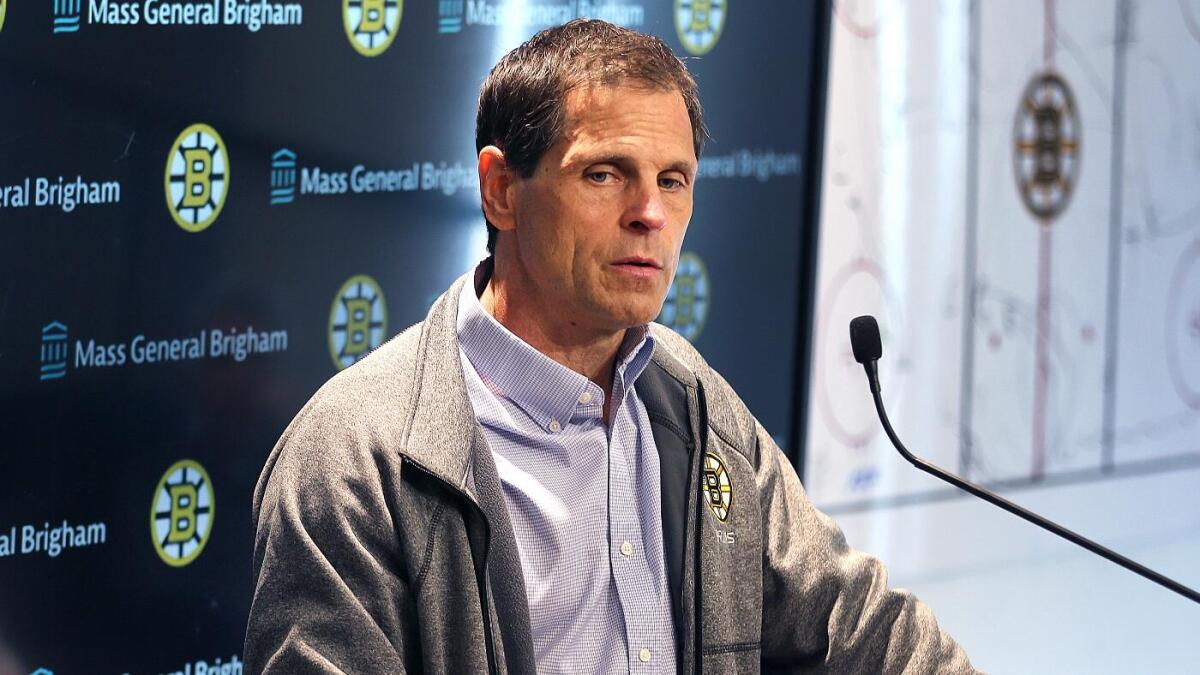
A year after the Boston Bruins’ historic regular season, Don Sweeney, the very architect of their roster, walks away with a contract extension. The timing couldn’t feel more off. If ever a general manager needed to be questioned, it was now, after a series of missteps, questionable personnel moves, and coaching decisions that led to a promising season crumbling prematurely. Why, then, is Boston so intent on keeping him around?
A Pattern of Mistakes or a Vision Misunderstood?
The decision to extend Sweeney defies logic—unless you subscribe to the idea that the Bruins’ front office is stuck in a loop of nostalgia and fear. Look back at his tenure. Sure, there have been some victories, some moves that seemed inspired at the time, but history has a way of shining a harsh light on failed gambles. Trading away players like Torey Krug and sending David Backes packing might’ve seemed like necessary moves, but in hindsight, they stand as cautionary tales.
The flaw isn’t just in the personnel; it’s in Sweeney’s approach to coaching as well. Despite assembling an elite squad that dominated in the regular season, his inability to mold the team’s potential into postseason success can’t be ignored. Instead of evolving the strategy, it often seemed like Sweeney clung to outdated tactics. So why, then, is the extension seen as a win for the franchise?
Continuity or Complacency?
Sweeney’s extension might be seen as stability, a management decision grounded in consistency. After all, the Bruins’ performance has been mostly strong under his leadership—regular-season dominance often translating into playoff contention. But a closer look reveals a more unsettling pattern: stability has been confused with complacency. The Bruins’ front office hasn’t just accepted mediocrity; it has cultivated it. When a team is consistently talented but lacks the necessary edge to make that final leap, it suggests a disconnect between leadership and the true potential of the roster.
There’s a fine line between vision and stubbornness—and it seems Sweeney has spent too much time on the wrong side of that line. “In this business, you either evolve, or you die,” said an anonymous source within the organization, their voice tinged with frustration. The Bruins, as a team, have evolved—Sweeney, it seems, has not.
The Perils of Being Right in the Wrong Moment
It’s easy to get caught up in the short-term vision, especially when the team is regularly competitive. Sweeney’s commitment to his long-term plan has often meant making moves that sacrifice the immediate future for a promise of greater things ahead. But the problem lies in the fact that, in sports, promises are just another form of deception. Fans and analysts alike are left wondering: how long can you bank on potential before that very same potential starts to rot away? Will this extension mark a final opportunity for Sweeney to show he can lead the Bruins to the promised land, or will it simply highlight his reluctance to change in a sport that thrives on it?
As Boston’s front office prepares to move forward, one question remains: Is Don Sweeney the answer, or is he just the next mistake dressed up as a solution? Time will tell, but in sports, sometimes waiting for the right answer can be the most costly decision of all.







Barcelona’s Fragile Pursuit: When Injuries Threaten More Than Just a Season
A silence spreads over Camp Nou that no roar can drown out—two...
 Chris Marks2 Mins read

William Saliba: Arsenal’s Silent Architect or Its Greatest Gamble?
The air inside the Emirates shifts with unspoken tension—William Saliba, once a...
Joseph Bennett2 Mins read

Joel Embiid’s Quiet Confidence: Is the 76ers’ Giant Ready to Rewrite His Story?
Joel Embiid is rarely one to make noise without purpose, and now,...
 Kirsten Collins1 Mins read
Juventus, Atalanta, and Arsenal’s Quiet Revolution: What’s Really Shaping This Week in Football?
The roar of Serie A stadiums masks a subtle shift, one that...
Kirsten Collins2 Mins read





Leave a comment