

Deliver Me From Nowhere Doesn’t Want You to See Bruce Springsteen as a Legend—Just as a Man
Bruce Springsteen has long resisted biopics, but Deliver Me From Nowhere isn’t the typical tribute—it focuses on the haunted, solitary birth of Nebraska. This is a film that insists we witness doubt, anxiety, and authenticity before the roar.
 Krista FreelandSeptember 11, 20252 Mins read15
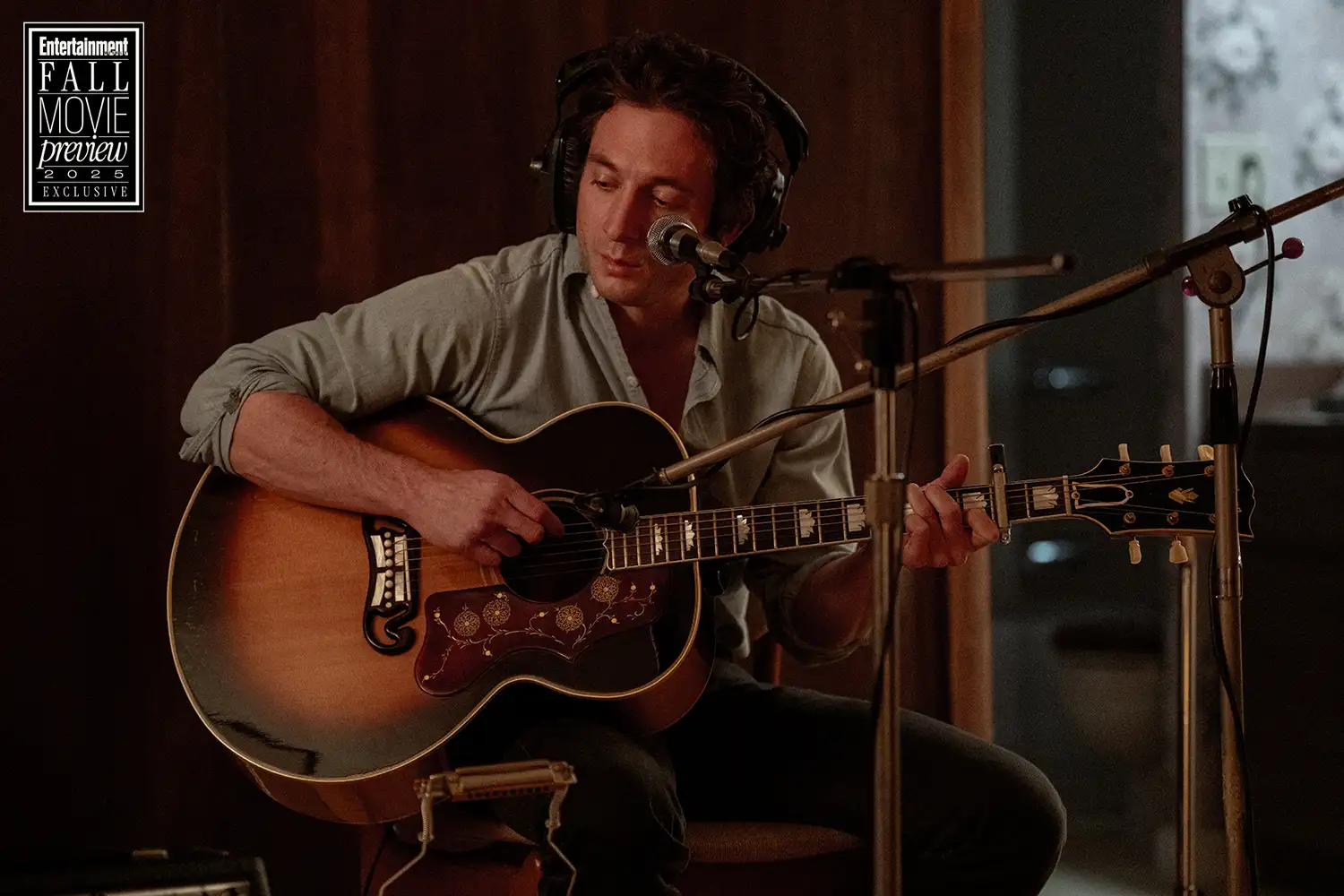
He sits in a rented house in New Jersey, alone at a four‑track recorder, staring at silence instead of screaming crowds. That is the frame Scott Cooper chooses for Deliver Me From Nowhere, a biopic that doesn’t want to mythologize Bruce Springsteen—but instead to pull away the myth.
Springsteen, now 75, agreed to this film under one condition: it must not be a glorification. It must strip away spectacle. He calls it—and Cooper echoes him—an “anti‑biopic”—a term that both resists and invites myth. The story winds through Springsteen’s early 30s, as he wrestles with depression, with echoes of boyhood, with the heavy hum of expectation just after The River and before Born in the U.S.A.
Behind the Silence, the Storm
It’s Nebraska that anchors the story: that stark collection of songs meant originally as demos, recorded in solitude, “dirty,” minimalist, in a rented house. Cooper decided to focus on Nebraska because there lies the tension between what Springsteen became—the stadium anthem maker—and what he felt driven to be: a truth‑speaker, even when truth is small, even when only the walls in a house and a single recorder bear witness.
The film is not about denying Born in the U.S.A.; instead, it gestures toward what was being built underneath, in the shadows. Springsteen himself admits that Born in the U.S.A. was “not necessarily the album he was interested in making” at that moment—he had visions closer to Nebraska, stripped down, raw.
The Weight of the Unseen
Jeremy Allen White plays Springsteen, not as a larger‑than‑life icon, but as a man tired, haunted, listening to his own echo. Cooper, his director, borrowed from Springsteen’s objects—clothes, guitars—in order to inhabit that moment so fully that the boundary between actor and memory shakes. Their goal: not a grand sweep, but something interior. Quiet rooms. Hesitations. The fear behind the recording.
Then there’s Jon Landau, manager and confidant, portrayed by Jeremy Strong, who in this film is more than background: he’s equal parts anchor and mirror. There is a sense this film could have drown in sentiment; instead, it climbs out of it—by admitting that the internal storms Springsteen weathered are messy, unresolved. They don’t lead cleanly to victory; they lead to Nebraska.
Springsteen once told Cooper he didn’t want the myth. He wanted truth. That meant letting audiences see the guy who fights depression, who doubts, who builds songs in silence before they become something else. When the film releases October 24, we’re not being offered the roar of the stadium. We’re being invited into whisper.
What does it mean, then, to admire someone for their vulnerability rather than their fame? When the banging guitars come, will we still hear the voice that trembled before he sang? And in that tremble, find something more real.








When Are the Oscars 2026? Date of the Academy Awards – Hollywood Life
Image Credit: AFP via Getty Images The Oscars are officially on the...
 Kirsten Collins1 Mins read

Ticket Prices & Presale Details – Hollywood Life
View gallery Image Credit: Dave J. Hogan/Getty Images Harry Styles is embarking...
Kirsten Collins2 Mins read

Where Is Lawrence Jones on ‘Fox & Friends’? Health Update Amid Hiatus – Hollywood Life
Image Credit: Getty Images Fans of Lawrence Jones, a Fox & Friends...
Kirsten Collins1 Mins read

Who Is Lexi Minetree? 5 Things to Know About the ‘Elle’ Series Actress – Hollywood Life
View gallery Image Credit: Getty Images for Hello Sunshine Lexi Minetree plays...
Kirsten Collins2 Mins read





Leave a comment