

Cam Ward’s Collision Course: When a Rookie Moment Becomes a Warning Shot
The NFL has its rites of passage—but what happens when a rookie’s first real test is less about football and more about timing, narrative, and optics? Cam Ward’s debut moment didn’t just arrive—it announced itself.
 Joseph BennettAugust 7, 20252 Mins read19

There are rookie moments, and then there are choreographed collisions—where sweat, spectacle, and suspicion merge under the artificial sunlight of media-engineered destiny. Cam Ward’s first “Welcome to the NFL” snap wasn’t tucked into a sleepy preseason game or lost in some third-quarter blur. No, it came precisely when the cameras were close, the stakes were low, and the stories were ripe for spinning. It was less an accident of fate and more an invitation to watch.
One hit during a Titans-Bucs joint practice. Just one. But the aftermath was cinematic. Pads collided, helmets rocked, a veteran linebacker howled something unprintable, and suddenly the rookie had arrived. But in a league obsessed with control and image, whose moment was it really? Ward’s? Or the NFL’s carefully groomed theater of masculinity, risk, and renewal?
The Violence Is Scripted, But the Faces Are Not
The genius of the NFL isn’t the game—it’s the staging. Ward’s big moment was, reportedly, “perfectly timed.” Which begs the question: perfect for whom? For the rookie eager to prove himself, or for the brand eager to push a new gladiator into the coliseum lights? NFL joint practices aren’t just training—they’re pageantry under the pretense of preparation. And a rookie’s hard hit isn’t just a test—it’s often a headline.
As one coach whispered over a Gatorade-stained clipboard, “That’s what they want. A rookie moment. They eat it up.” The “they” here? Us. The viewers, the scouts, the bloggers, the fantasy league junkies. The machine. Ward may have delivered the hit, but the machine edited the trailer.
He Doesn’t Know It Yet, But He’s Already Been Cast
Cam Ward doesn’t yet know the weight of being memorable. Not yet. Because in the NFL, memory is currency—but also curse. One well-placed tackle in August could define a narrative for years. “Promising,” they’ll say. “Fearless.” “Disruptive.” These labels stick fast—and fade faster. Especially when they’re built not on consistency, but on spectacle.
There’s something disquieting about how these “rookie moments” are shaped by who’s watching, not just who’s playing. When you peel back the hyper-masculine choreography, the helmets, and the branded narratives, what’s left? A young man learning that performance is everything. Even when no one admits it’s a performance.
By the time Cam Ward realizes what happened, the season will be underway, and his moment—his single, iconic hit—will already be baked into the sizzle reel. Did it mean anything? Or was it just another loud gesture in a sport built on them?
The hit echoed, yes. But what we heard may not have been the sound of contact—it might have been the quiet machinery of myth-making at work.
And in that silence, something else lingers: whose moment was it really?





Barcelona’s Fragile Pursuit: When Injuries Threaten More Than Just a Season
A silence spreads over Camp Nou that no roar can drown out—two...
 Chris Marks2 Mins read
William Saliba: Arsenal’s Silent Architect or Its Greatest Gamble?
The air inside the Emirates shifts with unspoken tension—William Saliba, once a...
Joseph Bennett2 Mins read
Joel Embiid’s Quiet Confidence: Is the 76ers’ Giant Ready to Rewrite His Story?
Joel Embiid is rarely one to make noise without purpose, and now,...
 Kirsten Collins1 Mins read
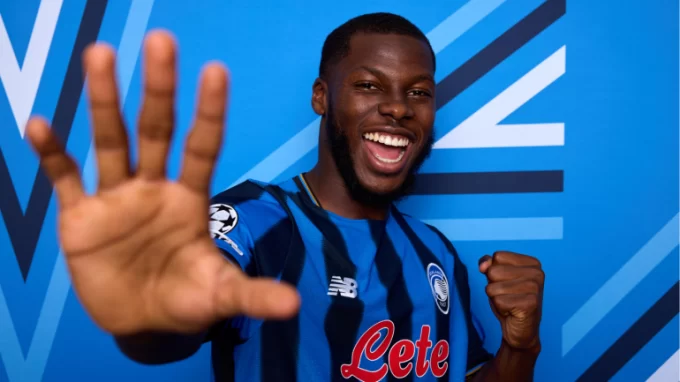
Juventus, Atalanta, and Arsenal’s Quiet Revolution: What’s Really Shaping This Week in Football?
The roar of Serie A stadiums masks a subtle shift, one that...
Kirsten Collins2 Mins read





Leave a comment