

The 5-Minute Flight: The Future of Urban Travel or Just Another Mirage?
A helicopter ride that promises to get you from Manhattan to JFK in five minutes sounds like the dream. But in a city that never stops moving, is this high-flying promise truly the future—or just another luxury illusion?
 Chris MarksMay 7, 20253 Mins read44
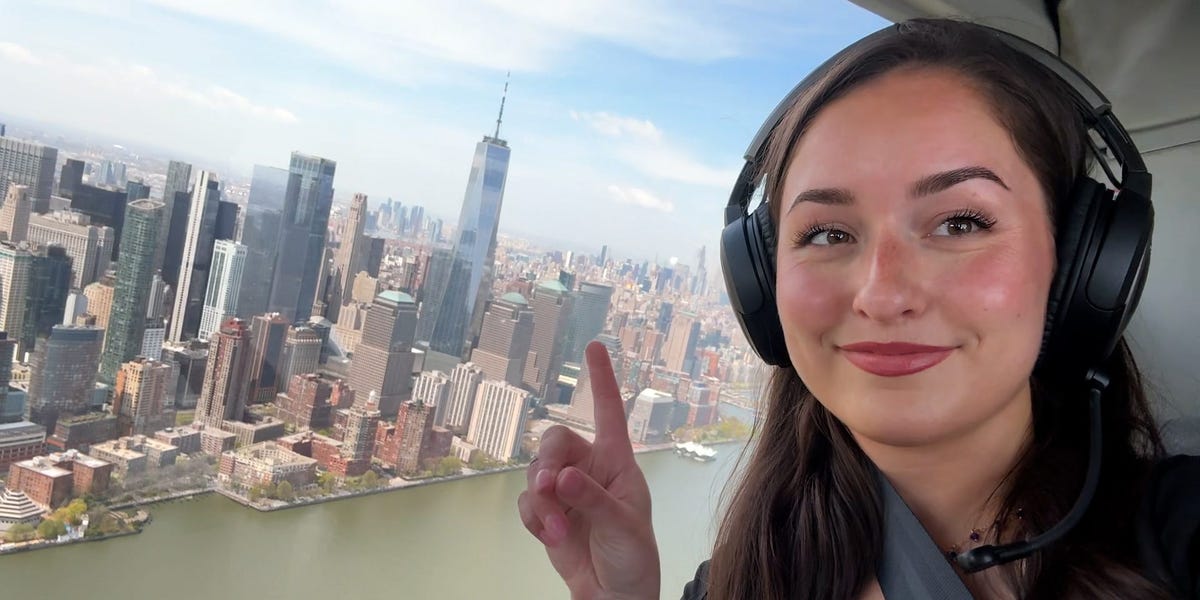
Five minutes. That’s the promise—a blink of an eye and you’re airborne, soaring over the churning streets of Manhattan and bypassing the chaos of the Long Island Expressway. The iconic skyline falls behind, and the rumbling engines of a helicopter cut through the noise. It’s as if the laws of time and traffic have been rewritten in favor of those who can afford it. But ask yourself: is this the future of urban transport, or merely a gilded mirage designed to soothe the egos of the city’s elite?
A Flight of Fantasy
New York is a city of contradictions—where luxury lives in the streets, but it’s often hidden beneath a layer of dirt and grit. And yet, every once in a while, a service emerges that dares to promise an escape from the urban grind. A helicopter ride from Manhattan to JFK in just five minutes—an answer to the city’s perpetual gridlock and the insatiable hunger for speed. No traffic, no delays, just the unshakeable thrill of flying.
But who is this miracle really for? For those who can’t afford to wait in the cacophony of yellow cabs and subway cars, this seems like a utopian solution—a quick, exclusive trip that cuts through the clutter. But does this service truly solve anything beyond the wallet of the person willing to pay for it?
The Myth of Accessibility
On the surface, the math checks out: five minutes, a luxurious helicopter, a direct route to the airport. It sounds like the transportation equivalent of a gold rush. But beneath that polished surface, cracks begin to appear. This new service caters to a sliver of the population—the ultra-wealthy or corporate titans with expenses that stretch far beyond most people’s understanding. How many people truly have the $200 or more to drop on a single trip just to avoid the traffic?
In a city that moves at the speed of light, how long before these exclusive services become symbols of inequality, rather than efficiency? “It’s a quick fix for a deeper issue,” says urban transport analyst, Jessica Goldman. “What we’re really seeing is not a transformation of how we move through the city, but a reinforcement of the divide between the haves and have-nots. It’s a temporary convenience for a tiny few—while the rest of us are left behind, again.”
More Than Just Speed—A Culture of Excess
What’s the price for a moment of luxury in a helicopter? Not just money, but access—access to a world where time is fluid, where waiting is for the other half. In a way, the five-minute flight becomes a metaphor for a larger shift in society: time has become the ultimate commodity. If you can afford to pay for it, you can control it, bend it to your will. But for the rest of us, time remains a slow, unyielding force—one that can’t be outrun, no matter how fast you go.
It’s fascinating, isn’t it? How something as basic as the desire to avoid delay has become a status symbol. The helicopter ride is more than just a means to get from point A to point B; it’s about announcing to the world that your time is more valuable than the average person’s. And in a city like New York, that’s everything.
A Mirage in the Sky?
Still, the question remains: is this futuristic vision of travel a glimpse into what’s next, or just a fleeting fantasy that will crash back to reality? New York has seen its share of transportation revolutions. From the first subway line in the 19th century to the rise of Uber helicopters, it’s always been a city that experiments with the boundaries of possibility. But the true question is whether these services will truly become the norm—or will they fade into the background like so many other expensive fads?
Perhaps the helicopter rides are a sign of things to come—a symbol of efficiency that only a select few will get to enjoy. But will they ever be more than that? Or will the true future of urban transport be found in something more democratic, more grounded? The 5-minute helicopter ride from Manhattan to JFK may be the answer for some—but for others, it will always remain an unattainable fantasy, suspended just above the skyline.
In the end, the question isn’t just about how fast we can get to the airport—it’s about whether we want a future that’s shaped by exclusivity and excess, or one where the roads and skies are open to all.





How Much Will Trump’s Policies Really Cost Wall Street?
When Donald Trump first took office, his policies were sold as a...
 Kirsten Collins2 Mins read
Milken 2025: The Party of the Rich, Amid a World Falling Apart
The night was electric in a way that only a private, star-studded...
 Joseph Bennett3 Mins read

Buffett, Cook, and the Quiet War for America’s Soul
There was a moment, barely a second long, when Warren Buffett’s smile...
Joseph Bennett3 Mins read

The Deception Behind the Deal: How Bait-and-Switch Pricing Is Shaping Our Desires
It’s the perfect price—a promise of a deal that seems too good...
Joseph Bennett3 Mins read





Leave a comment