

Alcaraz’s Night Sessions: Spotlight or Strategy?
Carlos Alcaraz's back-to-back night matches at Roland Garros have ignited debates about fairness and favoritism. Is the young Spaniard's rise being orchestrated, or is he merely the beneficiary of a well-timed spotlight?
 Joseph BennettMay 27, 20251 Mins read18
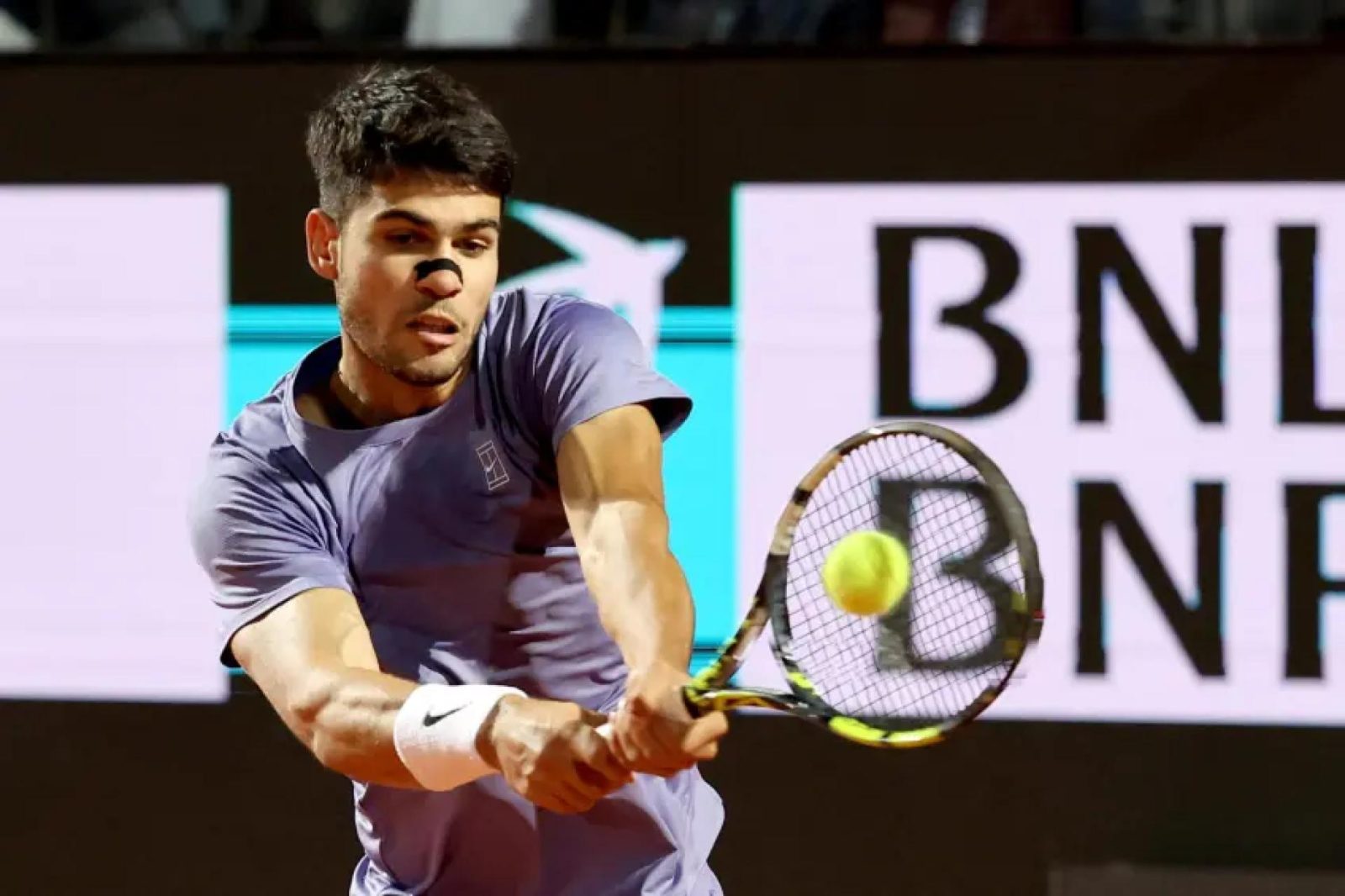
The Philippe Chatrier court gleams under the Parisian lights, its retractable roof casting a shadow over the day’s fading sun. Carlos Alcaraz steps onto the clay, his presence commanding the attention of the crowd. But is this spotlight a mere coincidence, or is there a calculated design behind his night sessions at Roland Garros?
“The New Face of Tennis”
Alcaraz’s meteoric rise has been nothing short of spectacular. Yet, as he ascends, questions arise about the fairness of his treatment. Alexander Zverev, a seasoned competitor, voiced concerns over the scheduling, noting that while Alcaraz is indeed the “new face of tennis,” the distribution of prime court times seems uneven. “I haven’t played a night match yet,” Zverev remarked, highlighting the disparity in opportunities among top players.
The Power of the Spotlight
Night sessions at Roland Garros are coveted. They offer enhanced visibility, a larger audience, and a unique atmosphere. Alcaraz’s consistent placement in these slots raises eyebrows. Is this a strategic move to bolster his brand, or does it reflect a deeper bias in the tournament’s scheduling?
A Pattern or a Coincidence?
The debate intensifies when considering the treatment of other tennis legends. Novak Djokovic and Rafael Nadal, with their illustrious careers, often find themselves in prime time slots. Alcaraz’s frequent appearances in these coveted positions suggest a pattern. But is this favoritism, or is he simply capitalizing on the opportunities presented?
As the tournament progresses, the question lingers: Are the night sessions a testament to Alcaraz’s undeniable talent, or is there a narrative being crafted around his rise? The lines between merit and manipulation blur, leaving fans and players alike to ponder the true nature of success in the world of tennis.







Barcelona’s Fragile Pursuit: When Injuries Threaten More Than Just a Season
A silence spreads over Camp Nou that no roar can drown out—two...
 Chris Marks2 Mins read

William Saliba: Arsenal’s Silent Architect or Its Greatest Gamble?
The air inside the Emirates shifts with unspoken tension—William Saliba, once a...
Joseph Bennett2 Mins read

Joel Embiid’s Quiet Confidence: Is the 76ers’ Giant Ready to Rewrite His Story?
Joel Embiid is rarely one to make noise without purpose, and now,...
 Kirsten Collins1 Mins read

Juventus, Atalanta, and Arsenal’s Quiet Revolution: What’s Really Shaping This Week in Football?
The roar of Serie A stadiums masks a subtle shift, one that...
Kirsten Collins2 Mins read





Leave a comment