

The Gilded Age Glitch That Spoke Louder Than Words
A Spanish-language audio error during HBO’s The Gilded Age sparked confusion, humor—and a deeper reflection on the illusion of prestige, identity, and who gets to narrate power.
 Joseph BennettAugust 4, 20252 Mins read28
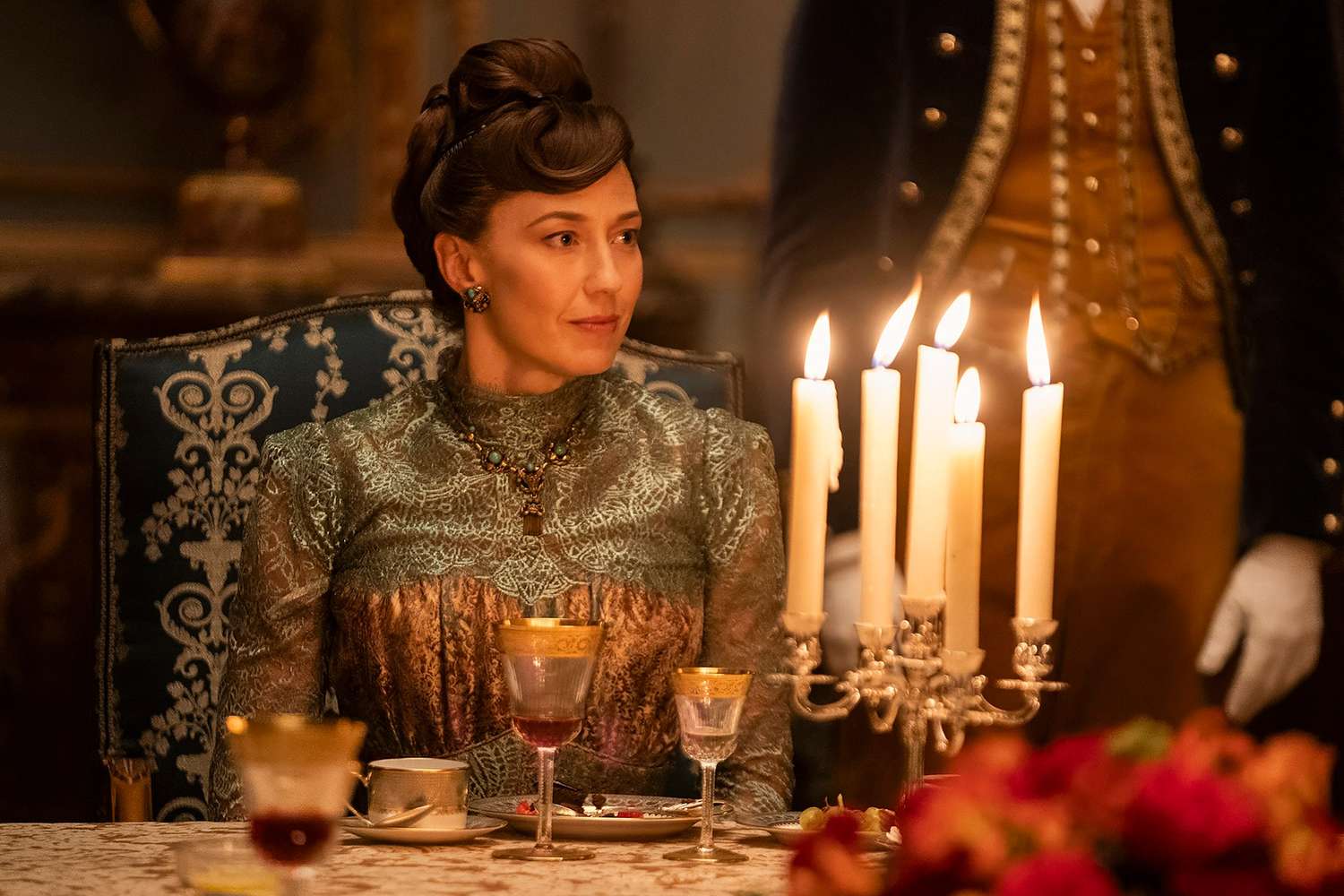
Karolina Wojtasik/HBO
She stood there—Bertha Russell, in velvet and defiance—issuing commands in Spanish. Not just accented whispers or foreign intrigue, but full-bodied, dubbed dialogue fit for a soap opera, not a Julian Fellowes period drama. And just like that, The Gilded Age slipped through a crack in its own perfection, revealing something neither costume nor character could control: the absurdity beneath the silk.
The glitch—an HBO Max audio error that accidentally played the Spanish dub of a Season 2 episode—turned an otherwise polished hour of historical drama into a linguistic fever dream. For many viewers, the unexpected shift from WASP drama to Latin rhythm was jarring. For others, it was poetic. Because in a series obsessed with who belongs where, nothing disrupts class hierarchy like a voice that doesn’t match the chandeliered room.
Lipstick on Marble, Voices in Velvet
There was something uncanny about it. Something timely. Something, as Carrie Coon herself observed with a wink, “kind of perfect.” Because this wasn’t just a glitch. It was a collision—between expectation and accident, between artifice and algorithm. A reminder that even prestige TV, with all its carefully hemmed hems and proper enunciations, can fall victim to the same digital chaos as a YouTube vlog.
But maybe that’s what made the moment resonate more than it should have. Because here was The Gilded Age, a show about the iron rules of social elevation, suddenly destabilized by a technical hiccup. And the result was not scandal—but glee. As if audiences, long steeped in curated perfection, secretly delighted in watching the spectacle trip on its own petticoat.
The elegance remained—but now it had subtitles.
When Prestige Television Mispronounces Itself
What’s most revealing is not the glitch itself, but the reaction to it. Memes flooded social media. Clips were reshared with added drama. But the undertone of it all—the laughter, the irony, the strange delight—felt almost like protest. As if the audience, tired of being told what refined tastes look like, found freedom in a dubbed disruption.
The Gilded Age wants to tell a story about power, about ascension, about how new money forces its way into old rooms. But accidentally, it told a different story: about how even the most carefully crafted narratives are only a few wrong settings away from becoming something entirely other. And in that misalignment, we saw a truth more vivid than any costume ball could deliver.
Because what is prestige, really, if not a beautifully spoken illusion?
And who speaks it when the illusion slips?




Pianist Omar Harfouch Brings Celebrated Figures Together for a Night of Cultural Exchange – Hollywood Life
Image Credit: Omar Harfouch On February 20, 2026, pianist and cultural figure...
 Kirsten Collins2 Mins read
Who Is Ivana Lisette Ortiz? About the Rihanna Home Shooting Suspect – Hollywood Life
Image Credit: WWD via Getty Images The suspect in the March 8,...
Kirsten Collins1 Mins read

What Channel Are the Academy Awards On? – Hollywood Life
Image Credit: AFP via Getty Images The 2026 Academy Awards will bring...
Kirsten Collins1 Mins read
How Much Money Does She Have Now? – Hollywood Life
Image Credit: WWD via Getty Images Rihanna may be known as one...
Kirsten Collins2 Mins read





Leave a comment