

Carrie Underwood’s 13th Kickoff: What Are We Really Cheering For?
Carrie Underwood has returned—again—as the sonic gladiator of Sunday Night Football. But after 13 years of high-octane entrances, one has to ask: is this tradition, evolution, or something more quietly radical?
 Chris MarksJuly 30, 20252 Mins read21

She descends again—like clockwork, but with glitter. The leather fringe flutters just right, the spotlight hits her cheekbone at the same seductive angle, and America—millions deep in nachos and pregame adrenaline—screams on cue. For 13 seasons now, Carrie Underwood hasn’t just sung the Sunday Night Football theme—she’s made it ritual. And in 2025, she’s revamped it. Again. Because what’s more American than a reinvention that knows exactly how to stay the same?
This isn’t nostalgia. It’s national mythology delivered on a G chord. She isn’t just opening a football game; she’s opening the curtain on the weekly stage where masculine aggression and corporate polish dance for ratings. And there, at the lip of the screen, is Carrie—belting through the smoke like some blonde, Midwestern Valkyrie with a very specific mandate: electrify, but don’t disrupt. Change the look, not the temperature.
Anthem or Illusion?
There’s a well-rehearsed defiance in her voice, a pop-country growl polished for mass consumption. But listen more closely—what’s changed in 13 years? Each season promises a “fresh” version of the song, and yet, somehow, the refrain never really shifts. It’s the same power note, the same slow-mo linebackers, the same tribal drumbeat of America Inc. The illusion of newness—marketed to the pixel.
“I love getting to be part of the kickoff each season,” she said recently, with that exact brand of humility that masks extraordinary control. And of course she does. Because Carrie Underwood isn’t just performing a theme—she’s performing consistency. In an era when nothing on television lasts, she endures. Not by shock, not by scandal, but by precise calibration. Carrie doesn’t break the system. She beautifies it.
What she’s really offering isn’t music—it’s reassurance. The kind that makes audiences sigh not because they’re moved, but because they already know the words.
The High Note That Never Ends
There’s something strangely intimate about a woman so embedded in such a male-coded arena. She doesn’t interrupt the testosterone—she crowns it. Her presence signals that it’s safe for the spectacle to begin. But whose spectacle, exactly? Whose idea of Americana is being amplified each time she struts past pyrotechnics to a chorus of “Waiting all day for Sunday night”?
This is more than a football intro—it’s cultural choreography. And Carrie is both muse and gatekeeper. What makes it fascinating, even unsettling, is how well she wears the contradiction: tradition cloaked as innovation. Every year, the dress changes. But the song—the message—doesn’t.
So when she sings this year’s reboot, we know how it ends. The helmets will crash, the brands will beam, and Carrie will hit that final note like it’s the first time—even though it’s the 200th. Maybe that’s her genius. Or maybe it’s our craving. The question now isn’t what she’ll sing next Sunday. The question is—what would happen if she didn’t?





Laufey’s Opening Night Show at LA’s Crypto.com Arena: Best Moments
Laufey opened a two-night stand at Crypto.com Arena in downtown Los Angeles...
Chris Marks6 Mins read
Julie Adam Is Billboard Canada Women in Music’s 2025 Exec of the Year
Julie Adam is having a milestone year — and it’s getting even...
Chris Marks4 Mins read
Spinal Tap Tribute Album with Foo Fighters,Tool for Teen Cancer America
Spinal Tap may be a fake band, but its music is very...
Chris Marks2 Mins read
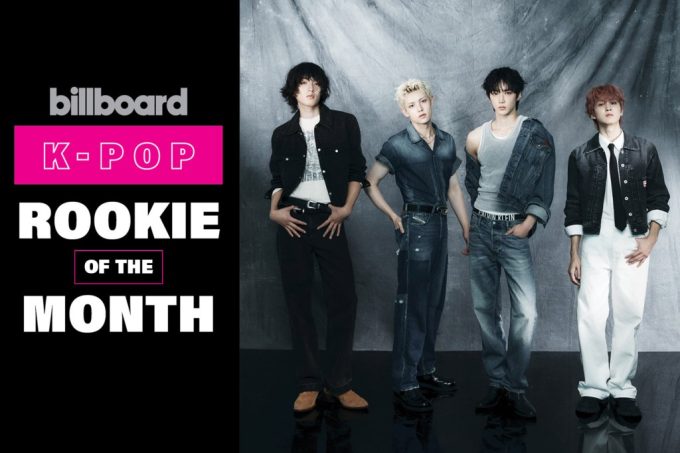
AxMxP Is K-Pop Rookie of the Month for September: Exclusive Photos
Ha Yoo Joon Image Credit: Chin Soyeon You debuted on Sept. 10....
Chris Marks2 Mins read





Leave a comment