

The Accident That Made You Cry: Christina Aguilera’s Beautiful Misstep
One of pop’s most iconic affirmations was never meant to happen. So why does the accidental lyric still feel like prophecy?
 Kirsten CollinsAugust 1, 20252 Mins read20

She didn’t mean to say it. “You are beautiful… no matter what they say.” A placeholder, an unpolished whisper. Christina Aguilera was standing in the booth, barely owning the words, when something uncurated slipped out. And somehow—perhaps because it wasn’t planned—it cut deeper than anything crafted.
There’s something eerie about the fact that one of the most enduring affirmations of the 21st century wasn’t written, but stumbled into being. Linda Perry, the songwriter behind the anthem, admits the lyric wasn’t the original plan. But plans don’t make culture. Accidents do. And this one spiraled into the bloodstream of millions. The message—half whispered, half belted—has since been screamed through tears in high school gymnasiums, tattooed across wrists, quoted in courtrooms.
The Perfection of an Imperfect Line
There’s a tendency in pop music to believe in magic—but only the kind we can manufacture. Tight choruses. Studio wizardry. Formulas disguised as inspiration. So when a line that was never meant to survive ends up defining a generation’s relationship with self-worth, we’re forced to reconsider what music actually is.
Aguilera didn’t write the lyric, but she wore it. There’s something electric in the way her voice cracks on “beautiful”—as if she’s trying to believe it, not just sing it. We don’t hear her mastery. We hear her trying. It’s the opposite of perfection—and that, oddly, is what made it perfect. In a culture that rewards polish, a flaw went viral.
When the Accidental Becomes Archetype
It’s easy to laugh at pop. To reduce it to glitter and breathy hooks. But the best of it—like “Beautiful”—slips past irony and finds us in the mirror. It doesn’t demand belief. It dares us to feel. And perhaps most provocatively, it reminds us that not every revolution arrives on purpose. Some begin in accidents. In doubt. In unedited vulnerability.
There’s a quote Aguilera once gave about the recording: “I almost didn’t sing that line. I didn’t think it fit. But something told me—just go with it.” That something—call it instinct, fate, or the ghosts of queer ballads past—changed the conversation around beauty forever.
And maybe that’s the secret behind pop’s most enduring anthems: they’re less about what we want to say, and more about what we’re afraid we actually believe.
The lyric was an accident. The impact wasn’t.







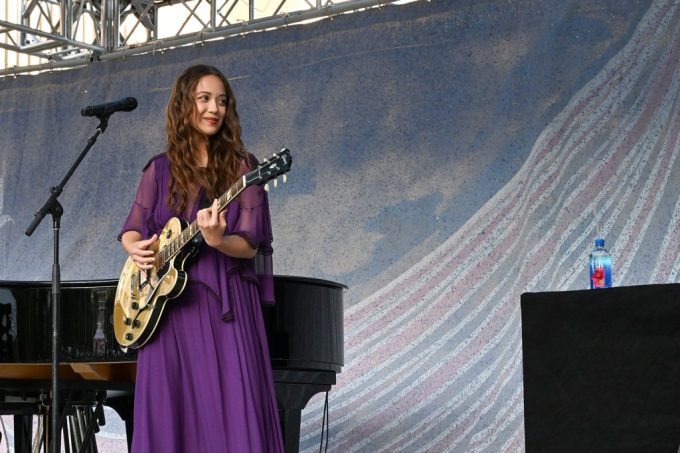
Laufey’s Opening Night Show at LA’s Crypto.com Arena: Best Moments
Laufey opened a two-night stand at Crypto.com Arena in downtown Los Angeles...
 Chris Marks6 Mins read

Julie Adam Is Billboard Canada Women in Music’s 2025 Exec of the Year
Julie Adam is having a milestone year — and it’s getting even...
Chris Marks4 Mins read
Spinal Tap Tribute Album with Foo Fighters,Tool for Teen Cancer America
Spinal Tap may be a fake band, but its music is very...
Chris Marks2 Mins read

AxMxP Is K-Pop Rookie of the Month for September: Exclusive Photos
Ha Yoo Joon Image Credit: Chin Soyeon You debuted on Sept. 10....
Chris Marks2 Mins read





Leave a comment