

The Gentleman Savage: Anthony Edwards and the Art of Post-Elimination Provocation
Fresh off eliminating the Lakers and racking up a fine, Anthony Edwards doesn’t tone it down—he leans in, trash-talking fans like a showman in a coliseum. But what is he really performing for?
 Joseph BennettMay 1, 20252 Mins read209
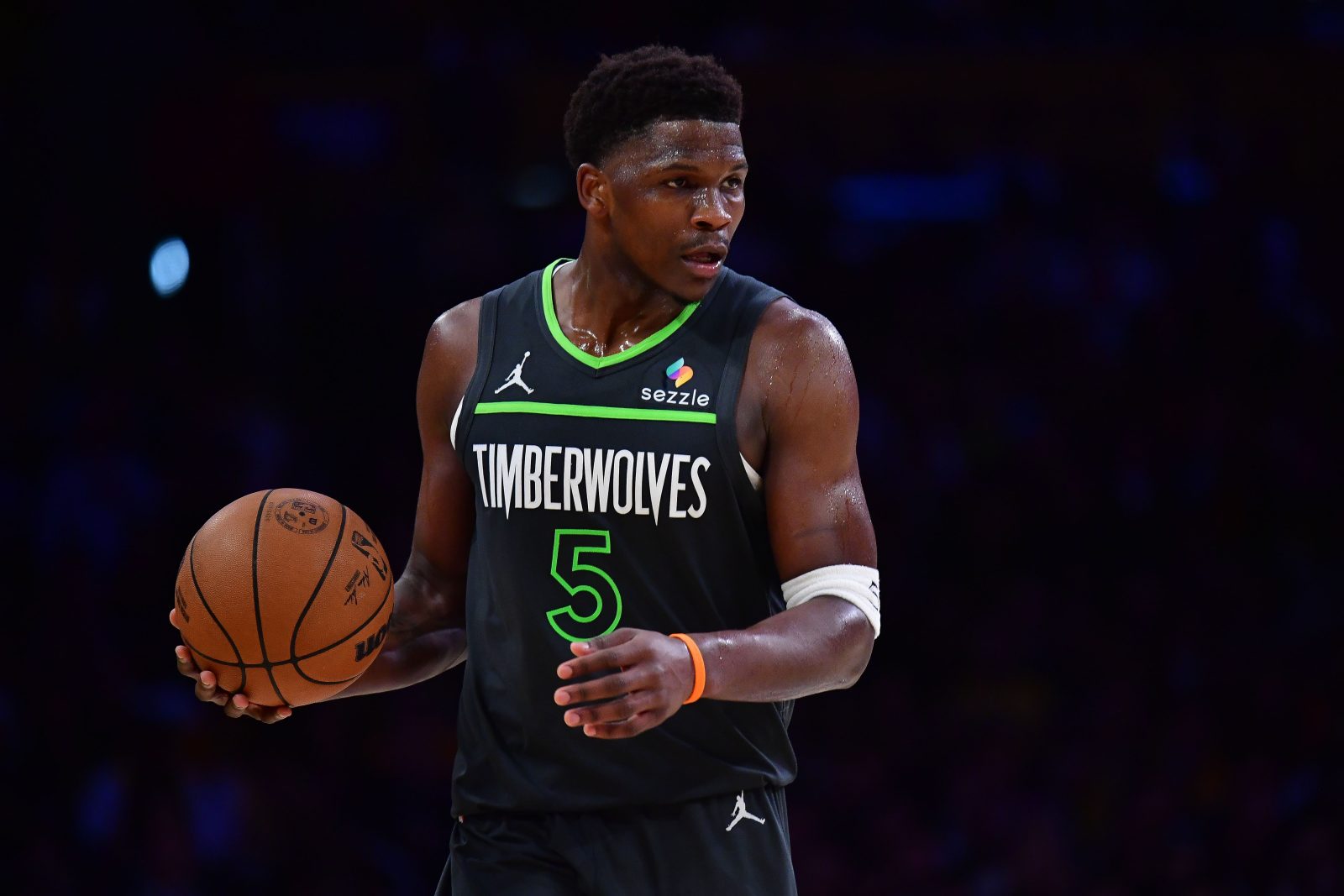
The crowd wasn’t just watching a game—they were watching a declaration. With every dribble, every look into the stands, Anthony Edwards wasn’t simply defeating the Los Angeles Lakers. He was erasing them. And as the gentleman’s sweep concluded in a 4-1 silencing, Edwards didn’t retreat into locker room diplomacy. No. He spoke—to the fans, to the cameras, to anyone within earshot. His words, like his game, cut deep. And days after the league fined him for “inappropriate language,” he proved one thing unmistakably: you can fine the man, but you can’t mute the moment.
Edwards’ post-game remarks weren’t tantrums. They were theatre. He wasn’t apologizing—he was authoring a new archetype: the postmodern antihero of the hardwood. A player who knows his every phrase is content, every grin a headline. But unlike others who stumble into controversy, Edwards seems to choreograph it. He wants the weight, the whisper, the world watching. And that’s where the real game begins.
Trash Talk as Performance Art
In this era where NBA stars are branded before they are beloved, Edwards disrupts the algorithm with charisma that feels dangerously analog. He’s sharp without polish, swaggering without the usual PR filter. “They thought this was Hollywood,” he muttered as he walked past heckling fans, “but I’m the director now.” That line wasn’t shouted—it was delivered. And it echoed louder than any final buzzer.
But why do we listen? Why do we watch Edwards mouth off to fans with the same precision he uses to dissect defenses? Perhaps because we know, deep down, the real NBA is no longer played just on the floor. It’s in the margins—the viral mic’d-up moment, the smirk before a three, the locker room taunt replayed a thousand times in ten-second bursts. Anthony Edwards doesn’t just understand the spectacle. He is the spectacle.
The New Rules of Reverence
LeBron once defined dominance through silence and sheer volume of achievement. Kobe did it with scowls. Jordan did it with menace wrapped in myth. But Edwards? He’s crafting a persona that seems less interested in legacy and more fascinated by immediacy. Is this generational? Or is it the evolution of fame in a culture that demands edge, not elegance?
The irony is this: Edwards, in all his posturing and provocation, may be offering something rare—authenticity. In an era of brand-safe superstars, he is emotionally legible. No notes app apologies. No half-hearted humility. Just a man on a mission, brushing against the walls of tradition and asking whether they were ever real to begin with.
So when he talks after a win—not just to fans but through them—it isn’t just about one series or one sweep. It’s about rewriting what it means to lead, to dominate, to matter. And maybe that’s what makes people uncomfortable. Not that Anthony Edwards is loud—but that his loudness makes more sense than silence ever did.
He didn’t just eliminate the Lakers. He annihilated the script. And we’re still waiting to see what he writes next.






Barcelona’s Fragile Pursuit: When Injuries Threaten More Than Just a Season
A silence spreads over Camp Nou that no roar can drown out—two...
 Chris Marks2 Mins read
William Saliba: Arsenal’s Silent Architect or Its Greatest Gamble?
The air inside the Emirates shifts with unspoken tension—William Saliba, once a...
Joseph Bennett2 Mins read
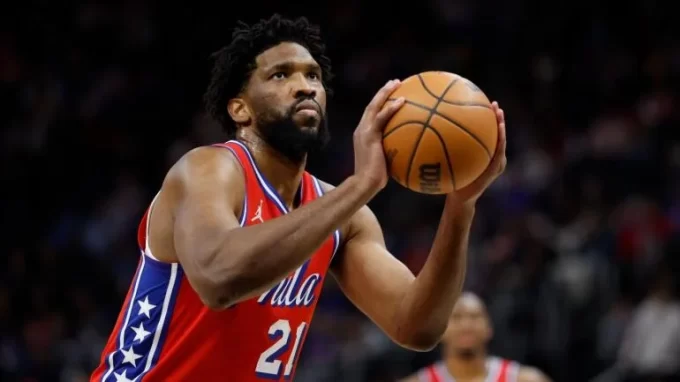
Joel Embiid’s Quiet Confidence: Is the 76ers’ Giant Ready to Rewrite His Story?
Joel Embiid is rarely one to make noise without purpose, and now,...
 Kirsten Collins1 Mins read
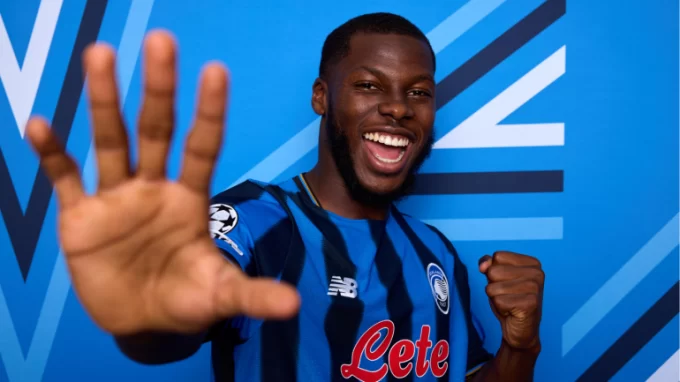
Juventus, Atalanta, and Arsenal’s Quiet Revolution: What’s Really Shaping This Week in Football?
The roar of Serie A stadiums masks a subtle shift, one that...
Kirsten Collins2 Mins read





Leave a comment