

Lisa Lu’s Walk of Fame Star: A Quiet Revolution in Hollywood’s History
When Lisa Lu received her star on the Hollywood Walk of Fame, it wasn’t just an award—it was a quiet rebellion against decades of invisibility. But is this recognition about time, or is there something deeper at play?
 Joseph BennettMay 7, 20252 Mins read168

The flashing cameras, the sea of familiar faces, the inevitable glow of Hollywood: when Lisa Lu’s star was finally unveiled on the Walk of Fame, the moment seemed like a cosmic joke. There, among the tinsel and the fame, stood a woman who had been hidden in plain sight for nearly a century. Yet, as the applause echoed, it was clear—this was more than a simple acknowledgment. It was a triumph, both personal and cultural.
Lu, whose career began in the shadows of Hollywood’s early racial politics, had been a part of cinema long before her name was uttered by the mainstream. Through decades of roles that ranged from secondary characters to unforgettable presences, she remained an indelible part of the fabric, but never quite recognized as such. Until now.
The Silence of the Asian Pioneer
For Lisa Lu, this was not just a career milestone—it was the long-awaited moment of cultural reckoning. In a town that too often relegated its Asian actors to the fringes, Lu’s star now shone brightly in the epicenter of its grandeur. “It’s been a long journey,” Lu admitted, standing at the ceremony, her voice catching in the midst of a crowd that had waited too long for this to happen.
Her rise was not a tale of wild popularity or overnight fame. It was the quiet perseverance of an artist who navigated the industry’s most invisible corridors, even as her peers were caught up in the flood of fame. She acted in films that often turned a blind eye to Asian representation, but even then, her performances spoke in languages Hollywood had never fully understood.
Ming-Na Wen and the Legacy of Representation
Among the most profound moments during the ceremony came from Ming-Na Wen, who spoke with a warmth that came not from the stage, but from something deeper. “I stand on her shoulders,” she said. And the truth behind those words rang out louder than any applause could reach. Ming-Na Wen’s tribute to Lu wasn’t just a gesture—it was a declaration. A recognition of how deeply the groundwork laid by Lu had shaped the next generation of Asian American talent, those who now stood ready to claim the spaces once denied them.
But what does this moment mean for Hollywood at large? Is this recognition an overdue correction, or is it merely a symbol of how far we still have to go?
A Star for All Time
Lisa Lu’s star is a reminder of how the industry has often been content to let the unsung quietly rise in the background. There is a quiet weight to her triumph that forces us to ask: How many others are still waiting for the Hollywood spotlight to catch them? Are we truly ready to reckon with the artists who have been sidelined for so long, or is the Walk of Fame merely a token gesture—an acknowledgment too little, too late?
Lu’s star will forever be a symbol of the distance between a dream and its realization. The recognition, while necessary, speaks to something else: the art of survival in a system designed to leave you out. And still, it is this survival that stands as the most remarkable story of all.
What happens when an artist finally receives what was long denied? Does it offer redemption, or simply a haunting reminder of what might have been? In Lisa Lu’s case, the answer may lie in the quiet power of her presence—no fanfare, no apology. Just the enduring beauty of someone who always belonged.





When Mercy Meets Tragedy: The Widow Who Forgave Her Husband’s Killer
The air thickens when forgiveness enters a room meant for grief. Imagine...
 Chris Marks1 Mins read

When Fear Became a Lifeline: Pete Davidson’s Reckoning in Rehab
There’s a silence that follows a mother’s voice when she confesses her...
Joseph Bennett1 Mins read
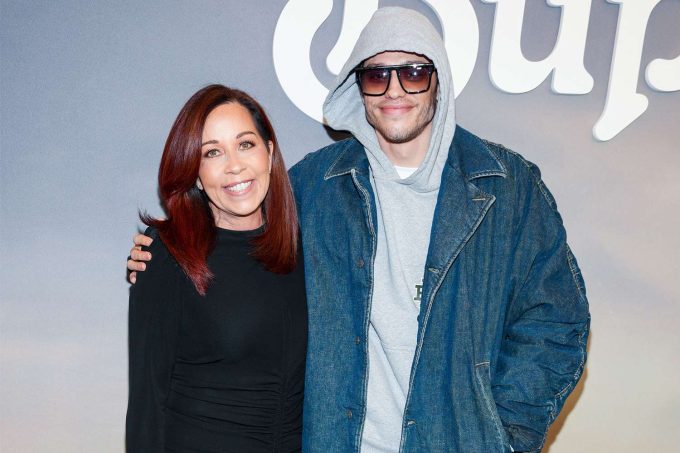
Pete Davidson’s mom told him in rehab worst fear was learning he died
Pete Davidson is opening up about the heartbreaking moment he had with...
Chris Marks2 Mins read

Katie Couric’s Unexpected Spin on Sydney Sweeney’s American Eagle Ad: What’s Really Being Said?
Katie Couric stepping into a scene dominated by Gen Z glamour feels...
 Krista Freeland2 Mins read





Leave a comment