

Shohei Ohtani’s New Chapter: When Baseball’s Two-Way Star Writes for Kids and Unleashes Decoy the Dog
Shohei Ohtani isn’t just rewriting baseball history—now, he’s stepping off the diamond to tell a story starring his beloved dog, Decoy, in a children’s book that blurs the line between celebrity and personal myth-making. What lies behind this unexpected creative play?
 Chris MarksJuly 18, 20252 Mins read23

The glare of stadium lights never quite prepares you for this: Shohei Ohtani, the electrifying two-way sensation who dominates headlines for his athletic prowess, now channels his energy into a storybook starring Decoy, his dog. This isn’t just a vanity project—it’s a deliberate pivot, a subtle reinvention. In the echoing silence of a baseball offseason, what does it mean when an athlete as singular as Ohtani chooses children’s literature as his canvas?
It’s tempting to see this simply as a charming sidestep—a sports icon dabbling in storytelling. Yet beneath the surface, a quiet tension hums. Here is a figure who defies convention on the field, now inviting us to peer behind the curtain of his personal life through a furry, four-legged muse. What truths hide in this playful collaboration?
The Art of the Unlikely Narrative
To understand Ohtani’s leap from fastballs to fables, one must appreciate the rare duality he embodies: the athlete who is also an enigma. Decoy, more than a pet, becomes a symbol of loyalty, innocence, perhaps even resilience—qualities that mirror Ohtani’s own narrative of defying limits. “It’s about sharing a part of myself that fans don’t often see,” Ohtani said, a quiet confession amid the storm of his public persona. Could this book be his way of controlling the story, of crafting a legacy that transcends home runs and strikeouts?
At a glance, this is an endearing addition to celebrity-authored children’s books. But Ohtani’s venture carries a curious weight—it asks readers to rethink the relationship between sports heroism and cultural storytelling. When the ballpark fades and the stadium empties, what remains? A man, a dog, and a story waiting to be told.
When Stardom Finds a New Stage
In a world obsessed with instant fame and fleeting headlines, Ohtani’s children’s book feels almost like a whisper—a deliberate retreat from the frenzy, a moment of vulnerability wrapped in whimsy. Yet, it also amplifies his star power in unexpected ways, positioning him as a cultural figure who defies categorization. The question lingers: will this book charm a new generation, or is it the opening move in a more profound reinvention?
As we wait to turn the first page, one thing is certain—Ohtani’s story, on or off the field, will never be quite what we expect. The game has changed, but the player remains a mystery. And Decoy? Perhaps the truest storyteller of all.







Barcelona’s Fragile Pursuit: When Injuries Threaten More Than Just a Season
A silence spreads over Camp Nou that no roar can drown out—two...
Chris Marks2 Mins read

William Saliba: Arsenal’s Silent Architect or Its Greatest Gamble?
The air inside the Emirates shifts with unspoken tension—William Saliba, once a...
 Joseph Bennett2 Mins read

Joel Embiid’s Quiet Confidence: Is the 76ers’ Giant Ready to Rewrite His Story?
Joel Embiid is rarely one to make noise without purpose, and now,...
 Kirsten Collins1 Mins read
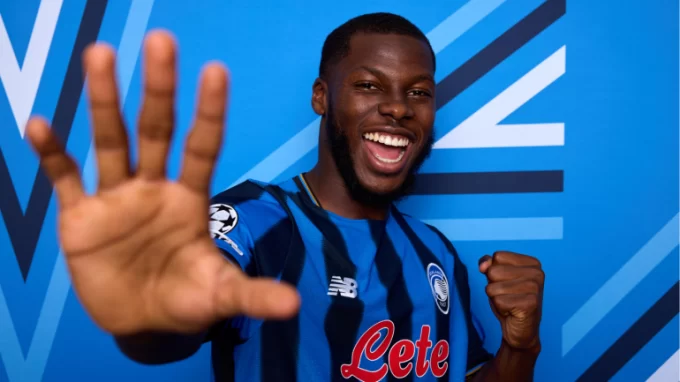
Juventus, Atalanta, and Arsenal’s Quiet Revolution: What’s Really Shaping This Week in Football?
The roar of Serie A stadiums masks a subtle shift, one that...
Kirsten Collins2 Mins read





Leave a comment