

From Russia with Love: Daria Kasatkina’s Bold Leap into Australian Tennis
In a move laden with personal and political significance, tennis star Daria Kasatkina trades her Russian roots for Australian allegiance, igniting conversations that transcend the sport.
 Joseph BennettApril 2, 20252 Mins read27
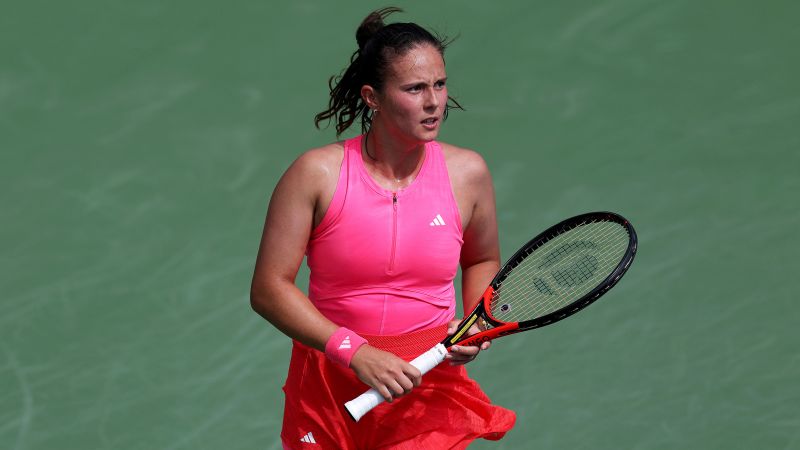
The sun blazed overhead as Daria Kasatkina stepped onto the Charleston court, not as the Russian prodigy the world once knew, but as Australia’s newest tennis sensation. The emblem on her attire had changed, but the fire in her eyes burned with a familiar intensity. What drives a top-ranked athlete to sever ties with her homeland and embrace a new national identity?
In 2022, Kasatkina made headlines by coming out as gay, a courageous act that rippled beyond the tennis world. Her native Russia, however, was less than forgiving. The country’s anti-LGBTQ+ laws cast a long shadow over her, transforming the act of living authentically into an act of rebellion. Her public honesty came with a private cost—alienation, scrutiny, and a sense of exile in her own birthplace. So when Australia opened its arms, it wasn’t just a relocation. It was liberation.
A New Dawn Down Under
Australia didn’t just offer residency. It offered reprieve, community, and a stage that celebrated her—not despite who she is, but because of it. The applause from the crowd during her first match in Charleston was more than a cheer. It was a chorus of acceptance. A sound she hadn’t heard in a long time.
Still, her transition from Russia to Australia wasn’t without an ache. There’s an emotional archaeology to leaving a country that made you and marred you. Representing a new flag feels dissonant at first—like singing a familiar song in a foreign key. “Honestly, it feels different,” she admitted. “I have to get used to it.” The weight in her words hints at the ache of displacement, the tug-of-war between heritage and hope.
Beyond the Baseline
But this is not just a tale about tennis. It’s about the price of freedom and the cost of visibility. It’s about what happens when personal truth collides with national pride. Kasatkina’s choice was never just about which anthem plays before a match—it was about who she gets to be when the lights are off and the cameras aren’t rolling.
We often assume athletes have the luxury of choice. But what if the real story lies in the fact that they don’t? What if switching allegiances wasn’t a strategy, but a necessity? What if her “choice” was just the only path left that led to air?
And as the racquet swings on, and the headlines fade, one question echoes with increasing urgency: Who else is playing for more than just points?








“De Minaur’s Confession: The One Shot He Covets from Alcaraz”
In the world of tennis, where every stroke is a testament to...
 Chris Marks1 Mins read
Alcaraz’s Night Sessions: Spotlight or Strategy?
The Philippe Chatrier court gleams under the Parisian lights, its retractable roof...
Joseph Bennett1 Mins read
“Caroline Garcia’s Hell Unveiled: A Love Story of Triumph and Turmoil”
In the glimmering world of professional tennis, where every serve and volley...
 Krista Freeland1 Mins read

Djokovic’s 21-0 Enigma: Is Roland Garros His Personal Labyrinth?
The Philippe Chatrier court stands silent, yet Novak Djokovic’s presence reverberates through...
Krista Freeland1 Mins read





Leave a comment