

The Red Sox Dilemma: Why Rafael Devers Isn’t the Answer at First Base
As Triston Casas’ injury throws a wrench into the Red Sox's lineup, the question arises: Is Rafael Devers the answer? The Red Sox aren’t asking him to step up—so why isn’t Boston exploring the possibility of turning Devers into the first baseman they desperately need?
 Joseph BennettMay 7, 20252 Mins read35
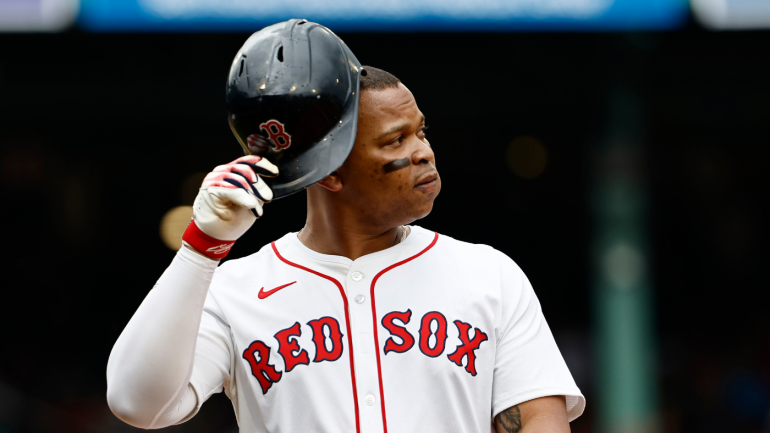
The truth is, Boston doesn’t want Rafael Devers at first base. It’s not about his ability—it’s about something else. An unspoken preference, a quiet reluctance to shift the cornerstone of their infield into a role that, on the surface, seems so logical. After Triston Casas’ injury, the answer should be obvious. Or is it?
Devers has been the face of the Red Sox’s offense for years. He’s their star, their centerpiece, the player whose bat can alter the course of a game in an instant. Yet, in the wake of Casas’ injury, when all eyes should be on Devers as a natural solution for first base, Boston’s front office says no. They like him as a DH. That’s it. No first base experiments, no ‘let’s make it work’ attitude. Why?
The Risk of Reinvention
Maybe it’s because Devers is already a known commodity. His bat, the thing that makes him irreplaceable in Boston’s lineup, can’t afford to be overshadowed by an unfamiliar position. Moving him from third to first could disrupt the rhythm of his game—he might become a different player, an experiment gone awry. As Red Sox manager Alex Cora put it, “I like Raffy as a DH.” That’s it. Short. Simple. Direct. It’s a message that’s unmistakable.
But why not? Why not roll the dice on the potential of a Devers-turned-first baseman? The answer, perhaps, lies deeper. Boston’s reluctance might not just be about Devers’ performance but about something subtler—fear of breaking a formula that works, even if that formula is beginning to show cracks. The Red Sox are rebuilding, but they’re doing so around Devers. Would shifting him away from third base just be too much? Can they risk everything they’ve built on the uncertain promise of positional change?
A Future Written in Uncertainty
The real question isn’t whether Devers could play first base—it’s whether the Red Sox have the courage to truly evolve. Baseball is a game of risk, and with Casas out, this is the moment for bold moves. But Boston’s hesitation feels like something deeper than just positional politics. Devers, for all his greatness, is a known figure in the lineup. He’s part of the story, a symbol of the team’s offensive promise. To mess with that could feel like rewriting too much of what the Red Sox are. And yet, isn’t that what great teams do? They adapt.
For now, Boston chooses to play it safe. The job will go to the next man up, a mix of bench pieces and patchwork solutions. But as the season moves forward, the question will remain. Is the real issue that Devers isn’t the answer at first base—or is it that the Red Sox are terrified of finding out who he could become in that role?
The answer is as elusive as Devers’ swing, as powerful as his bat. But the truth is—sometimes, the biggest risk is not taking one at all.






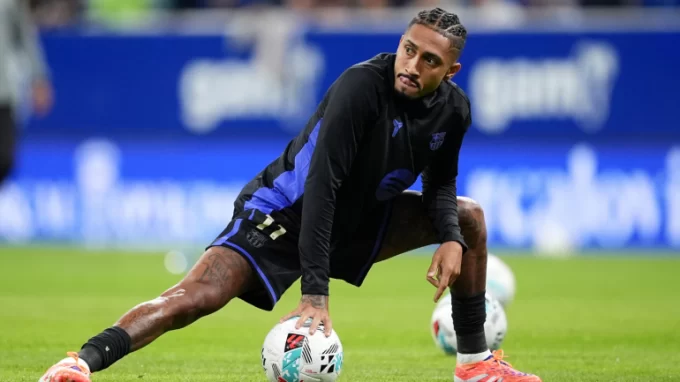
Barcelona’s Fragile Pursuit: When Injuries Threaten More Than Just a Season
A silence spreads over Camp Nou that no roar can drown out—two...
 Chris Marks2 Mins read
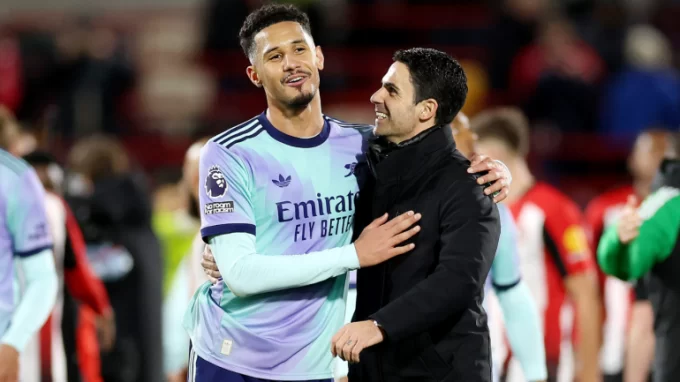
William Saliba: Arsenal’s Silent Architect or Its Greatest Gamble?
The air inside the Emirates shifts with unspoken tension—William Saliba, once a...
Joseph Bennett2 Mins read
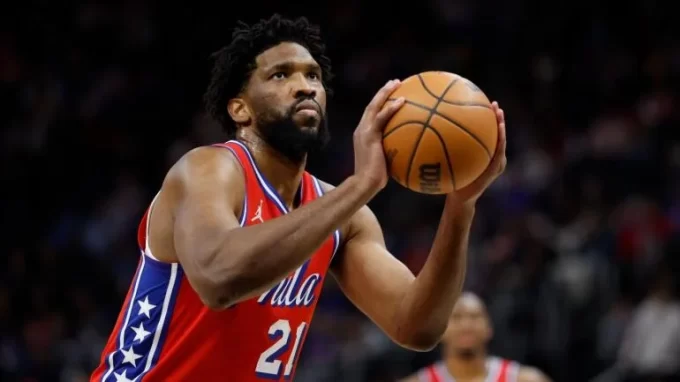
Joel Embiid’s Quiet Confidence: Is the 76ers’ Giant Ready to Rewrite His Story?
Joel Embiid is rarely one to make noise without purpose, and now,...
 Kirsten Collins1 Mins read
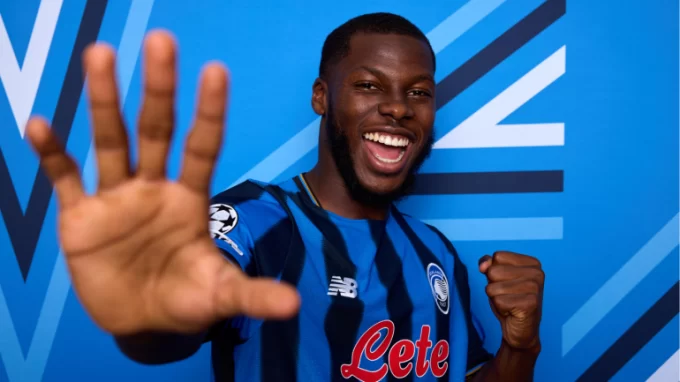
Juventus, Atalanta, and Arsenal’s Quiet Revolution: What’s Really Shaping This Week in Football?
The roar of Serie A stadiums masks a subtle shift, one that...
Kirsten Collins2 Mins read





Leave a comment