

Glamour in Zero Gravity: The All-Female Spaceflight That Redefined the Final Frontier
In a historic 11-minute journey, six trailblazing women—including Katy Perry, Lauren Sánchez, and Gayle King—ventured beyond Earth's atmosphere aboard Blue Origin's New Shepard rocket, blending science, celebrity, and empowerment in a mission that challenges traditional narratives of space exploration.
 Kirsten CollinsApril 14, 20252 Mins read36
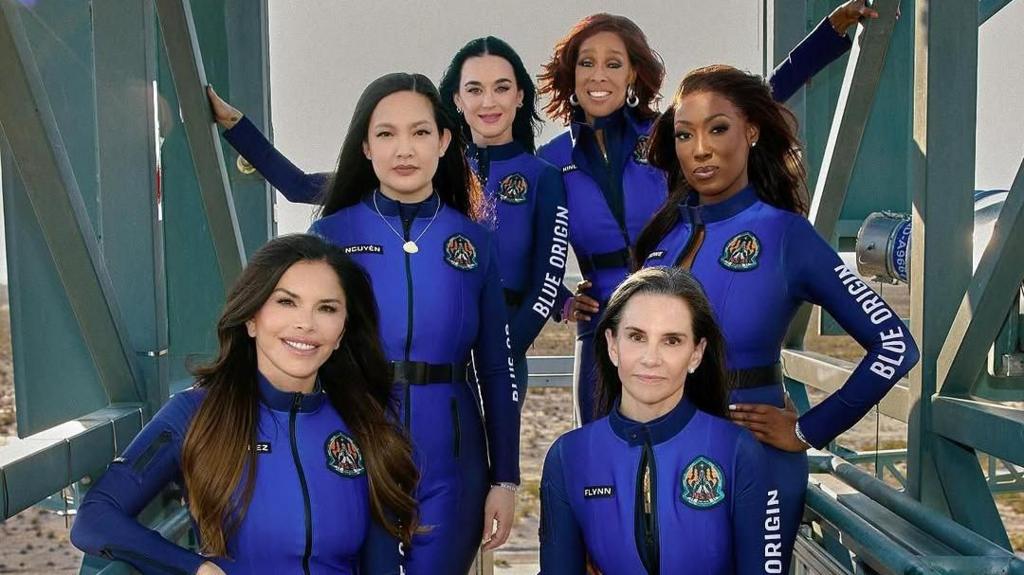
The roar of the rocket engines faded into the thin air as six women, adorned in custom-designed flight suits, crossed the Kármán line, marking a new chapter in space exploration. Among them were pop icon Katy Perry, journalist Lauren Sánchez, and broadcaster Gayle King, each bringing their unique narratives to this celestial voyage. Their mission aboard Blue Origin’s New Shepard wasn’t just a suborbital flight; it was a statement—a fusion of science, celebrity, and the enduring quest for equality.
The crew also included Amanda Nguyen, a civil rights activist; Aisha Bowe, a former NASA rocket scientist; and Kerianne Flynn, a film producer. Together, they represented a mosaic of backgrounds and professions, united by a shared ambition to reach beyond Earth’s confines. Their journey, lasting approximately 11 minutes, offered a brief yet profound experience of weightlessness and a view of our planet from the edge of space.
Beyond the Atmosphere, Beyond Expectations
This mission marked the first all-female crewed spaceflight since 1963, challenging long-standing gender norms within the aerospace industry. The inclusion of high-profile figures like Perry and King brought unprecedented attention to the endeavor, sparking conversations about representation and the evolving face of space travel. “This is bigger than going to space,” remarked Oprah Winfrey, who attended the launch to support her friend Gayle King. “This is overcoming a wall of fear, a barrier.”
The mission’s significance extended beyond its celebrity passengers. It highlighted the growing accessibility of space travel and the importance of diverse voices in shaping its future. By embracing both their femininity and their roles as pioneers, these women redefined what it means to be an astronaut in the 21st century.
A New Narrative in the Stars
As the capsule descended back to Earth, landing gently in the West Texas desert, the impact of the journey was only beginning to unfold. The mission served as a catalyst for discussions on inclusivity, the commercialization of space, and the intersection of science and popular culture. It posed questions about who gets to explore the cosmos and how those stories are told.
In the days following the flight, images of the crew in their sleek flight suits circulated widely, inspiring a new generation to look to the stars. The mission’s blend of glamour and grit challenged preconceived notions and opened the door for more diverse participation in space exploration.
As we reflect on this landmark event, we’re reminded that the journey to the stars is not just about technology or ambition; it’s about the stories we choose to elevate and the barriers we dare to break. The sky, it seems, is no longer the limit.







When Mercy Meets Tragedy: The Widow Who Forgave Her Husband’s Killer
The air thickens when forgiveness enters a room meant for grief. Imagine...
 Chris Marks1 Mins read

When Fear Became a Lifeline: Pete Davidson’s Reckoning in Rehab
There’s a silence that follows a mother’s voice when she confesses her...
 Joseph Bennett1 Mins read

Pete Davidson’s mom told him in rehab worst fear was learning he died
Pete Davidson is opening up about the heartbreaking moment he had with...
Chris Marks2 Mins read

Katie Couric’s Unexpected Spin on Sydney Sweeney’s American Eagle Ad: What’s Really Being Said?
Katie Couric stepping into a scene dominated by Gen Z glamour feels...
 Krista Freeland2 Mins read





Leave a comment