

The Last Optimist
Michael J. Fox’s new book Future Boy isn’t a memoir—it’s a message in a bottle from a man who’s been to the edge of time, and came back with a different kind of future.
 Chris MarksMay 7, 20252 Mins read27
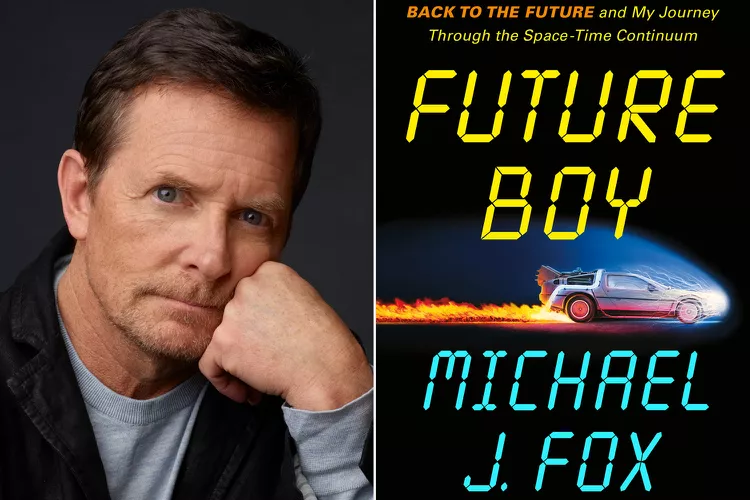
You never expect the boy who played with time to run out of it. Yet here we are, with Michael J. Fox—silver-haired, spine curved by disease, and smiling in the way only people who’ve wrestled gravity can smile—releasing what may be his final gift: Future Boy, a memoir written like a requiem and performed like a wink.
He calls it his “final installment,” but you don’t believe him. Fox has been announcing endings since 1991, when Parkinson’s arrived like a glitch in the reel. But endings, in his story, have always been temporary. What’s more permanent is something rarer than fame: hope that doesn’t make you roll your eyes.
Time Travel Isn’t What It Used to Be
The brilliance of Future Boy isn’t in what it remembers—but what it refuses to forget. This is a man who has stood in rooms with the most powerful people in the world, and still chooses to write about falling down the stairs. Not to earn sympathy, but to underscore something far more electric: “I’ve never been a victim,” he writes. “I’ve just had a very specific set of circumstances.”
The 1980s loved him for his boyish smirk, Reaganite charm, and that spark of TV-casual rebellion. But this book reads like an anti-epilogue to all that: less Marty McFly, more philosopher in Vans. The writing is crisp, unsentimental, but haunted by a strange serenity—like someone watching his own footprints disappear behind him and knowing that’s exactly how it should be.
Fox doesn’t reach for grandeur. He doesn’t eulogize himself. Instead, he dismantles the myths we built around him and hands us something quieter, but heavier. Grace, it turns out, isn’t cinematic.
What Happens After the Final Scene?
There’s something poetic in the fact that Future Boy is less about acting and more about what it means to endure. He barely mentions Hollywood. There are no score-settling anecdotes, no desperate pleas to be remembered. Instead, Fox explores time not as a plot device, but as a lived burden. The boy who once outran the past now walks with it in every tremble of his hand.
But don’t mistake it for a tragedy. There’s humor. Dry, wry, and loaded with that Midwestern humility that made us believe him in the first place. “I used to be Michael J. Fox,” he jokes. “Now I’m mostly J.” It’s the kind of line that lands like a sigh—soft, funny, and devastating all at once.
This is not the memoir of a man asking to be remembered. It’s the offering of someone who has already let go of legacy in favor of something quieter: truth without vanity, joy without spectacle. He’s no longer the boy from the future. He’s what comes after—when the cameras cut and the clock keeps ticking anyway.
So perhaps we’ve misunderstood who the real time traveler was all along. Not the man in the Delorean. But the man who stayed.







When “107 Days” Meets Outcry: Harris’s Book Tour Interrupted
The microphone crackled to life, and before Harris could finish her opening...
Chris Marks1 Mins read

Whispers in the Shadows: Why Holly Black’s Sequel Is a Dark Invitation We Can’t Ignore
The night isn’t just dark—it’s ravenous, greedy, and it’s coming for you....
Chris Marks2 Mins read

Why Stephenie Meyer’s Regret About Edward Changes Everything You Thought You Knew
The moment Stephenie Meyer admitted she wouldn’t pick Edward Cullen today, a...
Chris Marks2 Mins read

When Fear, Fury & Feathers Collide: Cinema, Superheroes, and a Confessional Album
Open with tension—the kind that threads through a scream, a reveal, and...
Chris Marks2 Mins read





Leave a comment