

Who Really Commands the NFL? Meet the New Kings of the Gridiron Payroll
Steelers’ T.J. Watt and Jets’ Sauce Gardner don’t just break records—they rewrite the rules of power and prestige across every NFL position. But does a paycheck tell the full story of what it means to dominate the game?
 Kirsten CollinsJuly 17, 20251 Mins read19

The numbers don’t lie—but they also don’t tell everything. When T.J. Watt signed the richest non-quarterback deal in NFL history, and Sauce Gardner stepped into the spotlight as the highest-paid cornerback, a seismic shift rippled beneath the surface of professional football. Suddenly, the gridiron’s financial throne is no longer reserved for the QBs who long dominated the narrative. What does this redistribution of wealth say about the evolving nature of power in the NFL? And more intriguingly, what forces have driven it?
Contracts, after all, are more than digits inked on paper—they are declarations of value, status, and influence. Watt’s historic extension with the Steelers isn’t just a payday; it’s a challenge to the traditional hierarchy of the league. And Gardner’s emergence in New York as a new financial apex for corners flips the script on what the game’s guardians demand in return for their talent and threat.
When Money Talks, What Does It Say?
Behind every dollar lies a story of market shifts, player agency, and team desperation. Watt’s deal is a testament to relentless performance, sure—but it also raises a sharper question: how are teams recalibrating what makes a player indispensable? Meanwhile, Gardner’s contract shatters assumptions about defensive backs being secondary commodities. “We’re seeing a cultural realignment,” said an NFL executive recently. “The players who define the game now get to define their worth.”
It’s tempting to view these salaries as mere celebrations of individual greatness, but beneath that lies a deeper narrative about how the NFL’s economic architecture is morphing—and what it means for the future.
The Invisible Currency of Influence
In the chessboard of NFL power, money moves are often the quietest yet loudest signals. What’s being bought, and what’s being sold? Watt and Gardner’s contracts don’t just buy loyalty; they buy cultural capital, they buy a seat at a table where quarterbacks used to reign alone. Could this shift herald an era where the value of defensive brilliance and versatility finally commands parity? Or is this just a momentary blip in an ever-fluctuating market?
As the league’s highest earners grow beyond traditional positions, one wonders: what other unspoken bargains are hidden beneath these eye-popping figures? And when the spotlight moves away from the QB, what stories go untold?






Barcelona’s Fragile Pursuit: When Injuries Threaten More Than Just a Season
A silence spreads over Camp Nou that no roar can drown out—two...
 Chris Marks2 Mins read
William Saliba: Arsenal’s Silent Architect or Its Greatest Gamble?
The air inside the Emirates shifts with unspoken tension—William Saliba, once a...
 Joseph Bennett2 Mins read
Joel Embiid’s Quiet Confidence: Is the 76ers’ Giant Ready to Rewrite His Story?
Joel Embiid is rarely one to make noise without purpose, and now,...
Kirsten Collins1 Mins read
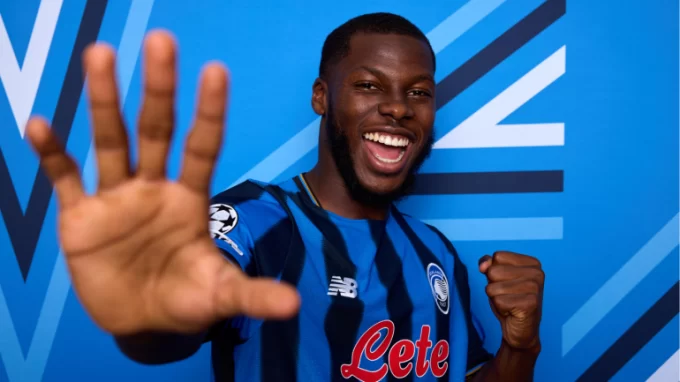
Juventus, Atalanta, and Arsenal’s Quiet Revolution: What’s Really Shaping This Week in Football?
The roar of Serie A stadiums masks a subtle shift, one that...
Kirsten Collins2 Mins read





Leave a comment