

When Hymns Break Free: The House of Worship Project’s Radical Reinvention
A bold reimagining of classic worship anthems challenges everything we thought we knew about sacred music. Is this the future of faith sound, or a provocative disruption that unsettles tradition?
 Chris MarksAugust 22, 20251 Mins read23
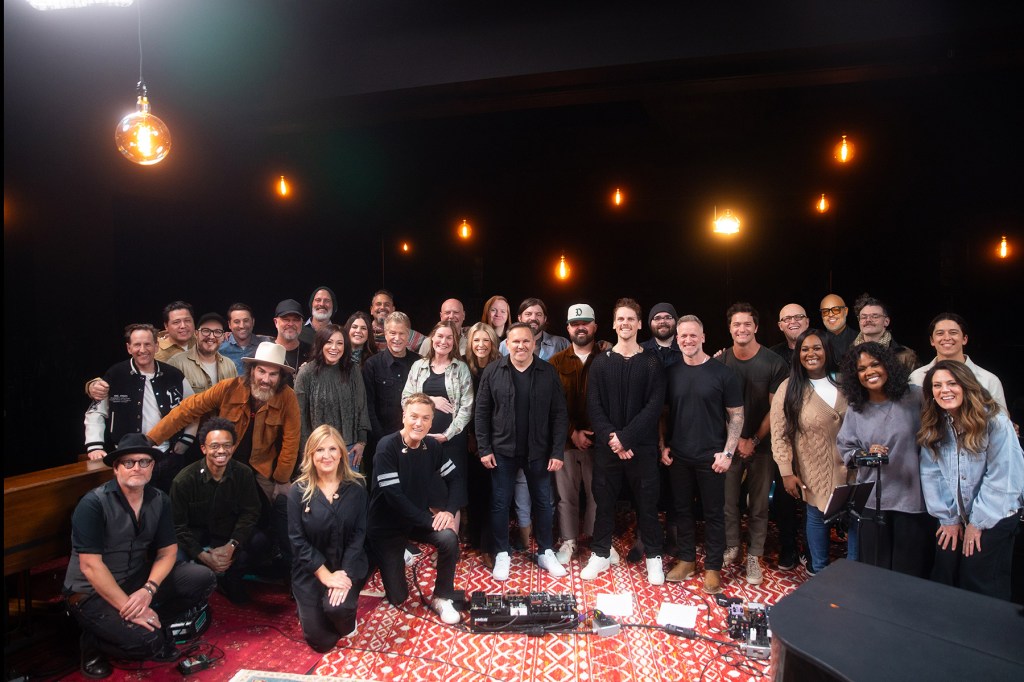
The familiar melodies of worship, once bound by the architecture of tradition, are suddenly unmoored—transformed by a project that dares to question reverence itself. The House of Worship Project doesn’t just cover classic hymns; it deconstructs, reassembles, and reanimates them for a world craving both the sacred and the unexpected.
But what happens when the anthems we grew up with become something unrecognizable? Who claims ownership of spiritual sound when the past is rewritten with modern sensibilities?
Sacred Disruption or Reverent Evolution?
To some, this project is nothing short of sacrilege—an audacious gamble with notes and nostalgia. Yet, to others, it is the essential pulse of faith caught in the electric heartbeat of now. A member of the creative team confessed, “We aren’t trying to erase the past; we want to invite a new dialogue between the old and the new.” This is no mere homage; it is a conversation—a provocative negotiation between tradition and innovation.
Can faith be renewed without rewriting its soundtrack? Or does this reinvention reveal a deeper, more urgent truth about spiritual expression in our fractured age?
The Thin Line Between Devotion and Experimentation
There is a tension in the air—between comfort and challenge, certainty and ambiguity. The project forces listeners to confront their own assumptions about what worship “should” sound like. Is the rawness, the unconventional rhythms, the unexpected instrumentation a betrayal—or a necessary evolution of how we connect to something larger than ourselves?
As one listener put it, “It feels like stepping into a cathedral where the walls are shifting beneath your feet. You’re unsteady, but awake.”
In the end, the House of Worship Project leaves us with a question rather than an answer: Can sacred music survive without surrendering its soul? Or does breaking free from its past finally allow it to breathe?
The hymns we knew are no longer safe—but perhaps that’s exactly where they need to be.







Laufey’s Opening Night Show at LA’s Crypto.com Arena: Best Moments
Laufey opened a two-night stand at Crypto.com Arena in downtown Los Angeles...
Chris Marks6 Mins read

Julie Adam Is Billboard Canada Women in Music’s 2025 Exec of the Year
Julie Adam is having a milestone year — and it’s getting even...
Chris Marks4 Mins read

Spinal Tap Tribute Album with Foo Fighters,Tool for Teen Cancer America
Spinal Tap may be a fake band, but its music is very...
Chris Marks2 Mins read

AxMxP Is K-Pop Rookie of the Month for September: Exclusive Photos
Ha Yoo Joon Image Credit: Chin Soyeon You debuted on Sept. 10....
Chris Marks2 Mins read





Leave a comment