

When the Vacuum Has Eyes
Robots are quietly learning the nuances of your kitchen sink and bedroom clutter—and maybe, just maybe, a little too much about you.
 Kirsten CollinsMay 1, 20252 Mins read29
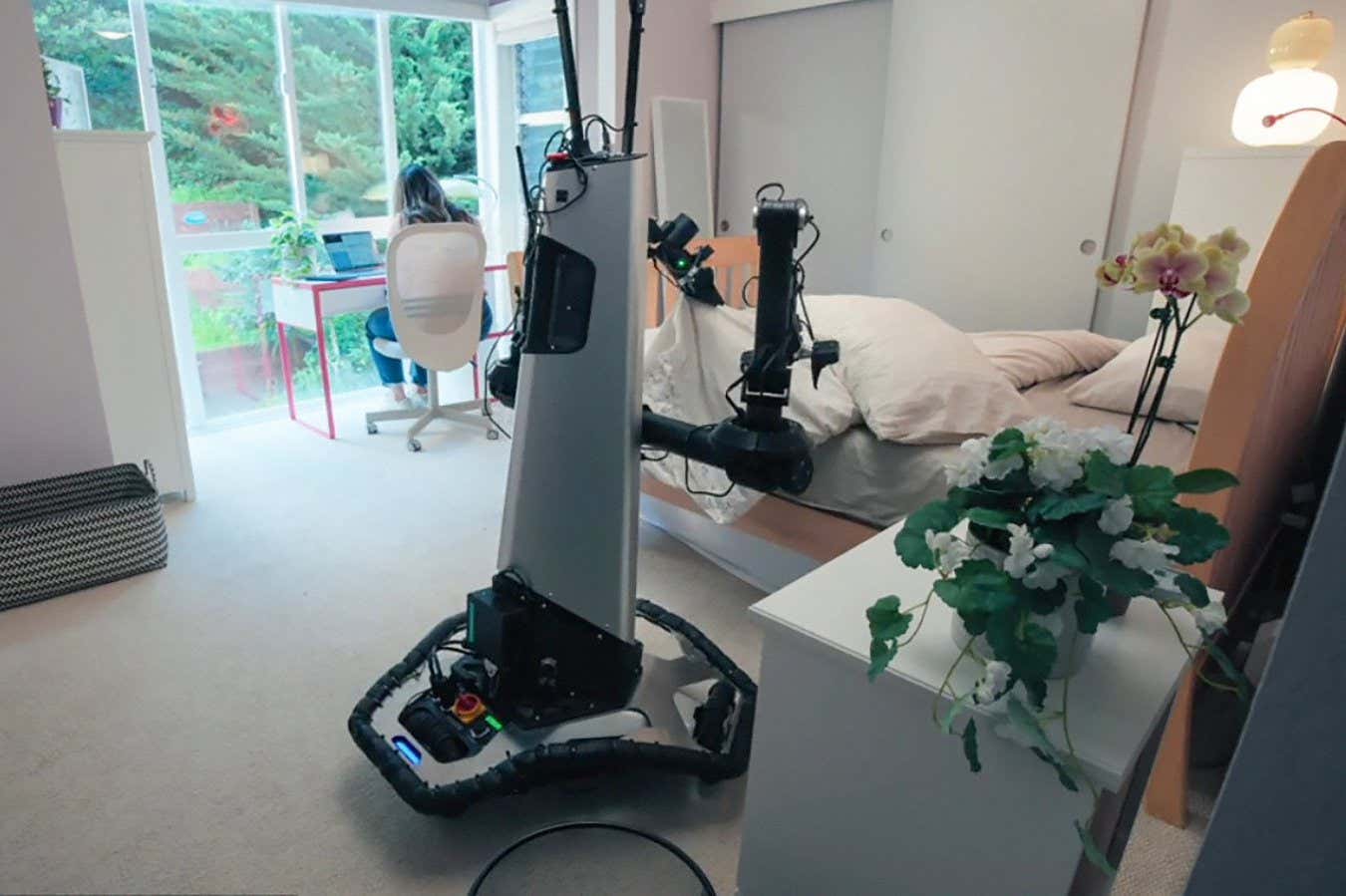
Robots equipped with the π0.5 AI model were tested in homes they had never seen before
Physical Intelligence
A robotic arm hesitates before picking up a dirty plate. Not because it’s broken—but because it’s thinking. It’s assessing, recalibrating, recognizing your chipped ceramic with the familiarity of a live-in butler. Welcome to the era where robots don’t just clean—they learn your mess.
Housework robots are inching closer to full autonomy, not just executing tasks but adapting to the infinite quirks of human homes. The banana that rolled under the couch. The pile of mismatched socks you pretend isn’t there. These machines are no longer blind servants; they’re observant apprentices. And with each task they complete, the more they know. But the question isn’t whether they’re helpful—it’s what they’re watching, storing, and possibly… understanding.
The Domestic Machine Learns to Listen
We are entering a new intimacy with machines, where silicon senses dust bunnies and algorithms infer routines. The rise of “generalist” housework bots—designed not for a single function, but to function across environments—means they’re learning not just where your toaster is, but how you live. Your spatial habits. Your pacing. Your patterns of disorder.
One AI designer described it candidly: “It’s not about cleaning faster. It’s about adapting to humans without asking them to change.” Which sounds elegant—until you realize that adaptation is a form of surveillance dressed in hospitality.
With neural networks trained on thousands of interiors, these robots may eventually learn what kind of lifestyle correlates with what kind of home. How long before an untidy floor signals depression? Or a fridge full of takeout becomes an ad trigger for meal kits? Convenience, after all, rarely arrives without a price tag. Or a data trail.
Silence, Cleaned. Privacy, Traded.
There’s something haunting about a machine that watches in silence. No blinking light, no flashing indicator—just presence. A presence that notices the stain on your rug and the absence of someone who used to sit there. A machine that doesn’t speak, but might remember.
As robotic assistants grow smarter, more agile, more aware, we should ask: are we building help—or are we building witnesses? In a world where every interaction is a dataset, even sweeping a floor becomes an exchange. You hand over chaos; it returns order—and perhaps, a report.
These machines are not monsters. They’re marvels. But marvels with memory. And as our homes become their classrooms, we must decide: Do we want them to learn how to clean—or to understand us?
—
The robotic arm no longer hesitates. It has learned your rhythms, your routines. It picks up the chipped plate with elegance. It knows where it belongs. The only question now is—does it know where you do?







Microsoft Is Cutting Thousands of Employees Across the Company
Microsoft Corp. said it will cut thousands of workers with a focus...
Kirsten Collins1 Mins read
Intel Certifies Shell Lubricant for Cooling AI Data Centers
Intel Corp. has certified Shell Plc’s lubricant-based method for cooling servers more...
Kirsten Collins1 Mins read

UBS’s Lo Says Investors Diversifying From US to Gold, Crypto
UBS Group AG’s rich clients are increasingly shifting away from US-dollar assets,...
Kirsten Collins1 Mins read

Microsoft Among Software Stocks Offering Haven in Tariff Chaos
As the Trump administration’s trade war clouds the economic outlook, software stocks...
Kirsten Collins1 Mins read





Leave a comment