

When Ann Wilson and Paula Abdul Dance: A Rock Legend Meets a Pop Icon
Ann Wilson of Heart, the powerhouse rock singer, once took a moment to step into the world of dance with the help of pop legend Paula Abdul. But what happens when these two forces of music collide—how does it redefine the boundaries of performance?
 Kirsten CollinsMay 7, 20253 Mins read34

What happens when a rock icon, known for her voice that can shake the heavens, steps into the world of pop choreography? For Ann Wilson of Heart, this wasn’t just a moment; it was a collision of worlds—a fusion of power and precision that would make anyone question the boundaries of musical performance. The scene: Paula Abdul, the pop legend and choreographer, was teaching one of rock’s most revered figures how to move like she never had before. It wasn’t just about the music—it was about redefining what it meant to perform.
In a world where genres are often defined by their contradictions, this unexpected pairing between Ann Wilson and Paula Abdul embodies the very essence of genre-bending. Heart’s anthem-heavy rock meets the sleek choreography of pop’s brightest star. One is known for commanding the stage with voice alone, the other for guiding bodies in a rhythmic embrace. What happens when these forces meet?
The Choreography of Legends
Ann Wilson, often compared to a force of nature, was never one to shy away from the spotlight. She was a woman in a male-dominated industry, and she thrived. But could she dance? That’s the question Paula Abdul would soon answer. Abdul, a former Laker Girl turned international sensation, took it upon herself to teach Wilson a few key moves, shaping a performance style that blended heart-throbbing rock with smooth, stylized motion. There’s something deeply fascinating about seeing the two women—one with her voice, the other with her body—collaborating, even if it was just for a brief moment in time.
And let’s be honest: the idea of Ann Wilson dancing isn’t exactly one that fits neatly into any preconceived box. She’s known for her commanding stage presence, an emotional force with a voice that could bring down the house. To see her under the tutelage of someone like Abdul—whose moves have defined pop culture—raises more than just a few eyebrows. Could Wilson, whose rock credentials are carved in stone, step into a new territory and show us a side we’ve never seen before?
A Moment of Surprising Depth
But it’s not just about the choreography. There’s a deeper question lurking here: What happens when artists who have shaped their respective genres push beyond their comfort zones? There’s an element of vulnerability in this—allowing someone else, particularly from a vastly different musical world, to shape their artistry in ways they never anticipated. And in that, there’s something profoundly human. For Ann Wilson, this wasn’t just about learning dance moves; it was about embracing a new aspect of her performance, one that broke the mold of what a rock singer “should” be.
As much as the idea of a rock legend learning dance moves from a pop icon might seem playful, it’s also a reminder of the blurred lines between genres, and the fluidity with which performers cross them. “It was a great moment of growth for me,” Wilson reflected, her voice hinting at something more than just a simple dance lesson. For both women, it wasn’t just about learning new steps—it was about embracing the unknown and allowing themselves to be shaped by new experiences.
The Story We Didn’t Expect
In the grand narrative of rock and pop, the moment when Ann Wilson and Paula Abdul crossed paths is one that feels almost destined to be forgotten in the noise of louder stories. But isn’t that part of what makes it so intriguing? The collision of these two worlds didn’t make headlines at the time, but now, looking back, it feels like a metaphor for the times when artists are allowed to be more than their labels.
Isn’t this what the future of music needs? A little less division, and a little more space for collaboration between the unexpected? Maybe, in the end, it’s the mystery of these unlikely moments that keeps us asking: what else is out there, waiting to be discovered when two musical forces cross paths in ways we never imagined?
In a world where musical careers can feel boxed in by genre and expectation, there’s something deeply freeing in witnessing icons, like Ann Wilson and Paula Abdul, remind us of what it means to embrace not just music, but the very act of performance itself—regardless of what shape that takes.






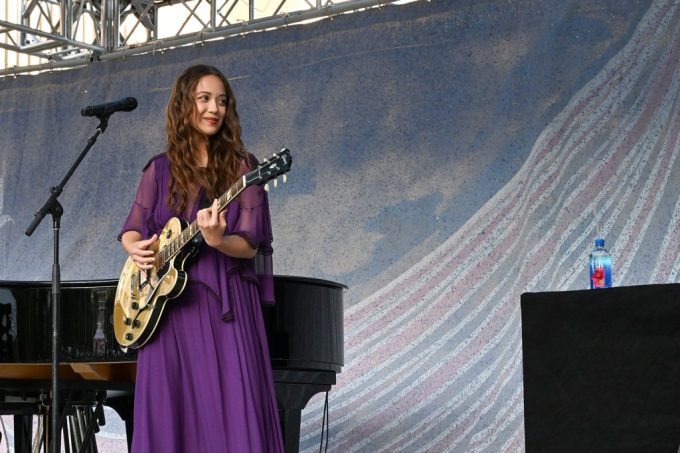
Laufey’s Opening Night Show at LA’s Crypto.com Arena: Best Moments
Laufey opened a two-night stand at Crypto.com Arena in downtown Los Angeles...
 Chris Marks6 Mins read
Julie Adam Is Billboard Canada Women in Music’s 2025 Exec of the Year
Julie Adam is having a milestone year — and it’s getting even...
Chris Marks4 Mins read
Spinal Tap Tribute Album with Foo Fighters,Tool for Teen Cancer America
Spinal Tap may be a fake band, but its music is very...
Chris Marks2 Mins read
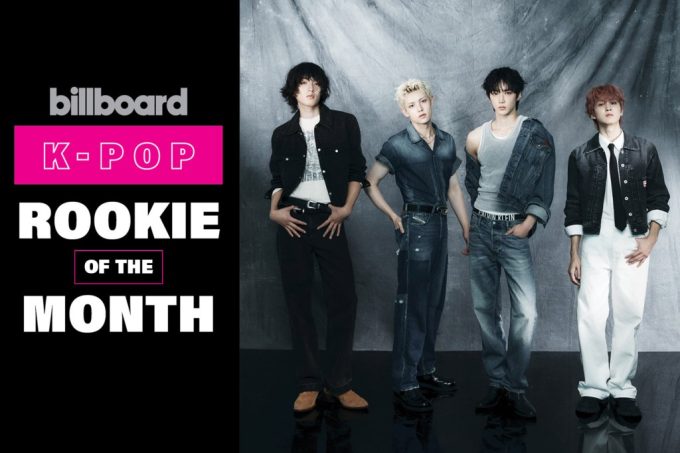
AxMxP Is K-Pop Rookie of the Month for September: Exclusive Photos
Ha Yoo Joon Image Credit: Chin Soyeon You debuted on Sept. 10....
Chris Marks2 Mins read





Leave a comment