

When Folk Whispers Kendrick: The Cover You Weren’t Supposed to Hear
Iron & Wine and Ben Bridwell didn’t just cover Kendrick Lamar and SZA—they distilled it into something uncomfortably beautiful. It’s not just a song; it’s a cultural mirror cracked in all the right places.
 Joseph BennettJuly 31, 20252 Mins read27

You don’t expect to hear “All the Stars” in a whisper. Yet here it is—stripped, slowed, sacred—emerging not from a nightclub or a car stereo, but from two men with acoustic guitars and an ache. Sam Beam (Iron & Wine) and Ben Bridwell don’t so much sing the song as trace it with trembling fingers, like they’re handling something breakable. And they are.
Because when indie-folk covers hip-hop, something strange happens. You begin to hear not just the lyrics, but the silence between them. The original—a towering anthem of Black excellence, coded pain, and untamed pride—now echoes differently in this new room. It’s not lesser. It’s not greater. It’s a ghost. One that asks: Who’s allowed to hold the mic when the story’s not theirs?
A Song Wears a New Skin, and It Doesn’t Fit Easily
It would be easy to dismiss this cover as indulgence or novelty. But that would be a mistake. Bridwell’s voice breaks just enough to let the song bleed. Beam, always more prayer than performance, gives the melody the same reverence he gives heartbreak. “This may be the softest protest we’ve ever made,” he murmured between songs, half-grinning.
There’s no beat drop. No chorus built to shake stadiums. And yet it unsettles. Because when folk artists step into the language of rap and R&B, they don’t just borrow a melody—they drag cultural history into the open, and sometimes into the wrong light. It’s beautiful. It’s borrowed. It’s complicated. And it dares us to listen differently.
Where Covers End and Culture Begins
There’s a quiet violence to reinterpretation—especially when two white men sing a song born of Black futurism and trauma. It’s not about permission. It’s about precision. And the questions that refuse to sit still: Is empathy enough? Can vulnerability translate across racial memory? Or is this, like so much else, a performance of solidarity that still centers the wrong voice?
Yet perhaps that’s the point. Music, like identity, fractures under scrutiny. And sometimes, the most uncomfortable art is the most necessary. Not because it solves anything, but because it makes us sit in the discomfort longer than we want to.
When Iron & Wine sang “All the Stars,” they didn’t try to sound like Kendrick or SZA. They didn’t need to. They sounded like themselves—yearning, hesitant, reverent—and in that tension, the cover becomes a kind of mirror. Not of the original artists. But of the audience. Of us.
And maybe that’s the most honest cover of all: the one that plays us back to ourselves, quiet and questioning.







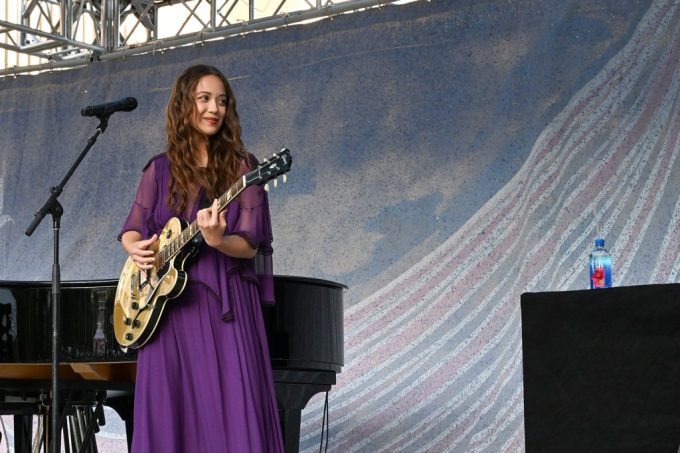
Laufey’s Opening Night Show at LA’s Crypto.com Arena: Best Moments
Laufey opened a two-night stand at Crypto.com Arena in downtown Los Angeles...
 Chris Marks6 Mins read

Julie Adam Is Billboard Canada Women in Music’s 2025 Exec of the Year
Julie Adam is having a milestone year — and it’s getting even...
Chris Marks4 Mins read
Spinal Tap Tribute Album with Foo Fighters,Tool for Teen Cancer America
Spinal Tap may be a fake band, but its music is very...
Chris Marks2 Mins read
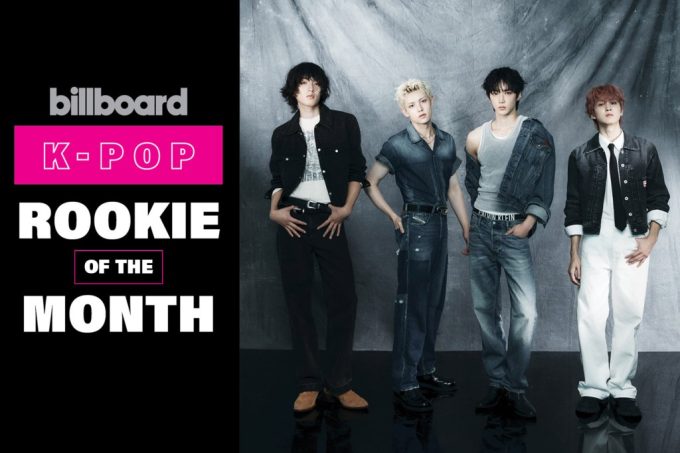
AxMxP Is K-Pop Rookie of the Month for September: Exclusive Photos
Ha Yoo Joon Image Credit: Chin Soyeon You debuted on Sept. 10....
Chris Marks2 Mins read





Leave a comment