

Summer Secrets: The Killer Returns—and So Does Our Curiosity
A slick legacy sequel reunites Jennifer Love Hewitt and Freddie Prinze Jr., but its tongue-in-cheek slasher meets modern satire raises more questions than answers—and we’re dying to find out why.
 Kirsten CollinsJuly 16, 20252 Mins read15
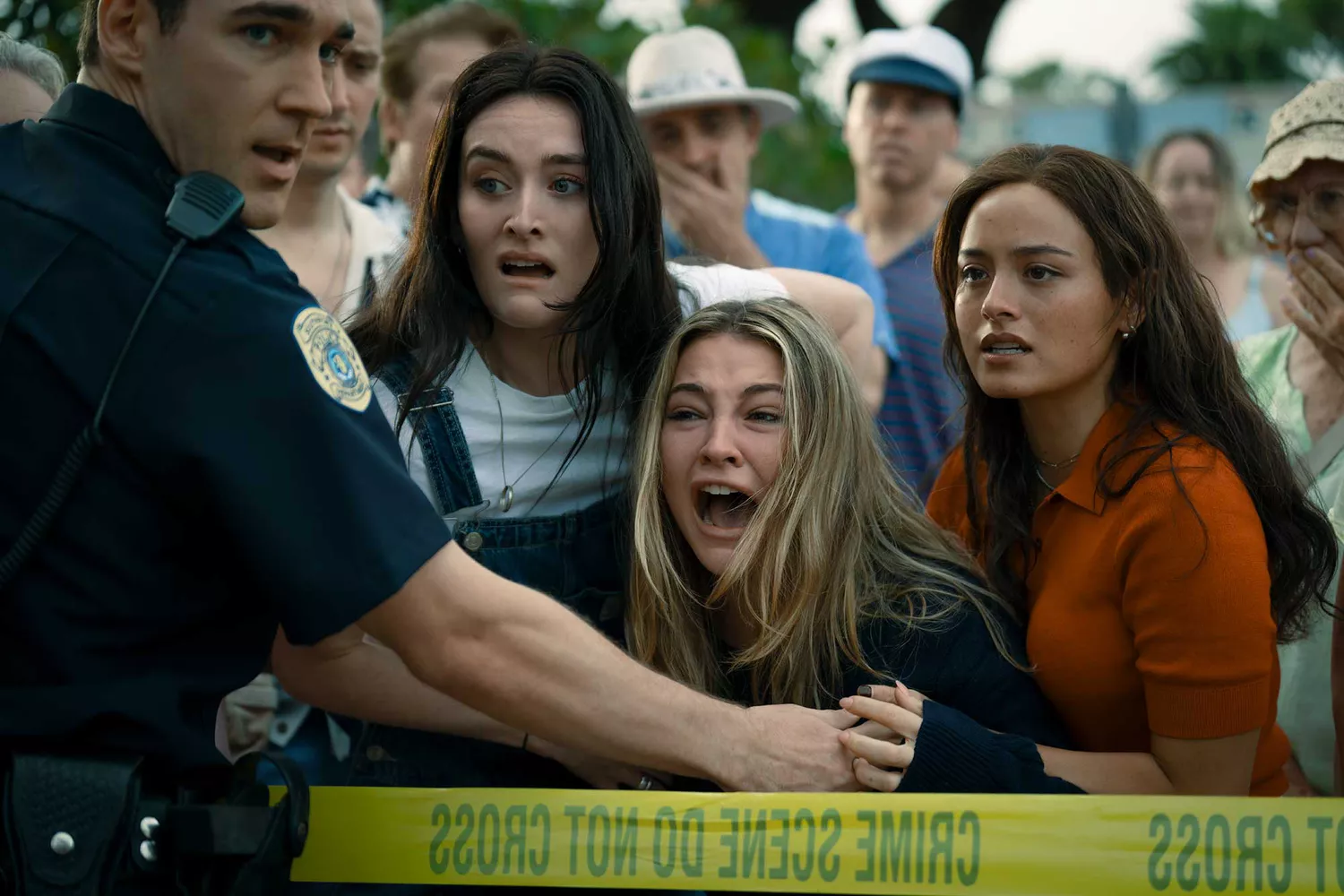
My pulse quickened the moment Julie James appeared—Cure tee, disillusioned eyes—whispering, “Nostalgia’s overrated.” A confession laced with defiance, it was the perfect incantation to summon both dread and reflection.
Ava (Chase Sui Wonders) steps back into Southport’s sun-bleached streets for a friend’s engagement, and within moments, history repeats itself: the hook-wielder’s return, bodies discovered, old trauma unearthed. But this time, the town roars with social media scandals, million-dollar developments, and a killer who knows everyone’s sins—past and present.
Legacy Meets Laughter
The film thrives on its meta impulse. When Julie delivers that brutal line, it’s not just comedy—it’s critique. Director Jennifer Kaytin Robinson and co-writer Sam Lansky seem acutely aware of the franchise’s silliness, and they lean into it. Madelyn Cline steals every scene as Danica, alternating between biting humor and primal terror. She doesn’t just scream—she inhabits fear. Her presence ignites every frame and leaves you wondering if she might just eclipse the original icons.
The Weight of Return
Bringing back Jennifer Love Hewitt and Freddie Prinze Jr. as seasoned mentors feels both comforting and destabilizing. Hewitt’s Julie is now a trauma professor, her iconic scream muted by a more measured gravitas—and yet, she never fully penetrates the film’s tonal fabric. Freddie Prinze Jr. fits easily into the story’s rhythm, but one wonders: are they flesh or nostalgia? Their presence is a bridge—sometimes sturdy, other times creaking.
Where Horror Meets Hypocrisy
In a world of privileged protagonists, gentrification isn’t just backdrop, it’s motive: the mansion-built town, online fame, real-estate money—this slasher wears a suit. Technology brands the killer (“I know what you did”), amplifying paranoia into pixels. And yet characters act like horror novices, ignoring obvious mistakes. It’s as if the film is poking fun at horror conventions while trapped in them—asking us to laugh, then scream, then ask why we ever expected better.
The final act unspools with deliberate absurdity—mannequins, parade floats, bizarre reveals that don’t quite fit. Critics are divided: Entertainment Weekly praised its humor and Cline’s performance with a B‑-, while others dismissed it as “preposterously dumb” or “torture.” That divergence isn’t a flaw—it’s the point. It wants to unsettle, not settle. It wants us debating its logic and its heart.
We began with a defiant dismissal: “Nostalgia’s overrated.” By the end, that line resonates—with irony, with longing, with the realization that perhaps we crave comfort, even in fear. Does this sequel rekindle the old flame or snuff it out? Did we come for screams—or for a mirror?
So ask yourself: if a hook-wielding killer returns in full view of our screens—and we still watch—what does that say about us?





When Are the Oscars 2026? Date of the Academy Awards – Hollywood Life
Image Credit: AFP via Getty Images The Oscars are officially on the...
Kirsten Collins1 Mins read
Ticket Prices & Presale Details – Hollywood Life
View gallery Image Credit: Dave J. Hogan/Getty Images Harry Styles is embarking...
Kirsten Collins2 Mins read

See Release Date, Cast & Trailer – Hollywood Life
Image Credit: ©2026 Amazon MGM Studios Content Services LLC Masters of the...
Kirsten Collins1 Mins read
Where Is Lawrence Jones on ‘Fox & Friends’? Health Update Amid Hiatus – Hollywood Life
Image Credit: Getty Images Fans of Lawrence Jones, a Fox & Friends...
Kirsten Collins1 Mins read





Leave a comment