

The Ghost in the Spotlight: Cooper Hoffman’s Quiet Inheritance
Carrying his father’s name was never optional. But what Cooper Hoffman chooses to do with the weight of that legacy is eerier, quieter—and far more dangerous than applause.
 Kirsten CollinsMay 5, 20252 Mins read25
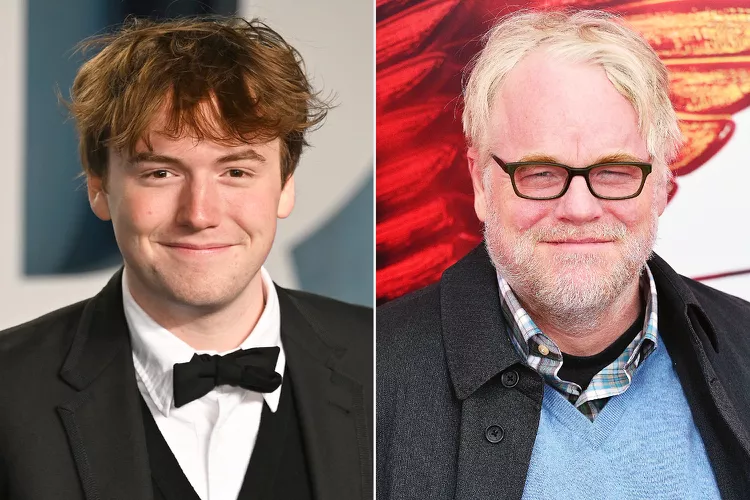
He doesn’t look like he’s performing. He looks like someone trying not to. In every close-up of Cooper Hoffman, there’s a flicker of restraint, as if acting were something sacred and private, not sold in trailers or clutched in hashtags. He doesn’t chase the camera. He lets it find him. And when it does, it finds something ancient: grief, maybe—or memory.
The question of what it means to be Philip Seymour Hoffman’s son isn’t one you answer in press junkets. You answer it in silence. Or in the long, lonely walks between scenes, like the one Cooper describes filming for The Long Walk, when his thoughts drifted, inevitably, toward his father. “I thought about him a lot. Especially then.” No tears. No crescendo. Just the flick of a shadow you only notice after it’s gone.
Fathers, Ghosts, and the Camera That Never Blinks
Legacy in Hollywood is a currency, but in the Hoffman family, it feels more like a curse. Philip Seymour Hoffman was not a movie star—he was a shape-shifter, a furnace, a holy terror of truth. He didn’t just act, he devoured. And now his son, still green but promising, steps into that same burnished spotlight with something bordering on reverence. But also resistance.
There’s something beautifully unnerving about Cooper’s presence onscreen. He doesn’t mimic his father, nor does he reject him. Instead, he plays like someone raised around brilliance, yet untouched by the fever of fame. That quiet, that near-stillness—it’s either genius incubating or the prelude to withdrawal. And maybe that’s the real performance: the act of staying present in a room still echoing with applause that wasn’t meant for you.
The Silence Between Applause
In Licorice Pizza, his debut with Paul Thomas Anderson, Cooper was cast not because of his surname, but because, as Anderson claimed, “he just had it.” Not charisma, not polish—it. That elusive, cinematic oxygen that can’t be faked. But the question nags: what if it isn’t sustainable? What if he vanishes between roles, retreating into the very shadow he’s trying to honor?
Hollywood loves a bloodline until it doesn’t. Until the child of genius fails to set themselves ablaze. Cooper seems aware of that trap. He sidesteps it. Avoids the spotlight parties. Gives interviews with the nervous clarity of someone who still feels like an intruder. There is power in that discomfort. In not assuming you belong.
He walked through the role and thought of his father. And somewhere between memory and performance, Cooper Hoffman became something more haunting than a rising star: he became a question. Not of talent, but of fate. What if the greatest tribute to legacy is not imitation—but escape?






Who Is Harry Styles’ ‘Aperture’ About? Breakdown of the Lyrics – Hollywood Life
View gallery Image Credit: Getty Images We’ve doing doing all this late...
Kirsten Collins1 Mins read

When Are the Oscars 2026? Date of the Academy Awards – Hollywood Life
Image Credit: AFP via Getty Images The Oscars are officially on the...
Kirsten Collins1 Mins read
Ticket Prices & Presale Details – Hollywood Life
View gallery Image Credit: Dave J. Hogan/Getty Images Harry Styles is embarking...
Kirsten Collins2 Mins read
See Release Date, Cast & Trailer – Hollywood Life
Image Credit: ©2026 Amazon MGM Studios Content Services LLC Masters of the...
Kirsten Collins1 Mins read





Leave a comment