

The Tackle He Couldn’t Miss
Josh Hines-Allen faced a season unlike any other—and it didn’t happen on the field. When a defensive end becomes a father at war with something he can't fight in pads, the meaning of victory shifts entirely.
 Kirsten CollinsJuly 29, 20252 Mins read25
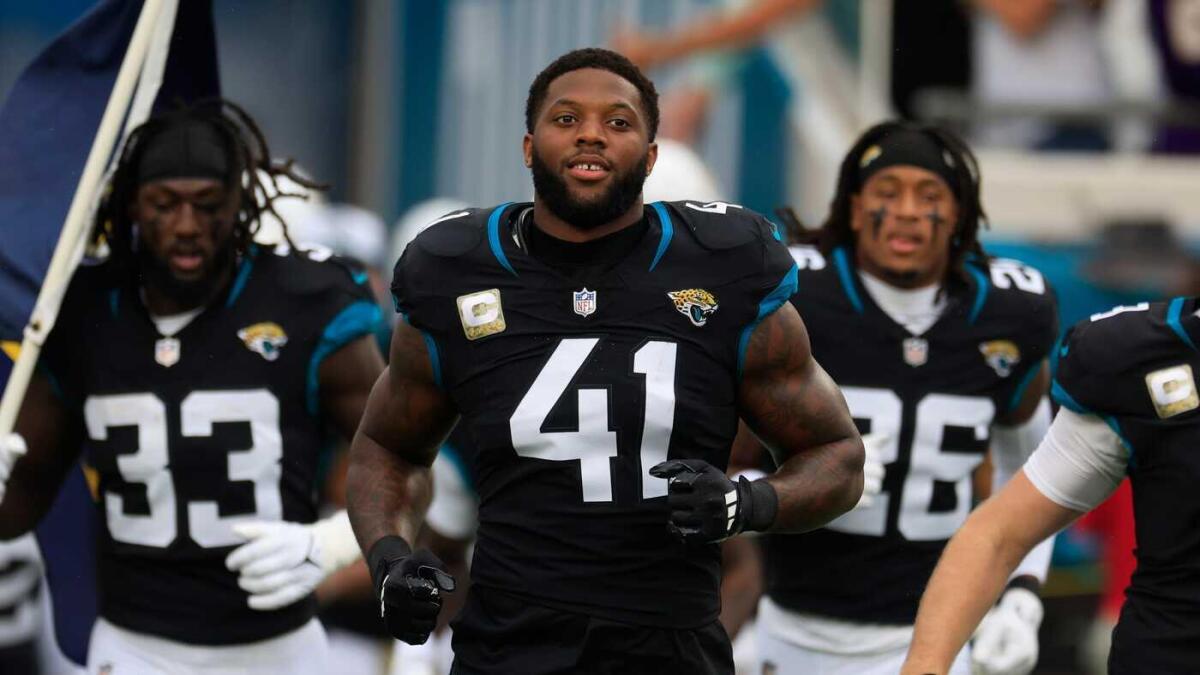
There are hits you recover from and ones you don’t. For Josh Hines-Allen, the impact came not under stadium lights, but in a sterile room where strength wore a hospital gown and IV lines looked like lifelines.
For the Jaguars’ defensive end, 2024 was supposed to be a year of headlines, contracts, sacks. But fate, without a helmet or whistle, blew past the line and blindsided him with something no playbook could counter. His young son was diagnosed with cancer. There are no post-game interviews for that kind of news—only the long, slow silence that rewrites your idea of purpose.
While Jacksonville debated edge rush technique and playoff potential, Hines-Allen’s real season happened behind the scenes. Between chemo sessions and whispered prayers, he learned a different kind of discipline—one that had nothing to do with schemes or stats. “Every morning felt like the fourth quarter,” a friend close to the family shared. “You didn’t know what the score was, but you had to show up like you were winning.”
More Than Muscle, More Than Football
It’s easy to forget that players don’t shed their lives when they suit up. Josh Hines-Allen is a terrifying presence on the edge—a force quarterbacks watch even before the snap. But inside, he was holding together a reality no training staff could tape. There’s a mythology in sports that pain is to be overcome, not held. But what if the bravest thing is not to bury it—but to walk onto the field anyway, carrying it with you?
This summer, he announced what most of the league didn’t even know was unfolding: his son is in full remission. The crowd clapped for a child they never met. And for a father who had spent a year showing up to two battles, both brutal and invisible. Not because it was expected—but because he couldn’t imagine doing anything else.
When the Real Game Ends, and the Lights Stay On
There is no stat line for nights spent in pediatric ICUs. No slow-motion replays for courage that doesn’t roar. What Hines-Allen did—what he lived—isn’t a comeback story. It’s something quieter, and harder to write: the refusal to fall apart. In an era obsessed with “legacy,” he chose something else. Presence. Intimacy. Sacrifice. Football will resume. So will press conferences and postgame breakdowns. But something changed in that year. Not just for him, but for those watching without realizing it.
The question now isn’t whether Hines-Allen will return stronger. It’s whether we’ve learned to see strength differently at all.
Victory, it turns out, doesn’t always look like celebration. Sometimes, it sounds like a doctor’s whisper: He’s clear.
And sometimes, even the toughest man on the field has to cry… not because he lost—but because, for once, he didn’t have to fight anymore.




Barcelona’s Fragile Pursuit: When Injuries Threaten More Than Just a Season
A silence spreads over Camp Nou that no roar can drown out—two...
 Chris Marks2 Mins read
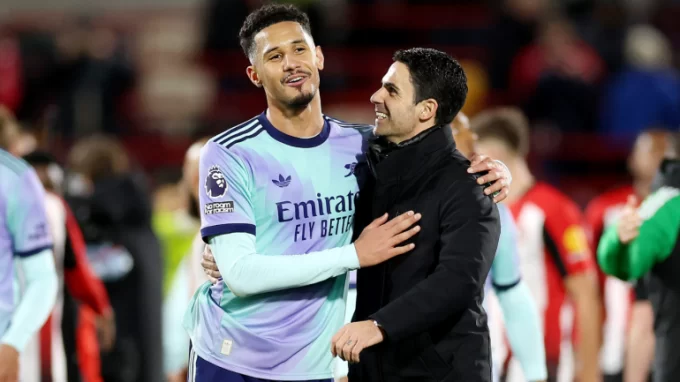
William Saliba: Arsenal’s Silent Architect or Its Greatest Gamble?
The air inside the Emirates shifts with unspoken tension—William Saliba, once a...
 Joseph Bennett2 Mins read
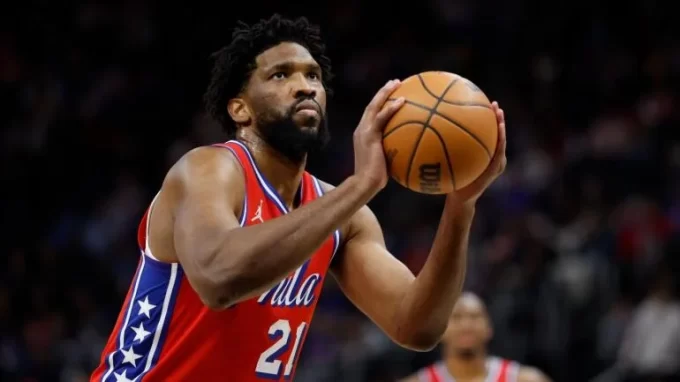
Joel Embiid’s Quiet Confidence: Is the 76ers’ Giant Ready to Rewrite His Story?
Joel Embiid is rarely one to make noise without purpose, and now,...
Kirsten Collins1 Mins read
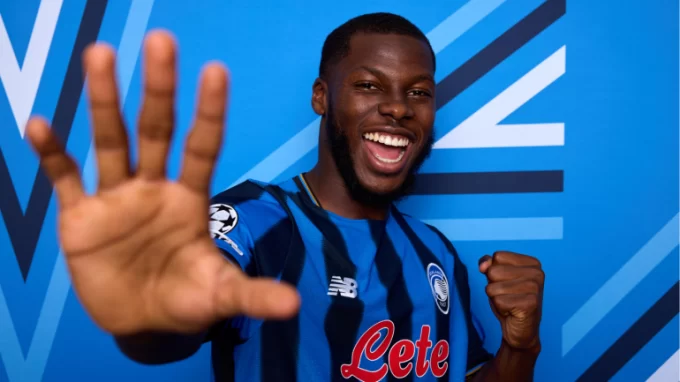
Juventus, Atalanta, and Arsenal’s Quiet Revolution: What’s Really Shaping This Week in Football?
The roar of Serie A stadiums masks a subtle shift, one that...
Kirsten Collins2 Mins read





Leave a comment