

Jannik Sinner’s Silence: What’s Being Left Unsaid About His Doping Ban
Jannik Sinner’s decision to remain tight-lipped about the messages he did and didn’t receive during his doping ban is as perplexing as it is telling. In a world where silence speaks volumes, what does his restraint say about the tennis world, the media, and perhaps even himself?
 Joseph BennettMay 8, 20253 Mins read251
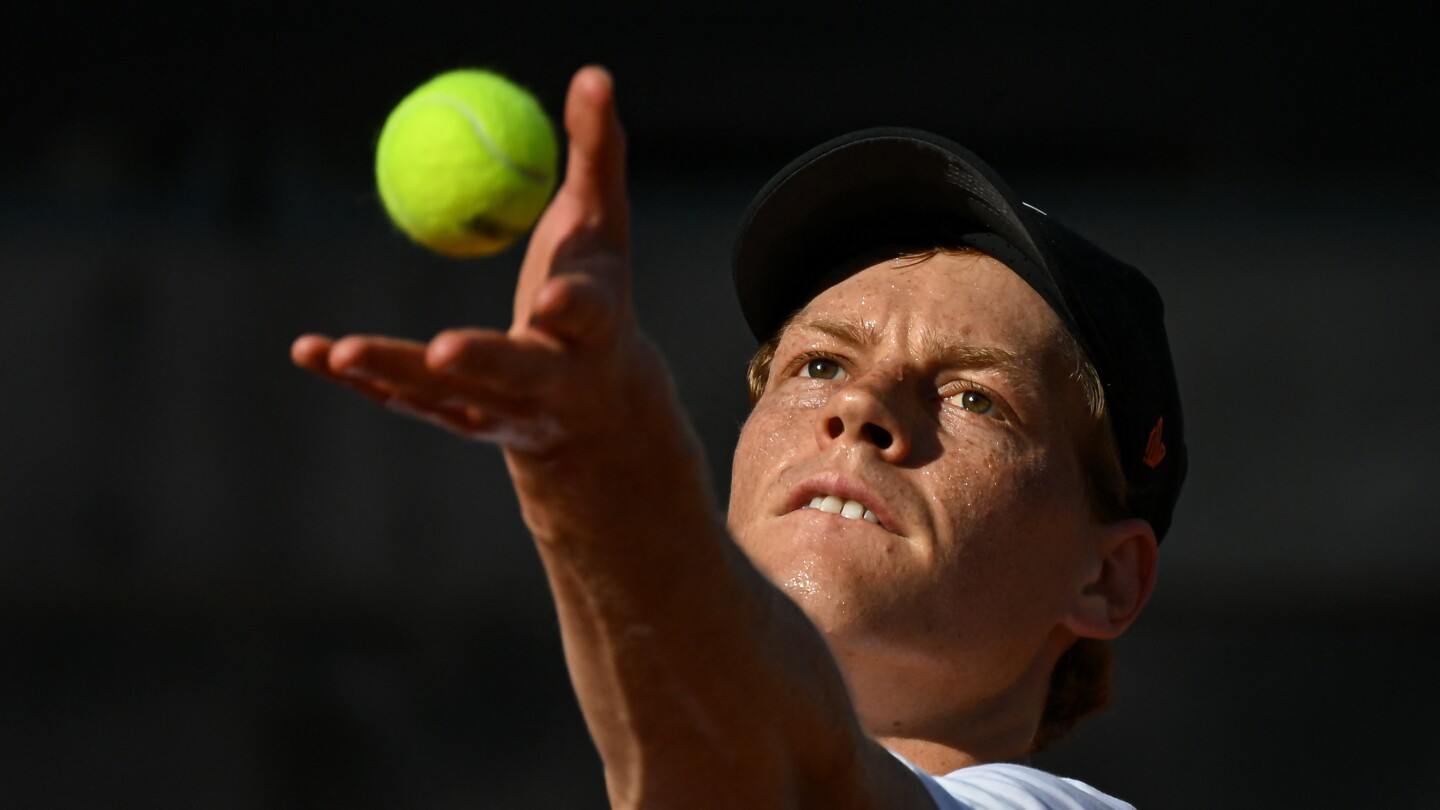
When Jannik Sinner refused to name names regarding the messages he did or didn’t receive during his doping ban, the silence echoed louder than any statement could. In the world of professional tennis, where every press conference is a performance and every sentence is weighed, his restraint was both a revelation and a challenge. Why the silence? What are we not hearing?
On the surface, it’s easy to dismiss this as another public relations move, another veiled attempt to steer the narrative, a subtle way of dodging difficult questions. But there’s something more unsettling about it. Could Sinner’s silence be a deliberate act of defiance, a quiet commentary on the hypocrisy of the system around him? Or is it an indication of a deeper isolation—a player caught between his public image and private truth?
The Messages That Were and Weren’t Sent
In a sport where every detail is scrutinized and every rumor is dissected, the decision to not address who stood by him during his suspension feels like an unresolved plotline. Sinner has always been a player of few words, more focused on his game than on the trappings of fame. But this time, his words—or lack thereof—are worth more than any victory on court.
Think about it: when a rising star like Sinner finds himself in the spotlight for a reason other than his skill, his fans and critics alike expect transparency. But when faced with the inevitable question about his doping ban—who reached out to him, who offered support, and who distanced themselves—he chose to remain silent. Was this an innocuous omission, or was there more to the story? Could it be that those who reached out were not the ones we expect?
“The tennis world has always been a family, at least in public,” said one long-time observer. “But what happens when a scandal hits? Who’s really by your side?”
A World Behind Closed Doors
In a sport that thrives on spectacle, it’s easy to forget the loneliness of its stars. Behind the cheers, the flashing lights, and the endless interviews lies a world few ever glimpse. The scrutiny is relentless, and the emotional toll—immense. The question is: when a scandal like a doping ban hits, who stands with the athlete behind closed doors? And more importantly, who turns away?
Sinner’s silence may be his way of protecting himself, but it’s also a window into a darker side of tennis—a world where loyalties are tested, where alliances can shift on a dime, and where the lines between public persona and private life blur beyond recognition.
Did the sport’s power players—coaches, agents, rivals—reach out to offer a word of comfort, or was Sinner left to weather the storm alone? The fact that we don’t know tells us something important: in the high-stakes world of professional tennis, the price of loyalty can be steep, and the cost of betrayal can be staggering.
Silence as Strategy?
Is Sinner’s silence a form of strategy? Could it be that by withholding the names of those who offered their support, or those who withheld it, he’s forcing the tennis world to confront an uncomfortable truth? Maybe the silence is not just about protecting his image, but about subtly calling out the system that’s quick to judge but slow to offer real compassion.
In a way, his refusal to name names is the loudest statement he could make. It raises questions about the tennis ecosystem: How many athletes have faced similar challenges but found themselves abandoned when the cameras turned off? Sinner, ever the enigma, may be unwilling to play the media’s game, but his silence opens up a larger conversation about the treatment of players in times of crisis.
Perhaps it’s time for the tennis world to reconsider its priorities. Sinner’s doping suspension isn’t just a story about one player—it’s a reflection of the sport’s often murky relationship with fame, loyalty, and redemption.
As the world waits for Sinner to speak on this matter more fully, one has to wonder: In an era where athletes are increasingly viewed as brands to be managed, is it possible to truly support them without exploiting their pain for the next headline?
The real question remains: what does Jannik Sinner know about the tennis world that none of us are ready to hear?






Barcelona’s Fragile Pursuit: When Injuries Threaten More Than Just a Season
A silence spreads over Camp Nou that no roar can drown out—two...
 Chris Marks2 Mins read
William Saliba: Arsenal’s Silent Architect or Its Greatest Gamble?
The air inside the Emirates shifts with unspoken tension—William Saliba, once a...
Joseph Bennett2 Mins read
Joel Embiid’s Quiet Confidence: Is the 76ers’ Giant Ready to Rewrite His Story?
Joel Embiid is rarely one to make noise without purpose, and now,...
 Kirsten Collins1 Mins read
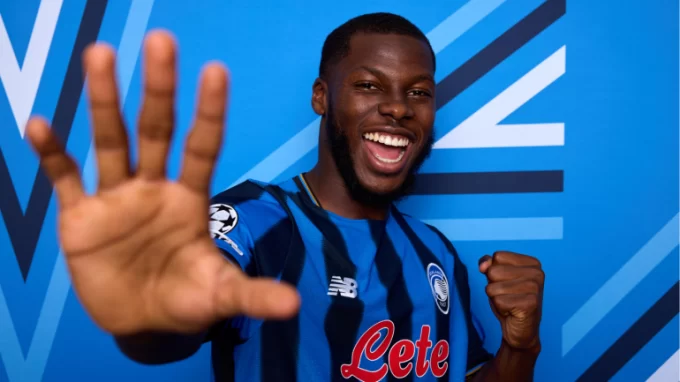
Juventus, Atalanta, and Arsenal’s Quiet Revolution: What’s Really Shaping This Week in Football?
The roar of Serie A stadiums masks a subtle shift, one that...
Kirsten Collins2 Mins read




Leave a comment