

Jannik Sinner’s 50-Win Surge: A New Era in Tennis or Just Another Flash in the Pan?
Jannik Sinner’s rapid ascent in the tennis world has shaken the sport’s foundations. Surpassing legends like Federer and Nadal with a blistering 50-win start, is he the heir to tennis’ throne—or is this a story still being written?
 Chris MarksMay 20, 20252 Mins read52
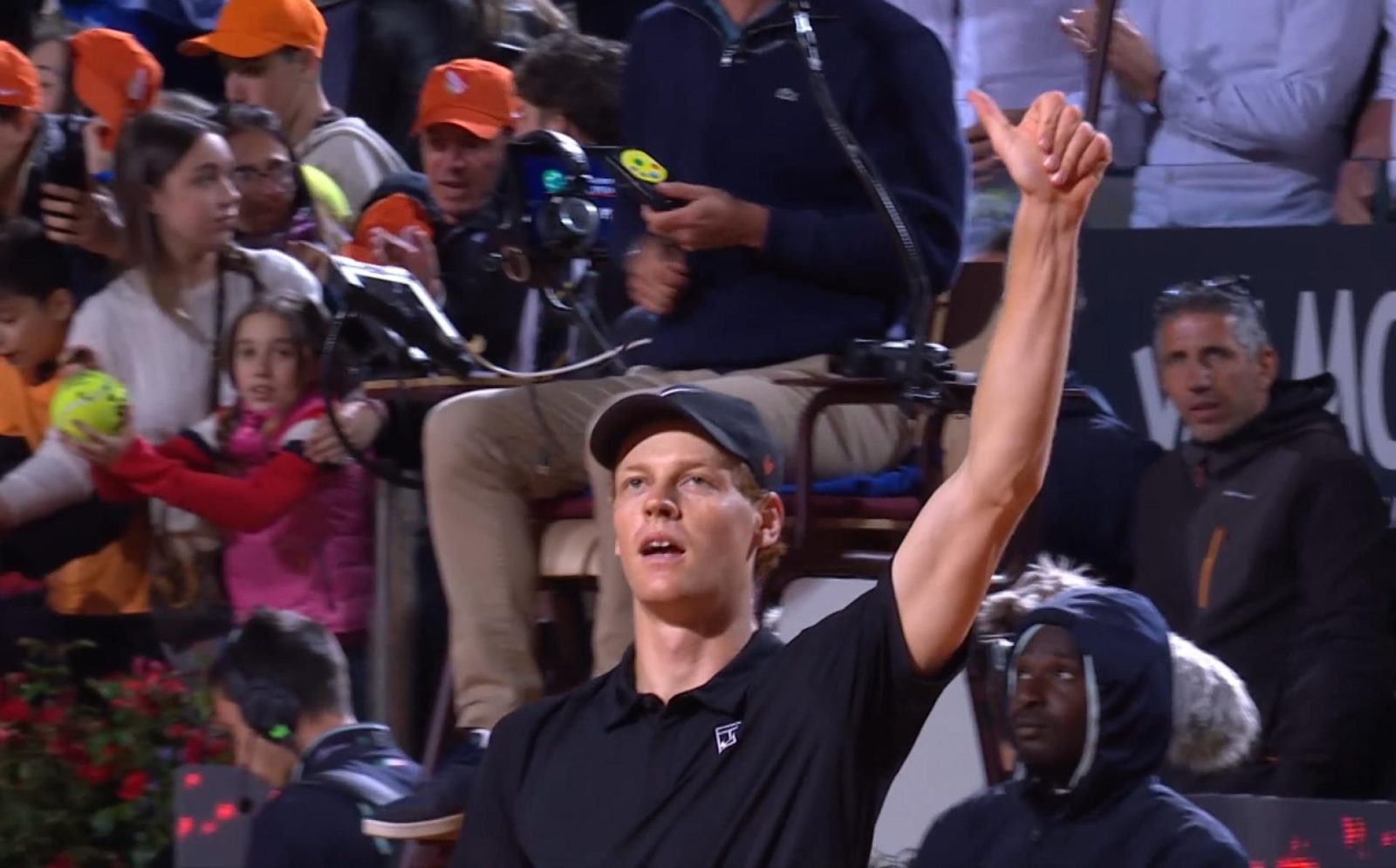
With a single, decisive stroke, Jannik Sinner has already begun to rewrite the tennis narrative. At 21, his 50th career win arrived with a weight that defies conventional expectations, surpassing the great Roger Federer and Rafael Nadal in the speed at which he reached this milestone. But in a sport where records are steeped in history and legends seem to rise in an eternal cycle, is this achievement truly remarkable, or just a blip in the crowded sky of tennis history?
A Phenomenon or Just the Next “It” Player?
Jannik Sinner’s name is quickly becoming synonymous with prodigy—an adjective that tends to stick like glue. But the truth is more complicated. His rise feels so rapid, so meticulously crafted, that it’s almost impossible to escape the underlying question: what does it truly mean to “arrive” in a sport where history is measured in decades, not years? Federer, Nadal, Djokovic—their legacies didn’t just accumulate in numbers; they shifted the tectonic plates of tennis itself. Sinner’s rapid ascent, however, feels different, even disorienting. Was it fate or just the right timing?
Breaking Records, Breaking the Mold
Here’s where Sinner’s record feels unsettling: in a sport so mired in tradition, where players like Federer and Nadal are carved into the very bedrock of tennis, there’s something unnervingly fresh about this young Italian. He hasn’t had to wait for his turn. He hasn’t made his mark through the slow, deliberate grind of years spent chipping away at the top. No, Sinner’s approach is not about waiting—it’s about seizing, about confronting the giants head-on and making them blink first. He has, after all, now surpassed the legends in one key measure: speed. It was something Federer himself once marveled at.
But there’s the rub—Sinner’s rush to the top feels almost like a warning. In a world that moves at breakneck speed, are we prepared for the consequences of burning bright too soon?
The Weight of Expectations
It’s not that Sinner isn’t deserving—no, he is a machine, a player whose court intelligence, grace, and power make him one of the most exciting prospects tennis has seen in years. But this feat—this milestone—carries more weight than it may seem. In surpassing Federer and Nadal, Sinner has inherited the future of the sport, whether he wanted it or not. And with that future comes expectation. The very speed with which he’s climbed has become a double-edged sword. Tennis isn’t just about victories; it’s about the way they are remembered, the legacy left in their wake. Can Sinner withstand the spotlight that comes with breaking a record? Or will it become his burden?
As Sinner looks toward his next 50 wins, we must ask ourselves: What does a new era of tennis look like, and how long can it last before it begins to fray at the edges? In surpassing Federer and Nadal, Sinner has done more than just claim his place in the history books; he’s carved out a space where the next generation might just find a way to eclipse the titans of the past. But perhaps that is the beauty and the tragedy of tennis: it is always looking ahead. The question is, will we be able to keep up?








Barcelona’s Fragile Pursuit: When Injuries Threaten More Than Just a Season
A silence spreads over Camp Nou that no roar can drown out—two...
Chris Marks2 Mins read

William Saliba: Arsenal’s Silent Architect or Its Greatest Gamble?
The air inside the Emirates shifts with unspoken tension—William Saliba, once a...
 Joseph Bennett2 Mins read

Joel Embiid’s Quiet Confidence: Is the 76ers’ Giant Ready to Rewrite His Story?
Joel Embiid is rarely one to make noise without purpose, and now,...
 Kirsten Collins1 Mins read

Juventus, Atalanta, and Arsenal’s Quiet Revolution: What’s Really Shaping This Week in Football?
The roar of Serie A stadiums masks a subtle shift, one that...
Kirsten Collins2 Mins read




Leave a comment