

Jannik Sinner’s Quiet Storm: The Comeback That Feels Different
Jannik Sinner is quietly becoming the player to watch in 2025, and his recent statement after his victory in Rome raises more questions than it answers. What does his "test" really mean for his future—and is this comeback different from all the others?
 Chris MarksMay 15, 20252 Mins read18
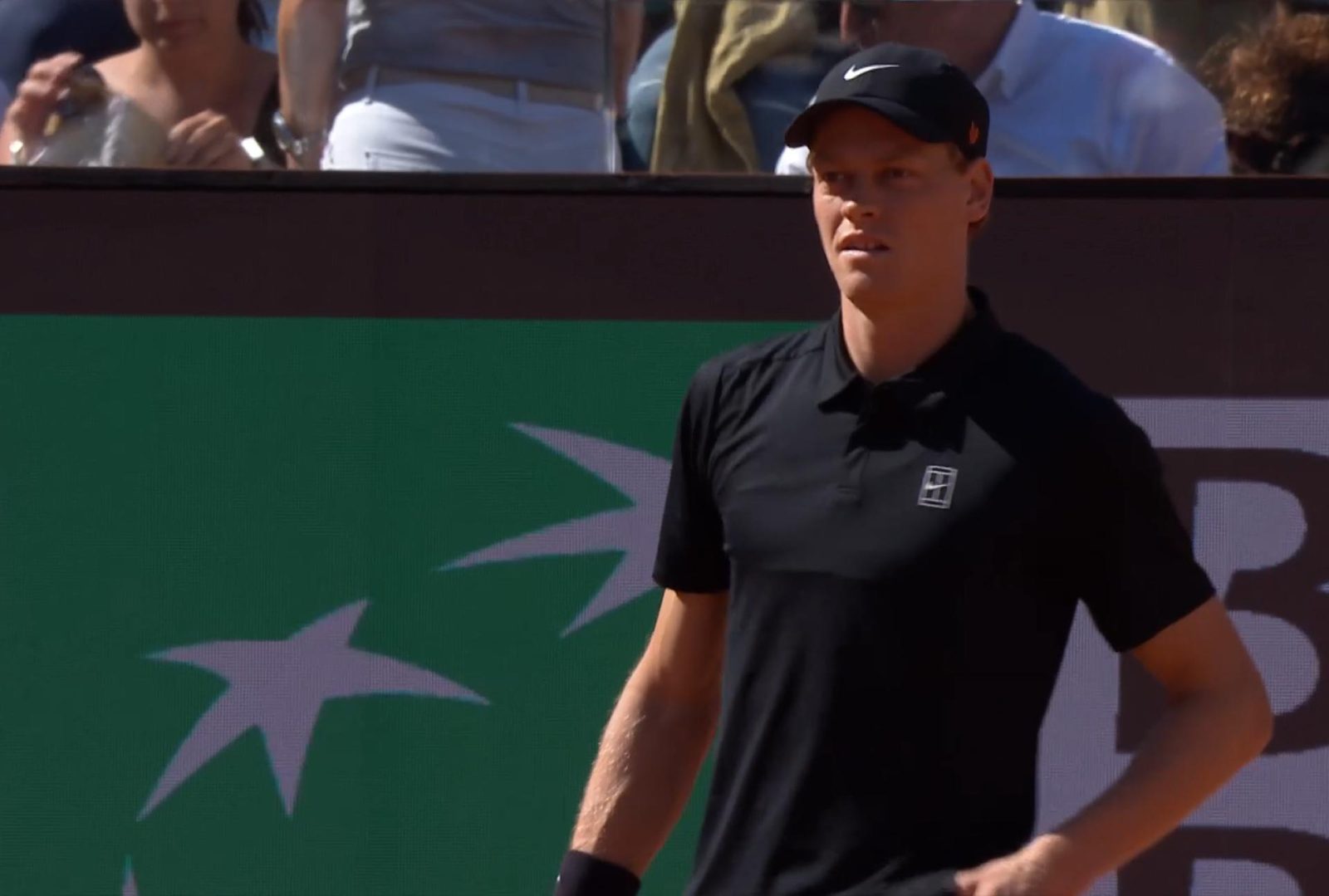
In a corner of the tennis world, where the flashes of grand slam glory often steal the spotlight, Jannik Sinner’s steady resurgence in Rome carries the weight of something more profound. “This was a test I needed,” he said after his victory—a seemingly simple phrase, yet it lingers in the air like a question, begging for deeper interpretation.
Sinner’s recovery isn’t just about returning to form; it feels like something more elusive, something much more calculated. There’s a subtle art to his approach, one that speaks volumes in silence, revealing not only a physical revival but a transformation of the mind. The Italian’s quiet determination, juxtaposed with his controlled demeanor, suggests there’s an understanding unfolding on the court that transcends technique.
A Test of More Than Skill
What does it mean to pass a test in tennis? To many, it’s a matter of holding serve, reading the opponent’s tactics, or delivering that signature backhand at precisely the right moment. But Sinner’s own words hint at a deeper form of growth—a mental clarity, a psychological recalibration. “I needed this,” he said, and there’s an edge to those words. His comeback isn’t solely about overcoming injury or physical setbacks; it’s about proving something intangible: that the hurdles of his past were not failures, but simply the trials of a mind on the brink of transformation.
In Rome, as the clay courts witnessed his wins, there was a sense that Sinner wasn’t just battling opponents—he was battling the version of himself that doubted his ability to rise again. And now, after taking on that internal conflict, he stands taller. The test was not a contest of endurance, but a challenge to the will.
The Echoes of Resilience
It’s tempting to frame Sinner’s resurgence as the narrative of a prodigy coming into his own, but the reality is far murkier. The stakes are higher than they appear—Sinner is not simply working to improve his game but rather to cement his place among the giants. His ability to adapt, to play with a combination of raw power and surgical precision, creates an atmosphere of mystery around his evolution. What is he really aiming for? To silence critics? To ascend in the rankings? Or to prove to himself that he truly belongs?
Tennis, like life, doesn’t unfold in tidy arcs. There is no definitive moment when the “comeback” is complete. For Sinner, this is just one chapter in an ongoing saga of overcoming, learning, and striving for greatness. Every victory is a layer of confidence, but also a window into his complex psyche—where the meaning of each match is not always about the score, but about the silent shifts taking place beneath the surface.
As the Italian Open progresses and Sinner continues his push for higher ground, the question remains: What is the true test that he speaks of? And perhaps more importantly—what does it mean for the future of tennis?
The answer is as elusive as the player himself, but one thing is certain: we have only begun to glimpse the full extent of his journey.







Barcelona’s Fragile Pursuit: When Injuries Threaten More Than Just a Season
A silence spreads over Camp Nou that no roar can drown out—two...
Chris Marks2 Mins read

William Saliba: Arsenal’s Silent Architect or Its Greatest Gamble?
The air inside the Emirates shifts with unspoken tension—William Saliba, once a...
 Joseph Bennett2 Mins read

Joel Embiid’s Quiet Confidence: Is the 76ers’ Giant Ready to Rewrite His Story?
Joel Embiid is rarely one to make noise without purpose, and now,...
 Kirsten Collins1 Mins read

Juventus, Atalanta, and Arsenal’s Quiet Revolution: What’s Really Shaping This Week in Football?
The roar of Serie A stadiums masks a subtle shift, one that...
Kirsten Collins2 Mins read




Leave a comment