

Ben Affleck, Britney Spears, and the Quiet Shame of Surviving Fame
In an unexpected confession, Ben Affleck reveals empathy for Britney Spears—not as a headline, but as a mirror. What happens when two cautionary tales quietly compare notes behind the curtain?
 Krista FreelandMay 7, 20252 Mins read36
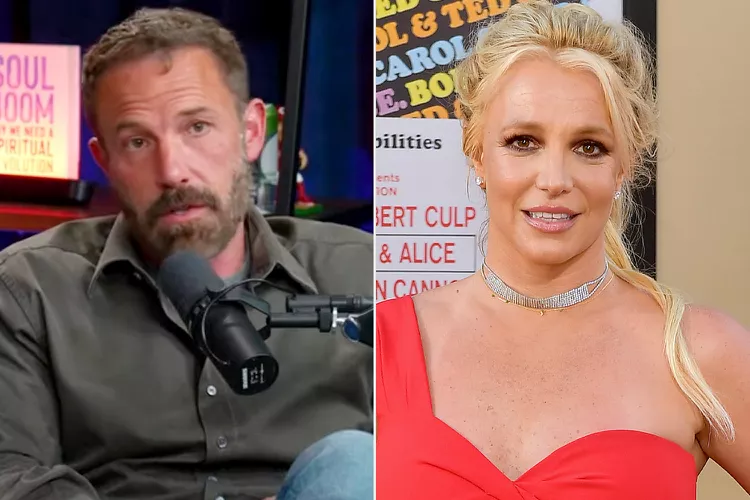
He wasn’t promoting a film. He wasn’t launching a foundation or selling cologne. Ben Affleck was simply speaking, candidly, about Britney Spears. And not in the way men in Hollywood typically do—through paternal protection or pitying distance. This was something more complex, more disarming. It was recognition.
“I had a moment of empathy,” he said, as if he were describing a splinter. A memory he couldn’t quite extract. The man who once held the keys to the box office now seemed to understand what it meant to be the commodity. Not the star. Not the director. The product. And when he saw Britney, somewhere in those tabloid ruins, he saw himself.
Two Sides of the Same Paparazzi Flash
The strange thing is how much they actually share. Both minted in the machine before they could legally rent a car. Both devoured by a press corps that didn’t blink before it bit. And both, perhaps most hauntingly, repackaged endlessly by a public that pretends it cares while clicking into the abyss.
But here’s where Affleck’s words drift from the expected: he doesn’t claim wisdom. He doesn’t offer solutions. What he offers is vulnerability disguised as reflection. “I could see it,” he said. “You don’t forget the look of someone who’s trying to survive themselves.” It’s the kind of line that doesn’t fit neatly into a press tour, but echoes anyway.
The Survivors Club No One Wants To Join
There’s a ritual in Hollywood—an unspoken initiation—that no one really wants to admit exists. You either burn out early or learn how to play dead. Affleck, somehow, did both. Spears, famously, didn’t get the chance to fake composure. Her rebellion was never allowed to be intellectualized—it was shaved, strapped, and photographed.
So when he speaks now, it’s not with the voice of an elder. It’s with the awareness of someone who dodged the same bullet, only to realize it still grazed him. The difference is that he was allowed to fail upward. Britney was chained to her own image and punished for trying to escape it. Affleck’s empathy, then, is not performative. It’s a form of mourning.
—
So what if the most piercing Hollywood memoir isn’t written at all, but shared in an offhand podcast quote? What if the real story isn’t who made it—but who survived making it out alive, and how they silently recognize each other in the wreckage?
And what if we, the audience, were never supposed to hear that part?






When Mercy Meets Tragedy: The Widow Who Forgave Her Husband’s Killer
The air thickens when forgiveness enters a room meant for grief. Imagine...
 Chris Marks1 Mins read

When Fear Became a Lifeline: Pete Davidson’s Reckoning in Rehab
There’s a silence that follows a mother’s voice when she confesses her...
 Joseph Bennett1 Mins read

Pete Davidson’s mom told him in rehab worst fear was learning he died
Pete Davidson is opening up about the heartbreaking moment he had with...
Chris Marks2 Mins read

Katie Couric’s Unexpected Spin on Sydney Sweeney’s American Eagle Ad: What’s Really Being Said?
Katie Couric stepping into a scene dominated by Gen Z glamour feels...
Krista Freeland2 Mins read





Leave a comment