

When Sorry Became a Billion-View Mirror: Justin Bieber’s Viral Enigma
Justin Bieber’s “Sorry” video smashing a billion views isn’t just a digital milestone—it’s a cultural riddle that asks what we’re really apologizing for in the age of viral fame.
 Krista FreelandSeptember 4, 20251 Mins read17
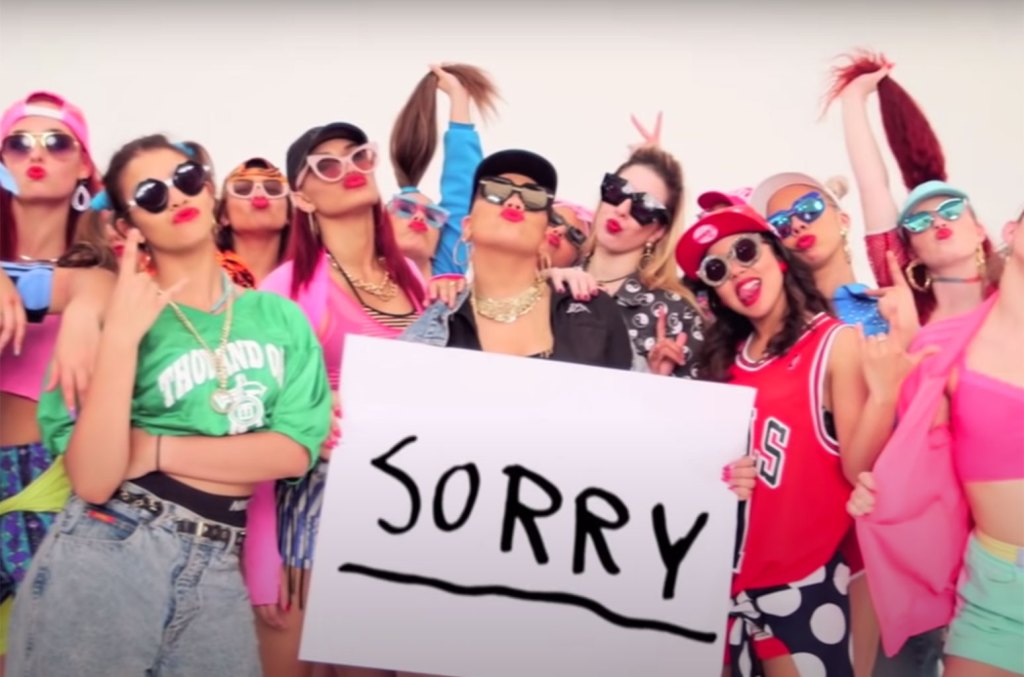
The screen flashes—one billion views. But what does it mean when a pop star’s apology becomes the soundtrack to a generation’s collective reflection? Justin Bieber’s “Sorry” video is no mere pop spectacle; it’s a mirror held up to a culture obsessed with redemption, spectacle, and the endless replay of contrition.
Behind the upbeat choreography and vibrant hues lies a question few dare to ask: when does an apology become performance, and what are we really saying sorry for? The video’s milestone is less a celebration and more a cultural Rorschach test, inviting us to ponder the paradox of forgiveness in an age that never forgets.
The Anatomy of a Viral Confession
“Sorry” wasn’t just a chart-topper—it was a statement, wrapped in dancehall beats and viral-ready visuals. Yet beneath its infectious rhythm lies a tension between sincerity and spectacle. Bieber’s apology is broadcast, repeated, dissected—transformed from private regret into public currency.
One might wonder if the billion views signify genuine empathy or the morbid fascination with celebrity vulnerability. As one critic put it, “The video’s success is less about the music and more about the performative ritual of saying sorry in public.” It’s a modern confession booth, pixelated and endlessly watched.
When Apologies Outlive Their Meaning
As “Sorry” continues its relentless climb, it forces us to ask: have apologies in the digital era become ephemeral acts of branding rather than genuine reckonings? The video’s vibrant energy contrasts sharply with the gravity of contrition, blurring lines between entertainment and earnestness.
In this context, the video’s billion views become a curious monument—not just to Bieber’s star power, but to our culture’s complicated relationship with redemption, remorse, and the spectacle of the self. It leaves us wondering: are we forgiving, or simply watching?
“Sorry” as a cultural artifact asks more than it answers, reminding us that in a world addicted to replay, some apologies are less about closure and more about keeping the conversation alive—sometimes, indefinitely. What does your apology look like when it’s on loop?







Laufey’s Opening Night Show at LA’s Crypto.com Arena: Best Moments
Laufey opened a two-night stand at Crypto.com Arena in downtown Los Angeles...
 Chris Marks6 Mins read

Julie Adam Is Billboard Canada Women in Music’s 2025 Exec of the Year
Julie Adam is having a milestone year — and it’s getting even...
Chris Marks4 Mins read

Spinal Tap Tribute Album with Foo Fighters,Tool for Teen Cancer America
Spinal Tap may be a fake band, but its music is very...
Chris Marks2 Mins read

AxMxP Is K-Pop Rookie of the Month for September: Exclusive Photos
Ha Yoo Joon Image Credit: Chin Soyeon You debuted on Sept. 10....
Chris Marks2 Mins read





Leave a comment